Circle's Five-Year Binance Deal Hides the Cost of USDC Distribution
Circle renewed its USDC deal with Binance for five years. Distribution costs already absorb 61% of reserve income, and the new fee rate is undisclosed.

By Anmol BillaSenior Analyst
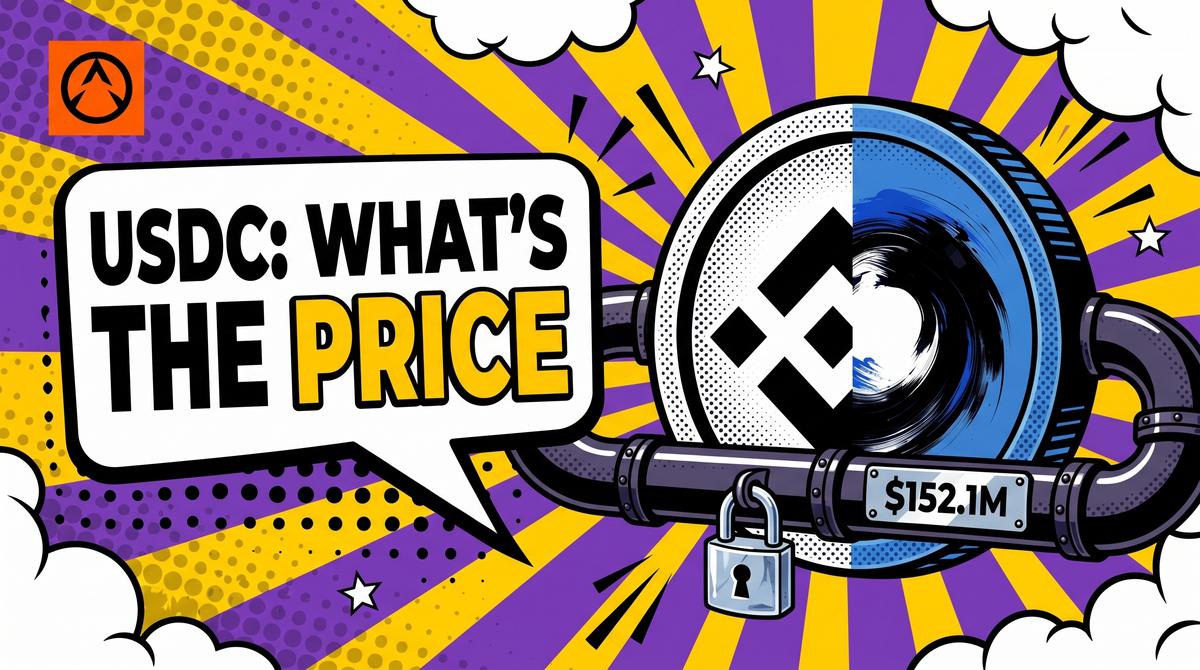
Circle and Binance announced a five-year extension of their USDC distribution deal on Sept. 22, with Binance taking a $100 million equity stake alongside it.
For a USDC holder, the deal changes two things and conceals a third. Binance now holds 22% of the stablecoins on its platform in USDC, up from 5% a year earlier, and Circle's cost of getting there is the highest it has been in the company's short public life. What the renewal costs, in fees or minimum balances, is not in the announcement.
Binance bought 1.237 million Circle Class A shares at $80.84, a 5% discount to Circle's Sept. 17 closing price, with a two-year lockup. The size of the stake is roughly 0.5%, much smaller than Coinbase's historical position in Circle, but a stake nonetheless. The commercial agreement runs through September 2031 and replaces a November 2024 deal and an August 2025 expansion.
The November 2024 deal is where the cost question begins. Circle paid Binance a $60.25 million upfront fee and agreed to monthly incentive payments that, per the filings, "ranged from an annualized mid-double-digit to high-double-digit percentage of a fixed rate reset quarterly at a discount to three-month SOFR." Binance also agreed, subject to certain exceptions, to keep $3 billion of USDC in its treasury, with treasury incentive payments requiring at least $1.5 billion to remain there. The August 2025 expansion added similar high-double-digit incentives around USDC held through Circle's Modular Smart Contract Wallet infrastructure.
The new five-year deal, in other words, replaces a contract that already pushed Binance-related distribution costs up by $152.1 million in 2025, and writes the price of the next five years out of the press release. Neither the new fee rate nor any minimum balance commitments have been disclosed.
Distribution costs now absorb 61% of Circle's reserve income
In the second quarter, Circle generated about $668 million of reserve income, the yield it earns on the cash and short-dated Treasuries backing USDC, and reported roughly $410 million of distribution and transaction costs. That is about 61% of reserve income, a share Circle did not break out as cleanly before this year. The company also said distribution costs specifically related to Binance increased by $152.1 million in 2025 as the relationship expanded, a number that does not include Coinbase, the larger historical partner.
Clear Street, in a note to clients, ran the math on what each new dollar of USDC on Binance actually earns Circle. At a 3.5% reserve return, an extra $1 billion of USDC produces about $35 million in gross annual reserve income. If Binance continues to receive a high-double-digit share, as in earlier terms, Clear Street estimates Circle retains only about $4 million to $7 million. The rest goes to the exchange.
Binance's USDC growth is the visible half of the deal
Binance customer USDC balances grew from about $1.5 billion on Oct. 1, 2024 to about $7.1 billion on the Sept. 1 Proof-of-Reserves snapshot, a roughly 376% increase. That is almost five times the 51% growth in USDT balances on the same exchange over the same period. USDC's share of Binance's stablecoin balances went from 5% on July 1, 2024 to 10% on Jan. 1, 2025 to 22% on July 1, 2025, per Circle's regulatory filings.
Globally, USDC circulation grew from $39.7 billion on Nov. 29, 2024 to about $74.4 billion currently on DeFiLlama, an increase of about 87%. Binance's share of that global supply rose from less than 4% at the start of the partnership to almost 10% by the Sept. 1 snapshot. On Binance itself, the USDT-to-USDC ratio narrowed from roughly $14.30 of USDT for every $1 of USDC to about 4.5-to-1.
Circle CEO Jeremy Allaire framed the deal as a way to "expand access to this new financial system to hundreds of millions of people and businesses around the world." Binance CEO Richard Teng said the investment was a recognition of "regulation, transparency, and delivery." Neither statement addresses the fee question.
What the next quarterly report needs to show
Clear Street analysts Owen Lau and Nikhil Vijay said the renewed agreement improves Circle's visibility over one of its largest distribution channels outside Coinbase but leaves its net economics unclear. They will watch reported Binance USDC holdings and Circle's non-Coinbase distribution expenses when third-quarter results arrive. For a USDC holder, the practical question is whether the 61% ratio improves or worsens.

Anmol Billa
Anmol Billa is a Senior Analyst at Altcoin Buzz, with over five years of experience working across cryptocurrency markets and the broader digital asset industry. His work focuses on technical analysis, market research, investment insights, and evaluating emerging opportunities within the crypto ecosystem. At Altcoin Buzz, Anmol contributes to technical market analysis, research-driven insights, pitch decks, and funding-related initiatives. His experience combines analytical thinking with a practical understanding of crypto markets, helping translate market trends and emerging projects into clear, actionable insights for readers and industry stakeholders.
More from AnmolNext up
KAVA Crashes 40% After Suspicious Activity in Kava Lend
KAVA plunged more than 40% after suspicious activity involving Kava Lend reportedly moved 48.36 million tokens to BNB Chain. South Korean exchanges suspended deposits and withdrawals as Kava investigated.
 KAVA
Related
More in Crypto NewsRelated
Securitize and Ethena Activate $100M Liquidity Facility for BlackRock’s BUIDL

Visa Opens Its Settlement Network to Anchorage Digital's Stablecoins
Hyperliquid's Open Interest Jumped 80% in Q3: Can It Hold the Gain?
 HYPEUSDC
$1.2 Billion in Liquidations as Bitcoin Falls 12% in a Week
 BTC
 BTW