CZ retires public wallet as Trust Wallet moves to make spam token management easier
CZ has retired a public wallet after repeated unwanted token transfers highlighted the challenges of managing spam assets on public blockchain addresses.

By Saloni RathiSenior Editor
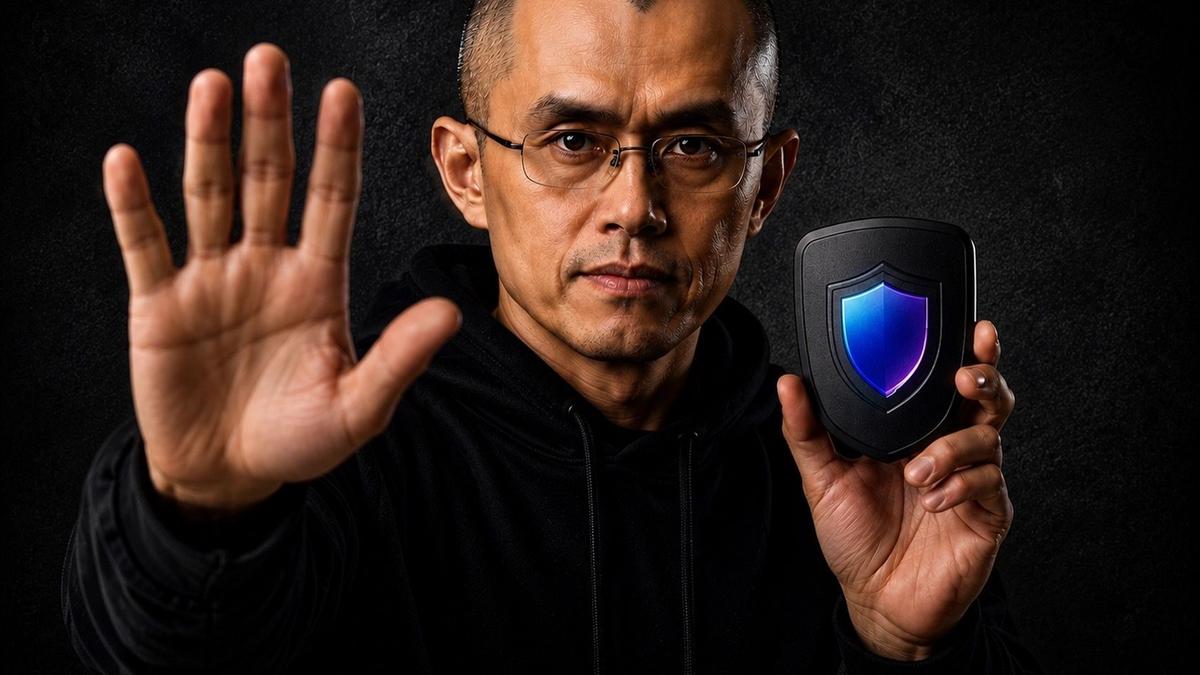
Binance co-founder Changpeng Zhao has retired a public wallet he had been using after unsolicited token transfers highlighted a common problem with public blockchain addresses.
The episode has also prompted renewed attention around Trust Wallet’s “Ignore coins” feature, which allows users to hide unwanted assets from their wallet interface.
The issue is rooted in how public blockchains work. Anyone can send compatible tokens to a publicly visible address without the wallet owner’s permission. That means users can receive promotional memecoins, spam tokens and other unwanted assets even if they never interacted with the sender.
CZ recently discussed the problem in an X post, explaining why simply removing such assets from a blockchain wallet is not straightforward.
CZ changes his view on hiding unwanted tokens
CZ initially questioned whether most cryptocurrency users would benefit from a dedicated feature for hiding unwanted tokens.
However, after receiving feedback from users, he acknowledged that he had underestimated the usefulness of the option.
“I made a mistake,” CZ wrote, explaining that several people had pointed out that hiding unwanted assets would be useful.
According to CZ, the Trust Wallet team told him that the functionality already exists through its “Ignore coins” feature.
The problem, however, appears to be accessibility.
CZ said the option is currently buried several steps inside the wallet interface, making it difficult for users to discover and use.
He suggested that Trust Wallet could make the functionality easier to access.
You cannot stop someone from sending tokens to a public address
The underlying problem cannot be completely solved at the wallet-interface level.
A public blockchain address is designed to receive transactions. If someone knows an address, they can generally send compatible assets to it without asking the recipient for permission first.
As a result, even users who carefully manage their wallets can accumulate tokens they never wanted.
This is particularly noticeable with public wallets belonging to prominent crypto figures. A visible address can attract promotional tokens, memecoins and other unsolicited transfers simply because the wallet owner is well known.
But the same issue can affect ordinary users if their addresses become publicly exposed.
Hiding tokens is different from removing them
An important distinction is that ignoring a token does not remove it from the blockchain. The asset can remain associated with the address on-chain even after the wallet application stops displaying it prominently.
This means the wallet interface is effectively providing a cleaner way to manage what the user sees rather than changing the underlying blockchain records.
That distinction matters because applications cannot simply erase legitimate blockchain transactions from a public ledger. The more practical solution is therefore to give users better control over their wallet interface.
Why the “Ignore coins” feature matters
Making the Ignore Coins functionality easier to find could help users deal with unwanted assets without interacting with them.
This is useful because users may have no reason to open, swap or otherwise interact with an unsolicited token. In particular, unknown tokens can create unnecessary risks if users interact with unfamiliar contracts or links associated with them.
A simpler interface could therefore allow users to hide suspicious or unwanted assets while leaving the underlying blockchain records untouched.
For public addresses, this could become an increasingly useful wallet-management feature as unsolicited token transfers continue to occur.
CZ’s retired wallet highlights a broader wallet problem
CZ's decision to retire the public wallet he had been using illustrates how difficult unwanted transfers can be to manage once an address becomes widely known.
Retiring the wallet does not erase its transaction history or the assets associated with it. The address remains visible on the blockchain. Instead, the move provides a practical way to stop relying on an address that has become a magnet for unwanted transfers.
For Trust Wallet users, however, improving access to Ignore Coins could offer a simpler alternative when the problem is primarily about keeping the wallet interface clean.
Trust Wallet’s next step could be better accessibility
The episode ultimately highlights a relatively simple but important distinction in crypto wallet design.
Users may not be able to control everything that gets sent to a public blockchain address, but they should have better control over what their wallet shows them.
CZ's experience initially centered on whether hiding unwanted assets was necessary. After feedback from the community, the focus shifted toward making an existing feature easier to discover.
If Trust Wallet brings the Ignore Coins option closer to the surface, users could have a more convenient way to manage spam and unsolicited tokens without interacting with them.
For now, the broader lesson is straightforward: public addresses cannot prevent unwanted transfers, but better wallet interfaces can make those transfers far less disruptive.

Saloni Rathi
Saloni Rathi has been part of Altcoin Buzz for over five years, working across content and marketing within the crypto and Web3 space. Her work focuses on creating clear, engaging and accessible content that helps readers understand complex cryptocurrency and blockchain topics. With a strong interest in storytelling and audience engagement, Saloni brings together research, creativity and marketing insight to turn complex ideas into simple and relatable stories. She believes great content starts with curiosity, creates clarity, and ultimately builds meaningful connections with readers.
More from SaloniNext up
Binance Lets Users Spend Against BTC, ETH and BNB With Pay Later
Binance opens Pay Later in Argentina and Mexico, letting users borrow up to 1,000 USDC against BTC, ETH or BNB, with liquidation at a 44% collateral drop.
 BTC
 BNB
Related
More in Crypto NewsRelated
$38,206 Drained From Curve Fee Contract in Signature Flaw
 CRVUSDC
Withdrawals Resume at Lighter After Leak Drained $10.39M
 ETH
Gnosis Safe Wallet Loses $6.45M With No Owner Signature
 XMR
Lighter Blames Leaked API Key for Reported $15.5M Drain
 LITUSDC


