EU Central Banks Push to Extend Stablecoin Yield Ban to Lending and Staking
The ECB and EU national central banks want MiCA's stablecoin interest ban extended to crypto lending, staking and borrowing, citing risks of indirect yield

By Anmol BillaSenior Analyst
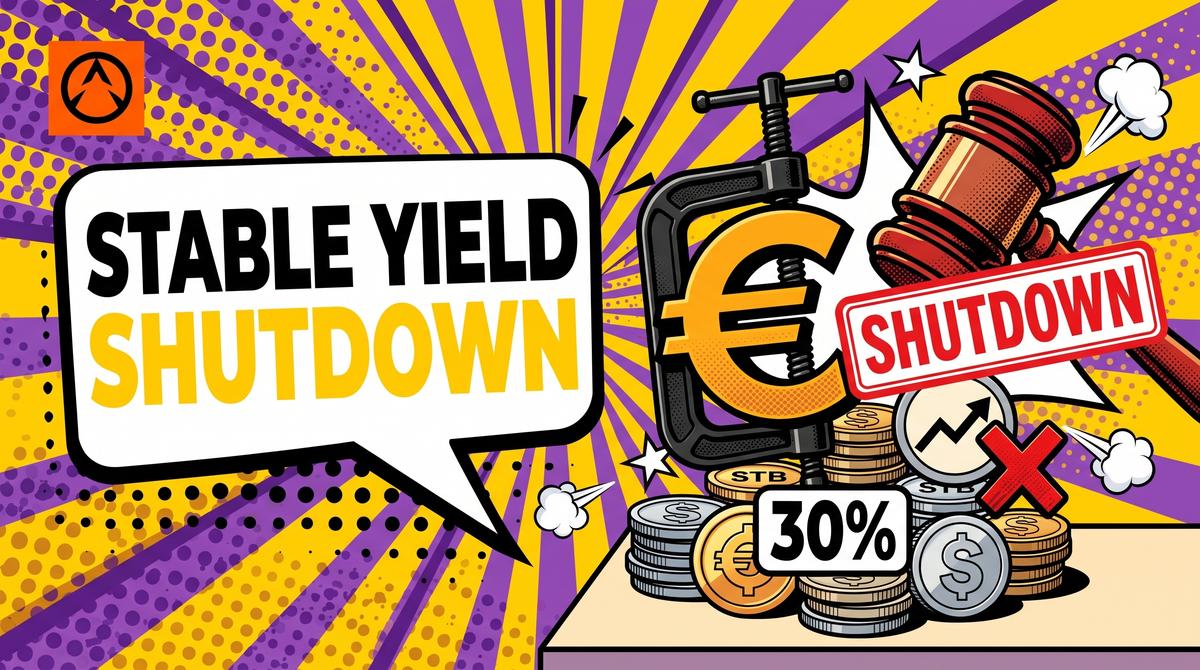
The European Central Bank and the EU's national central banks have asked the European Commission to widen MiCA's ban on stablecoin interest so that it covers crypto lending, borrowing and staking, not just the activities the rules already name.
For a holder, the practical effect is straightforward: in the EU, you would no longer be able to earn yield on a stablecoin by lending it, staking it, or routing it through a DeFi arrangement designed to look like something other than a deposit. The European System of Central Banks, which includes the ECB and the national central banks, set out the request in a 57-page response to the Commission's targeted MiCA consultation.
The ESCB's central argument is that stablecoins are a form of electronic money, and electronic money is supposed to move payments, not sit in savings accounts. "Electronic money is intended to be used for making payments and not as a means of saving," the response says. That framing underpins the rest of the paper.
Where the current rule stops
MiCA, which began taking effect in June 2024, already bars stablecoin issuers and licensed crypto-asset service providers (CASPs) from paying holders interest. The ESCB says that has not been enough. Stablecoins can be "transformed into yield-bearing arrangements through lending, staking or other layered structures," it wrote, "potentially circumventing the prohibition on direct remuneration."
The central banks want the ban to apply to unregulated services, not just those governed by MiCA. The prohibition "should not be limited to cases where CASPs offer services governed by MiCAR, but should apply also to unregulated services, such as crypto borrowing, lending and staking," the response said.
What the expansion would catch
The ESCB named loyalty program benefits and "liquidity mining incentives embedded in DeFi arrangements" as indirect payments the rule should reach, along with rewards, fee reductions and bundled services. "Maintaining and, where necessary, strengthening the prohibition, covering both direct and indirect forms of remuneration, should be a clear legislative priority," the response said.
It also wants staking, lending and borrowing of crypto-assets regulated at Union level, classified by economic substance rather than the technology behind them. Where a customer hands control of assets to a firm that promises to return the same quantity later, perhaps with a bit more, the ESCB argued, the arrangement starts to look like taking repayable funds and may belong under EU banking law.
Reserves: from deposit floors to maturity buckets
The push goes beyond yield. Under MiCA today, stablecoin issuers must hold at least 30% of reserves as deposits at credit institutions, rising to 60% for stablecoins designated as significant. The ESCB wants those floors replaced with rules requiring specified portions of reserves to mature within one to five working days.
The central banks pointed to draft European Banking Authority standards as a starting point: significant stablecoins would hold at least 40% of reserves in assets maturing within one day and 60% within five working days, with non-significant stablecoins at 20% and 30%. The argument is that large stablecoin deposits can become an unstable source of bank funding, leaving lenders exposed if an issuer needs to withdraw quickly to meet redemptions.
Timeline
The Commission's targeted MiCA consultation closes Sept. 30. A review report, which may carry a legislative proposal, is due by mid-2027. Anything the central banks are asking for has to travel through that process before it lands in MiCA itself.
The parallel in Washington
A similar argument is alive in the US. Eight US banking groups urged senators to tighten restrictions on stablecoin rewards in the Clarity Act, on the same logic: that crypto platforms could otherwise offer interest-like returns that compete with bank deposits. The Clarity Act failed a 49-50 procedural vote, where ethics provisions also played a role. Where US stablecoin policy now sits on the yield question is not settled in the public reporting reviewed here.
What's not in the public record
The 57-page ESCB response was filed collectively. Which national central banks pushed harder than the ECB's line, and whether any dissented, has not been published. The full text of the response has not been released either, only the summaries that have appeared in coverage of the consultation reply.

Anmol Billa
Anmol Billa is a Senior Analyst at Altcoin Buzz, with over five years of experience working across cryptocurrency markets and the broader digital asset industry. His work focuses on technical analysis, market research, investment insights, and evaluating emerging opportunities within the crypto ecosystem. At Altcoin Buzz, Anmol contributes to technical market analysis, research-driven insights, pitch decks, and funding-related initiatives. His experience combines analytical thinking with a practical understanding of crypto markets, helping translate market trends and emerging projects into clear, actionable insights for readers and industry stakeholders.
More from AnmolNext up

Crypto Liquidations Near $1B as Bitcoin Squeezes Shorts Above $80K
Nearly $1 billion in leveraged crypto positions were liquidated in 24 hours, about 59% of them shorts, as Bitcoin climbed back above $80,000 after the midterms.
 BTC
Related
More in Crypto NewsRelated
US Midterms: Crypto's Stalled CLARITY Act Awaits a New Congress
BTC ETH

TRUMP and MELANIA Memecoins Hit Record Lows as Democrats Win House
 TRUMP
House Democrats Weigh Crypto Bill Giving the SEC More Power

BitMart Founder Flags 'Severely Understaffed' Security After New Hack
BTCETH