HSBC Unveils RedCoin, Its Hong Kong Dollar Stablecoin, for 2026
HSBC plans to launch RedCoin through PayMe in 2026. Its first test is whether consumer payments can outgrow the bank's own apps.

By Pallavi Malviya GuptaChief Editor
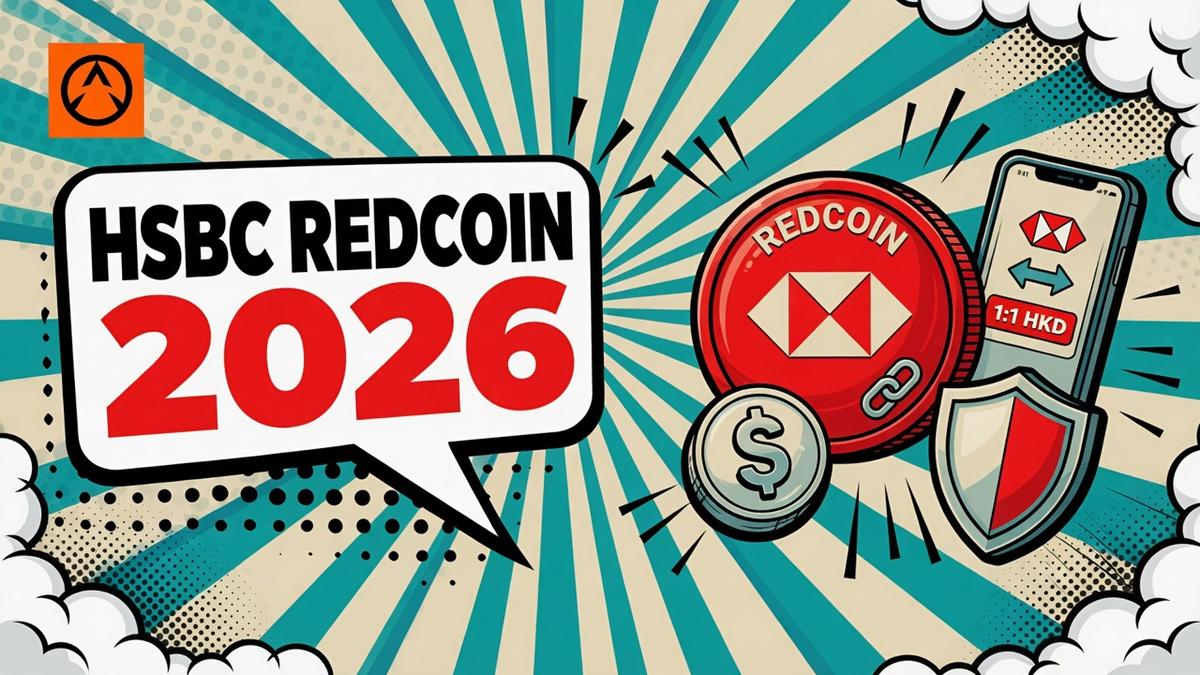
HSBC is giving its Hong Kong dollar stablecoin a name and a very practical first job. HSBC RedCoin is planned for the second half of 2026 through PayMe and the HSBC HK Mobile App, with person-to-person and person-to-merchant payments leading the way.
That makes RedCoin less about becoming an exchange-listed token and more about making Hong Kong payments familiar. The bank is starting inside products its customers already have, rather than asking them to move into a new crypto wallet first.
PayMe gives RedCoin a ready audience
PayMe has more than 3.3 million users, according to the report. That gives HSBC an existing payments network for RedCoin's first phase, although user numbers alone do not show how often people will hold or use the stablecoin.
The early use cases are practical: paying another person or paying a merchant. Wholesale, corporate and institutional settlement will come later. So, too, may tokenized investment products inside the HSBC HK app as RedCoin matures.
The sequence matters. HSBC is starting with payments, then plans to consider more complex financial products. For a bank trying to earn trust, keeping the first job narrow may be sensible. A red name, after all, cannot make an unfamiliar payment experience feel familiar by itself.
The 1:1 peg needs backing details
RedCoin will be pegged 1:1 to the Hong Kong dollar and fully backed by segregated, high-quality liquid assets.
That is the central promise, but several practical details are still missing from the available reporting. The report does not state RedCoin's total supply, its minting and redemption mechanics, or which custodian will hold the reserves. It also does not settle whether the token will operate on a public chain.
Those details will tell users more about control, access and resilience than the name or the launch campaign can.
Regulation comes before exchange access
HSBC holds Hong Kong Monetary Authority stablecoin issuer licence FRS02, granted in April 2026, according to the report. The HKMA has issued only two licences so far and has said it is not in a hurry to issue another batch.
RedCoin will not be issued yet. On day one, access will be limited to PayMe and HSBC's own app, with no exchange listings. This is therefore a tightly controlled rollout, not a speculative listing.
That restraint also leaves the central test unanswered. If RedCoin remains inside HSBC's own products, it can serve the bank's customers while remaining difficult for the wider market to use. Opening an on-chain rail beyond those apps would make the product more open, but the available report does not say that this is planned for launch.
There is some evidence that HSBC has worked on the underlying settlement technology. The bank previously completed a tokenized deposits pilot on the Canton Network that showed atomic settlement across the US dollar, pound, euro, Hong Kong dollar and Singapore dollar.
Confidence depends on clarity and real use
HSBC surveyed 1,060 customers in June 2026. The bank found that 74% recognised at least one stablecoin use case, while 60% correctly described a stablecoin as a fiat-backed asset. Stronger regulatory clarity was the most-cited confidence driver, cited by 62% of respondents.
The findings suggest that customers are not simply waiting for another digital token. They are asking what backs it, who controls it and how the rules work.
HSBC also issued a fraud warning with the brand announcement. It said any token already circulating under the name HSBC or RedCoin is not the bank's product. That is a sensible piece of welcome signage, because impersonation often arrives before the real thing.
RedCoin's next test is whether people can mint, hold, send and redeem it without leaving familiar payment apps. A second test is whether HSBC opens RedCoin to networks and users beyond its own products. The third is how quickly corporate settlement follows the consumer phase.
The Hong Kong dollar peg, licence and PayMe route give the launch a solid starting point. Durable demand will depend on what happens after the name reveal, when people have to use the product for real.

Pallavi Malviya Gupta
Pallavi Malviya Gupta is the COO of Altcoin Buzz and founder of Funjible Games. Based in Singapore, she's been with Altcoin Buzz since its early days. Pallavi brings a builder's eye to both crypto media and gaming, she's spent years watching both spaces grow from niche communities into mainstream industries and still gets genuinely excited when something's built well.
More from PallaviNext up

KAVA Crashes 40% After Suspicious Activity in Kava Lend
KAVA plunged more than 40% after suspicious activity involving Kava Lend reportedly moved 48.36 million tokens to BNB Chain. South Korean exchanges suspended deposits and withdrawals as Kava investigated.
 KAVA
Related
More in Crypto NewsRelated
Visa Opens Its Settlement Network to Anchorage Digital's Stablecoins
Securitize and Ethena Activate $100M Liquidity Facility for BlackRock’s BUIDL

DTCC Picks Solana for Tokenized Stocks and Treasuries in 2027
 SOL
 XLM