Kalshi Gets CFTC Approval for S&P 500 Perpetual Futures
Kalshi has received CFTC approval for S&P 500 perpetual futures, expanding its derivatives business beyond crypto and into traditional stock markets.

By Bikash DekaAuthor
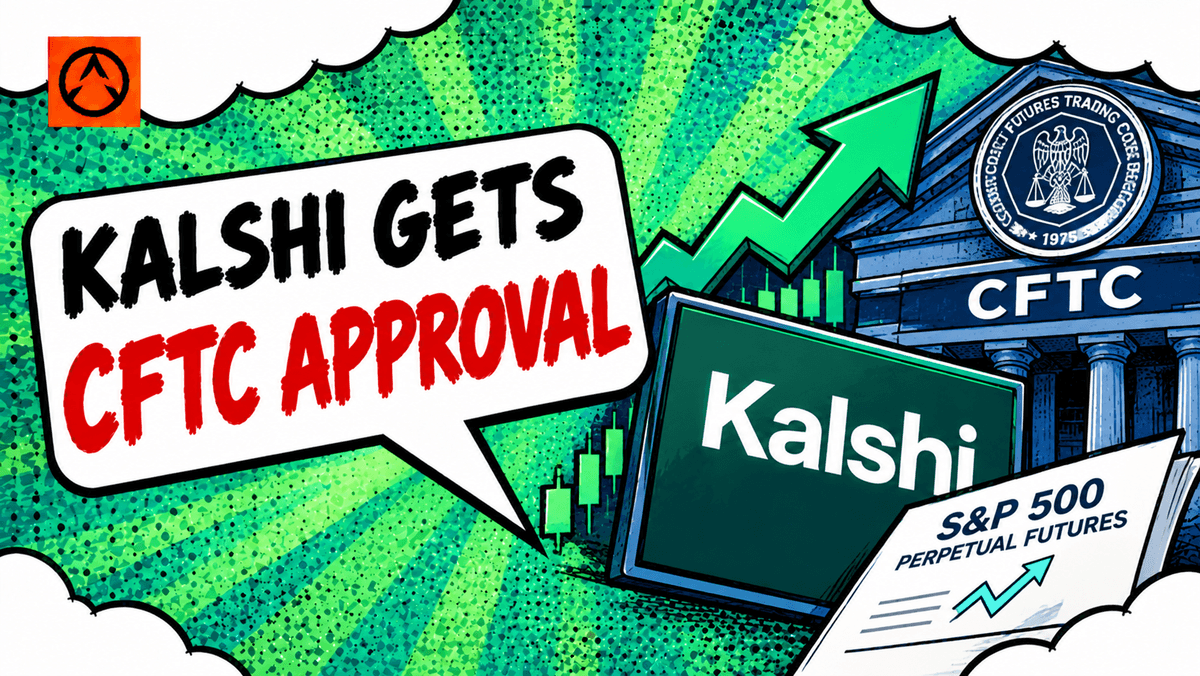
Kalshi is moving deeper into traditional financial markets after the US Commodity Futures Trading Commission (CFTC) approved its S&P 500 perpetual futures contract.
The approval allows the prediction market to offer perpetual exposure to a broad US stock index, putting Kalshi closer to established derivatives venues such as CME Group and Cboe Global Markets.
Kalshi gets approval for S&P 500 perpetuals
The CFTC approved Kalshi’s US500PERP contract on October 3, according to the regulator’s product database. The contract is classified as a financial instrument tied to an equity index.
The product tracks the MerQube US Large Cap Index, which represents 500 large US companies. Traders can take either long or short exposure through a cash-settled contract without a fixed expiration date.
That makes the product different from traditional futures contracts that have specific settlement dates.
Instead, Kalshi’s perpetual structure uses periodic funding payments to help keep the contract’s price aligned with its underlying reference. When the perpetual trades above the underlying value, for example, funding payments can shift toward short positions and encourage prices to move back toward the reference level.
The contracts will be cleared through Kalshi Klear, Kalshi’s CFTC-registered derivatives clearing organization.
From prediction markets to perpetual futures
The move marks another step in Kalshi’s expansion beyond traditional event contracts.
The company first received CFTC approval for its Bitcoin perpetual futures contract in May. That product gave US traders access to perpetual exposure to Bitcoin through a CFTC-regulated futures market.
Kalshi has since been expanding its perpetual futures offering beyond crypto. The new S&P 500 product takes that strategy further by bringing a major traditional market index into the same perpetual structure.
The S&P 500 contract was initially filed with the CFTC in August. At the time, Kalshi said the US500 contract would track the MerQube US Large Cap Index and provide leveraged long or short exposure without an expiration date.
Related: Kalshi Files for Perpetual Futures on 58 US Stocks and ETFs
Kalshi takes on traditional derivatives markets
The approval puts Kalshi closer to established futures exchanges that already offer products linked to major US stock indexes.
CME and Cboe have long provided regulated futures and other derivatives tied to equity markets. Kalshi's perpetual structure gives traders another way to gain market exposure without holding the underlying stocks.
The difference is particularly important for traders who prefer perpetual contracts. Because these products do not have a fixed expiration date, positions can remain open as long as traders continue meeting the platform's requirements and managing funding costs.
Kalshi's expansion also comes as regulators and exchanges continue debating how perpetual contracts should be classified in the United States.
The CFTC previously approved Kalshi's Bitcoin perpetual as a futures contract. The regulator said the product complied with the Commodity Exchange Act and applicable CFTC rules.
Why the S&P 500 move matters
Kalshi's latest approval shows that perpetual futures are moving beyond crypto and into more traditional financial markets.
For traders, that could eventually mean more ways to gain long or short exposure to major assets without using conventional futures contracts with fixed expiration dates.
For exchanges, however, Kalshi's expansion creates a new competitive challenge. A platform that began primarily with prediction markets is now building a broader derivatives business around perpetual contracts.
The S&P 500 launch therefore represents more than another product for Kalshi. It is another sign that the perpetual model, which became widely associated with crypto trading, is increasingly being adapted for traditional financial assets.

Bikash Deka
Bikash Deka is a crypto and Web3 analyst and writer focused on making blockchain, cryptocurrency, and digital asset developments easier to understand. His work covers crypto markets, emerging blockchain projects, industry trends, and major developments across the digital asset ecosystem. With a background in Technology and Web3, Bikash combines analytical research with clear, beginner-friendly writing. He follows market movements, evaluates industry developments, and turns complex crypto topics into accessible insights for readers. At Altcoin Buzz, Bikash contributes research driven news and educational content designed to help readers better understand what is happening in the fast-moving world of cryptocurrency and blockchain.
More from BikashNext up
$270 Million in XRP Vanishes During the Selloff, Where Did It Go?
XRP fell from $1.29 to $0.9709, but the 281 million tokens whales moved went into two wallets never flagged as exchange deposits. Here is the on-chain trail.
 XRP
Related
More in Crypto NewsRelated
Tokenization Needs Central Bank Money at Its Core, Fed Governor Says

Crypto News Today: Russia's Crypto Shift, Institutional ETF Moves and Trezor Data Breach
 BTC

Crypto Derivatives Get US Approval as Backpack, tZERO Win Licences

Pump.fun Adds Polymarket Prediction Markets Alongside Memecoins and Perps
 PUMP