Polymarket Unveils Protocol V2, Targets Nov. 2 With pUSD as Sole Collateral
Polymarket is rewriting the code that runs its prediction markets. The upgrade is called Protocol V2.

By Pallavi Malviya GuptaChief Editor
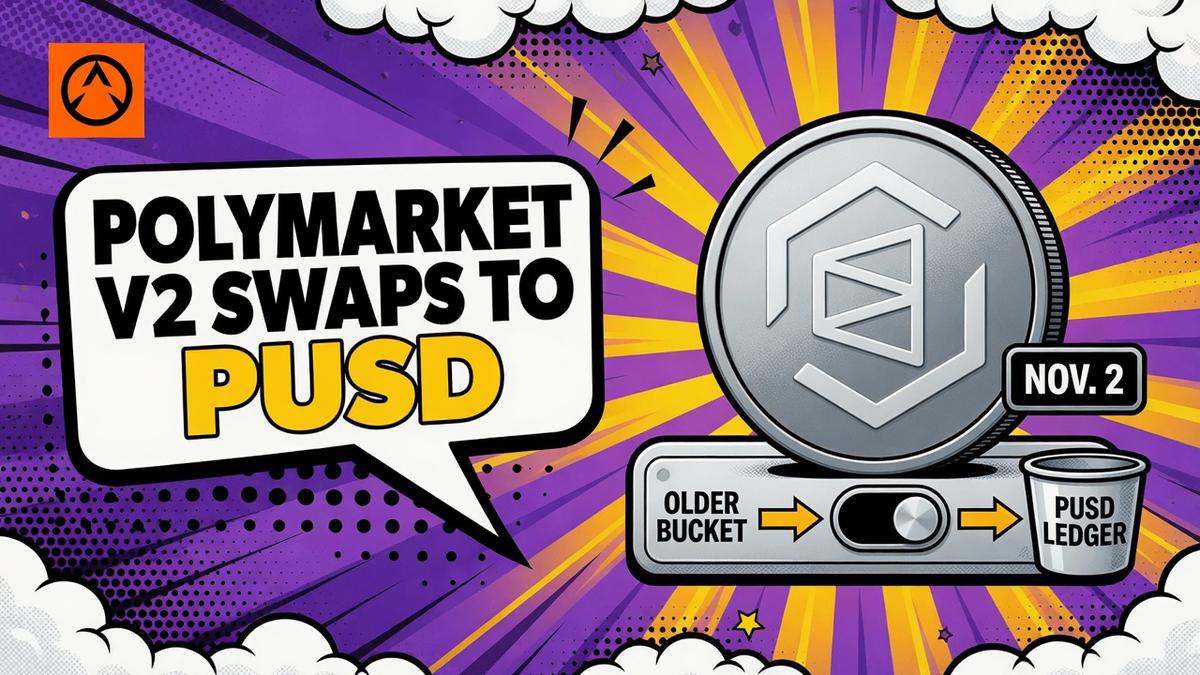
Polymarket is rewriting the code that runs its prediction markets. The upgrade is called Protocol V2. It is a complete overhaul of the smart contracts behind the platform. Rajath Alex, the Head of Protocol, shared the news on X on Oct. 5. He set a tentative Nov. 2 deadline for new markets to move over.
It sounds technical. But the change reaches into how people place bets and how the money moves.
Not one market, but a new ledger
There is a story in the announcement that deserves correction. It is not collapsing into a single market. Existing markets built on the older Gnosis CTF code are not touched. They stay where they are. V2 is a separate ledger.
If you have positions on the old system, they remain there. Balances and markets from before this change are safe in their own stack. This matters because it means liquidity does not vanish overnight. It does, however, split across two systems through the cutover window.
The business choice behind the rewrite
The platform has run on the same underlying code since 2019. It is a solid base. But every new market type added over the years required a separate adapter contract on top of that aging foundation. That is a lot of moving parts for one business to maintain.
V2 replaces the stacked adapters with a single ERC-1155 position contract called PositionManager. Each position ID now encodes the market type, the market, and the outcome in one place. It is a tidy result. You do not need to untangle layers of old code to know what a position is.
There is also one exchange contract, called ExchangeV3, plus a single router. These handle splits, merges, and redemptions across all market types. It feels like a cleaner counter, and it reduces the friction of building new markets later.
One money rail, two ledgers
The upgrade also changes the money side. pUSD becomes the sole collateral for V2. It wraps USDC and USDC.e at a 1:1 ratio. Old markets keep their own collateral rules because they do not migrate.
On the resolution side, V2 ships an OracleAggregator that makes the oracle pluggable. Chainlink and UMA are the first two sources. Chainlink provides faster finality where it already has a price feed. UMA handles optimistic resolution.
This is not just about speed. The platform recently secured a CFTC order to operate as a U.S. exchange. That milestone raised the bar for how its settlement infrastructure must perform. A simpler contract stack is easier to audit and easier to defend.
What we can and cannot know yet
The team suggests faster oracle resolution and lower integration costs may attract the market makers needed to tighten spreads on high-stakes contracts. The October Fed rate contract is already splitting 50/50, so the question is on everyone's mind.
It is worth being clear about what the announcement does not promise. There is no quantified figure for how pricing accuracy, liquidity depth, or cross-market arbitrage changes after Nov. 2. That part is a hypothesis, not a result.
The wider CFTC probe has not been resolved. And the date itself is tentative. Developers should note that Data API v1 retires on October 24. Migration to the Rust-based Data API v2 is required by then.
Dates to watch
- Canary markets run in production from Oct. 5 through Oct. 30.
- New markets cutover to V2 is penciled in for Nov. 2.
- Developers must migrate by Oct. 24.
- The announcement, documentation, and code are on the Polymarket Developers X account and GitHub.
For context on the market shape, Kalshi posts roughly $17.6 million in 24-hour volume against Polymarket's $12.3 million. That gap is real. Whether V2 narrows it depends on the market makers showing up.
The rewrite is a quiet infrastructure change. It does not shout. But it decides how the next round of markets will settle money and time.
Pallavi Malviya Gupta
Pallavi Malviya Gupta is the COO of Altcoin Buzz and founder of Funjible Games. Based in Singapore, she's been with Altcoin Buzz since its early days. Pallavi brings a builder's eye to both crypto media and gaming, she's spent years watching both spaces grow from niche communities into mainstream industries and still gets genuinely excited when something's built well.
More from PallaviNext up
$38,206 Drained From Curve Fee Contract in Signature Flaw
An attacker stole about $38,200 in Curve DAO fee revenue from the CowSwapBurner contract on 10 November 2026.
 CRVUSDC
Related
More in Crypto NewsRelated
Pump.fun Adds Polymarket Prediction Markets Alongside Memecoins and Perps
 PUMP
Injective, Stellar, Zcash Votes and Major Token Unlocks: Key Crypto Events This Week
DBS and Circle Bring 24/7 USDC Minting and Redemption to Asian Institutions
NVIDIA Posts 103% Revenue Growth as AI Crypto Projects Watch GPU Demand
 TAORENDER