The S&P 500 closed at a record 7,798.99 as cooling inflation reduced expectations for a September Fed rate hike. Here's what investors are watching next.
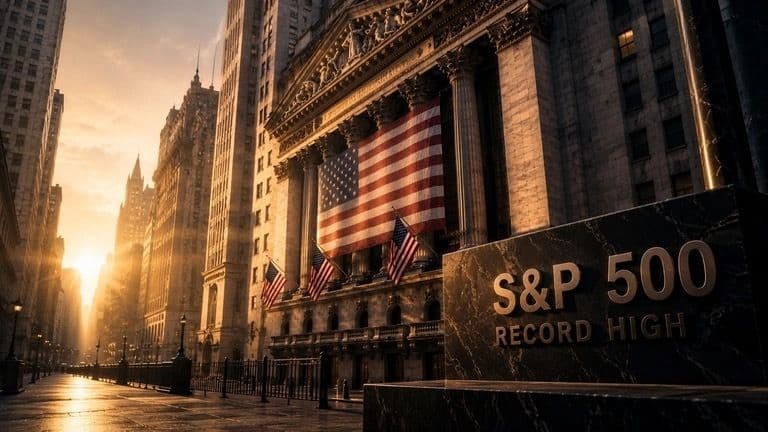
The S&P 500 closed at a record high on Thursday as fresh inflation data strengthened expectations that the Federal Reserve may avoid another rate hike in September.
The benchmark index gained 0.65% to 7,798.99, after reaching an intraday record of 7,816.70. Thursday's close marked the S&P 500's 27th record close of 2026.
The S&P 500 has already climbed strongly, and the index is now well above the levels discussed in the earlier rare market pattern analysis. The previous article examined the unusual rally pattern and the risks surrounding the market's rapid ascent.
Other major U.S. indexes also advanced. The Nasdaq Composite rose 0.81% to 26,803.03, while the Dow Jones Industrial Average gained 0.13% to 53,839.99.
The S&P 500 has now climbed more than 14% over the past six months, with cooling inflation providing another boost to the equity rally.

The latest catalyst came from the U.S. Producer Price Index (PPI).
The Bureau of Labor Statistics reported that producer prices for final demand were unchanged in July, well below economists' expectations for a 0.2% increase.
Annual producer-price growth also slowed to 4.7% from 5.5% in June.
The report followed Wednesday's Consumer Price Index (CPI) data, which showed consumer prices rising just 0.1% month over month and 3.4% from a year earlier.
Together, the two inflation reports have eased concerns that the Federal Reserve may need to keep raising interest rates.
That has been particularly positive for stocks because lower interest-rate expectations can reduce borrowing costs and make future corporate earnings more attractive.
Traders are now increasingly expecting the Federal Reserve to leave interest rates unchanged at its September meeting.
According to the CME FedWatch tool cited in the source material, markets now see a 63% probability of the Fed holding rates steady in September.
That represents a significant shift from expectations a month earlier, when another rate hike appeared more likely.
However, the outlook is far from settled.
Bank of America still expects three additional Fed rate hikes, arguing that the disinflation trend has not progressed far enough.
Another inflation report will also be released before the Fed's September decision.
That means investors still have another major data point to assess before making a firm judgment about the central bank's next move.
Thursday's gains were not limited to the technology sector.
Communication services led the market, rising 1.56%, while real estate gained 1.34%.
Both sectors can be particularly sensitive to changes in borrowing costs, making the move notable as expectations for another rate hike fade.
Semiconductor stocks also continued their strong run.
Sandisk jumped 13.7%, while Micron Technology gained 4.2%.

The moves extended a broader rally in semiconductor stocks, which have been among the market's strongest performers this year.
Not every stock benefited from the rally.
Cisco Systems fell 8.4%, despite providing an upbeat revenue outlook that failed to meet investors' elevated expectations.
The divergence highlights an important feature of the current market: strong earnings and growth expectations remain important even as macroeconomic conditions improve.
Workday was one of the day's biggest individual winners.
Shares jumped 18% after reports that private-equity firm Silver Lake is in talks to acquire the human-resources software company.
The potential transaction could value Workday at approximately $43 billion, according to the source material.
However, the discussions remain ongoing, and there is no guarantee that a deal will ultimately be completed.
Netflix also gained 5.4% after investor Bill Ackman disclosed a new position in the streaming company.
Meanwhile, Tapestry shares dropped more than 16% after the company issued a muted revenue outlook.
The mixed performance shows that company-specific developments continue to have a significant impact even as the broader market benefits from improved rate expectations.
The artificial intelligence trade remains another major force behind the stock market's gains.
Jay Hatfield, chief executive of Infrastructure Capital Advisors, described the current environment as an “earnings-driven tech boom”, arguing that the rally is being supported by corporate earnings rather than simply speculation.
That distinction matters because investors have increasingly questioned whether AI-related stocks have moved too far too quickly.
The latest S&P 500 record adds to those concerns.
JPMorgan and CFRA have recently warned about rising complacency risk in the stock market, while hedging demand has fallen toward multi-month lows.
In other words, investors appear increasingly comfortable with the rally even as some analysts warn that downside protection has become less popular.
The S&P 500's latest record shows how quickly markets can respond when inflation data reduces the probability of additional monetary tightening.
For now, the combination of cooling producer prices, softer consumer inflation and lower expectations for a September rate hike is supporting stocks.
But the rally still faces several tests.
Another inflation report is due before the Federal Reserve's September meeting, and the data will be closely watched for signs that price pressures are continuing to ease.
The earnings picture will also remain important. Strong corporate results, particularly from technology and semiconductor companies, have helped justify the market's elevated valuations.
At the same time, the decline in hedging activity means a sudden change in the macroeconomic outlook could produce a sharper reaction if investors are positioned too confidently for continued gains.
For now, the S&P 500 has momentum on its side.
The index closed at a record 7,798.99 on Thursday, but the next inflation report could determine whether this rally has room to continue or whether investors have become too optimistic about the Fed's next move.

Closing out TOKEN2049, the world’s largest digital assets conference series, AFTER 2049 takes over the 57th floor of the iconic Marina Bay Sands SkyPark Observation Deck.
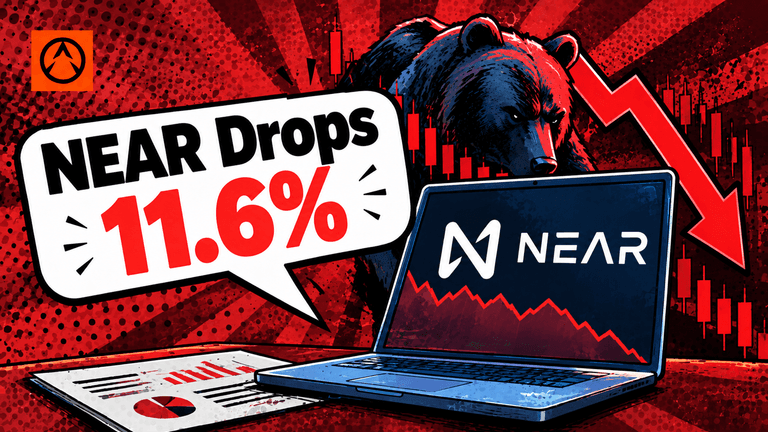
NEAR Protocol fell 11.6% despite new Ondo tokenized stocks, confidential Hyperliquid perps and a coming NEAR ETF as broader market pressure returned.
 NEAR
NEAR
Bitget's CEO says two small transfers tested the exchange's risk controls before $361M in larger withdrawals. A full incident report is pending.
 ETH
ETH TRX+2 more
