Ethena’s USDe Crashes 8% to $0.92 on Binance before Wallet Freeze
Ethena's USDe printed $0.9202 on Binance's USDE/USDT pair on Sept 22, 2026, then snapped back to near $1 an hour before Binance's wallet maintenance began.

By Saloni RathiSenior Editor
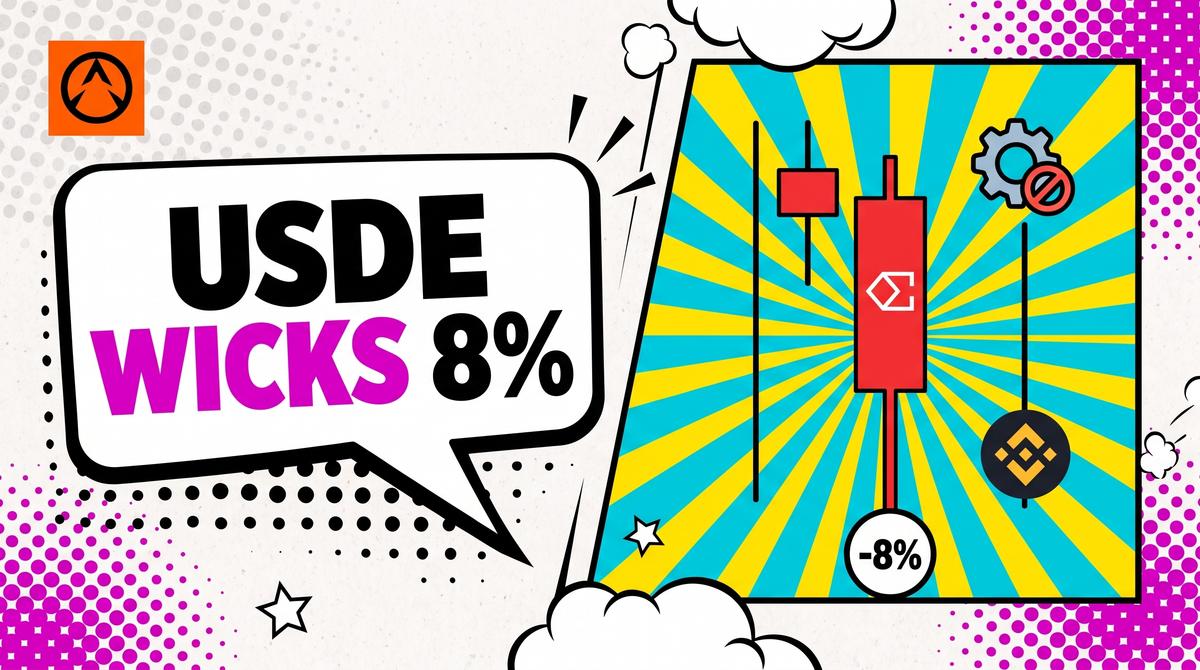
USDe, Ethena's synthetic dollar, printed $0.9202 on Binance's USDE/USDT spot pair at around 1 p.m. Beijing time on September 22, 2026, then snapped back to about $0.9996 within minutes. Global aggregators kept showing USDe near $0.999 the whole time, which is why most holders outside Binance's order book never saw the move.
The 8% gap landed roughly an hour before Binance's scheduled wallet maintenance began. Wu Blockchain, which flagged the wick in English, timestamped the low at 13:04 Beijing (05:04 UTC). Chinese accounts had spotted the move seconds earlier. Wu was clear: there is no confirmed link between the price wick and the maintenance window.
Why USDe Dropped on Binance
Binance announced the infrastructure upgrade on X on September 16, six days before the wick. The exchange told users funds were safe and that spot and futures trading would not be affected. The maintenance window ran from 06:00 to 09:00 UTC. Only deposits and withdrawals were frozen; spot and futures trading stayed open through the event.
The wick fits a familiar pattern. When a known transfer halt is approaching, market makers pull depth to avoid being stuck with inventory they cannot move. A thinner book absorbs fewer tokens per dollar, so a single large order can move price further than usual. The wick landed about an hour before the freeze, not because of it, but the conditions were there.
USDe is not a cash-backed stablecoin. It is built on delta-hedged positions across derivative venues, which means its price is held in line by arbitrage and hedging, not by reserves sitting in a bank. When the venue around it gets thin, the order book can move a long way before arbitrage catches up.
The Real Risk Is the Venue
The last comparable moment came on October 10, 2025. During the Black Friday crash, USDe fell to roughly $0.65 on Binance spot while on-chain pools barely moved, and Binance paid compensation afterwards. The September 22 wick was smaller and shorter, but it landed in the same shape: a venue-level dislocation on Binance while the wider market held near peg.
If you hold USDe on Binance, the practical question is what happens during the next scheduled maintenance window. None of the sources reviewed showed an official response from Ethena, BlackRock, FalconX or Binance to the wick, so the exchange's standing approach to compensation after similar events is what you are working with. On the institutional side, USDe sits on a $4.9 billion float. BlackRock's Aladdin integration and a $1 billion FalconX facility for USDe backing assets both went live in 2026, and the Ethena Pay neobank rollout brought USDe to retail balances across 48 countries. That is a lot of surface area for an order-book event to touch.
For anyone comparing USDe to other institutional dollar options, the contrast is sharp. Circle's bitcoin-backed USDC loans and a planned USD stablecoin from Goldman Sachs, Citi and Bank of America give institutions alternatives with a very different risk profile, anchored to cash and Treasuries rather than derivatives positioning. An 8% wick that lasts minutes does not change the design, but it does sharpen the question of how much venue risk you are taking on alongside the protocol risk.

Saloni Rathi
Saloni Rathi has been part of Altcoin Buzz for over five years, working across content and marketing within the crypto and Web3 space. Her work focuses on creating clear, engaging and accessible content that helps readers understand complex cryptocurrency and blockchain topics. With a strong interest in storytelling and audience engagement, Saloni brings together research, creativity and marketing insight to turn complex ideas into simple and relatable stories. She believes great content starts with curiosity, creates clarity, and ultimately builds meaningful connections with readers.
More from SaloniNext up

Moonwell cbBTC Supplier Asks for Repayment Plan as Cash Runs Dry
A Moonwell supplier wants a repayment plan for the Base cbBTC market, where 93.5% of debt is insolvent and utilization has hit 100% since the MAMO exploit.
 BTC
Related
More in Crypto NewsRelated
BitMart Founder Flags 'Severely Understaffed' Security After New Hack
BTC ETH
Tether Says It Holds 150,000 BTC, 50,000 More Than Its Q3 Report
BTC
Schroders Brings Emerging Market Bond Fund to Solana via Centrifuge
 SOL