USDT Plans Return to Bitcoin, but Payments Case Is Unproven
USDT is planned for an October 2026 return to Bitcoin, but private transfers, support and supply growth will determine whether it gains payments use.

By Anmol BillaSenior Analyst
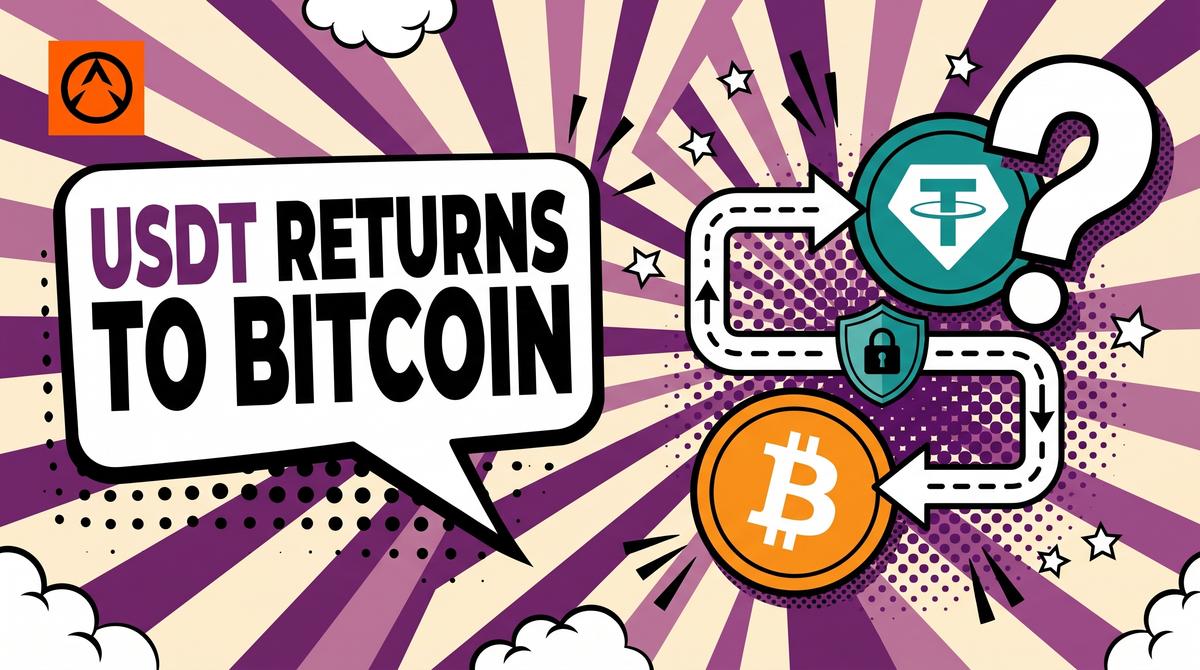
Tether is planning to issue USDT on Bitcoin again in October 2026, nearly three years after it stopped issuing the token on its original Omni Layer. The return is being built through Utexo, a licensed infrastructure project, but the launch does not yet show that Bitcoin has regained a meaningful role in stablecoin payments.
For a holder, the first question is practical: will the new Bitcoin version be available and useful? The announced features include private USDT transfers, direct swaps between BTC and USDT, and loans backed by native Bitcoin. Support for Bitcoin's Lightning Network is planned for later, while no exchanges or payment companies have been publicly confirmed as launch partners.
What Utexo Is Changing
Tether's transparency notice says it is no longer issuing or obligated to redeem tokens on the Omni Layer, alongside Kusama, Bitcoin Cash SLP, EOS and Algorand. The company halted Omni issuance in August 2023, according to the report on the planned relaunch.
Utexo was founded in 2025 and holds a commercial license from Tether to issue USDT on Bitcoin. The project raised $7.5 million in early 2026, according to the same report. The October launch date, funding details and licence claim were not confirmed through a Utexo announcement or press release in the research reviewed for this article.
The system is designed to use RGB client-side validation. Instead of broadcasting every transaction detail to Bitcoin's public ledger, the parties involved check the data themselves. Most of the transfer information would therefore stay off the public blockchain.
That design gives users a different set of trade-offs from a fully public token transfer. It can make the system more private, but it also limits what observers can inspect. It may also mean less fee revenue for Bitcoin miners, because most USDT transaction data would not enter the main chain.
Private Transfers Do Not Yet Prove Payments Demand
The launch is planned for Bitcoin mainnet first, with Lightning support expected later. Utexo's announced products are:
- Private USDT transfers.
- Direct BTC-USDT swaps without intermediaries.
- Loans using native Bitcoin as collateral.
More than 450 businesses, including exchanges and wallet providers, have expressed interest in Utexo, according to CoinGape. No partnerships have been confirmed. Morgan Stanley was also mentioned as a possible institutional participant, but the report did not confirm a deal or even a formal partnership.
Tether has not disclosed any exchanges or payment companies that plan to support the Bitcoin version. Without those integrations, the project would begin as a new issuance channel rather than a proven payments network. Users would still need wallets, trading venues or payment services willing to hold and move the token.
There is also no confirmed chain-level supply data showing how much USDT would move to Bitcoin after launch. The exact split between Bitcoin, Tron, Ethereum and other networks is not established in the material reviewed. Existing reports say Tron and Ethereum still hold most USDT, but the current figures could not be verified from Tether's chain-level transparency data.
The Test Runs Beyond Launch Day
A launch announcement is not evidence of renewed payment activity. The stronger test is whether Bitcoin-based USDT supply grows over time, supported by Lightning and exchange distribution.
The research for this article identifies March 2027 as a useful checkpoint. Steady supply growth through that point, with Lightning support and confirmed exchange backing, would show that Bitcoin-based USDT is moving beyond a pilot. If supply remains small or integrations do not appear, the project would mainly mark a change in where USDT can be issued.
Bitcoin's payments case also has a public-use problem. A University of Central America survey cited by 24/7 Wall St. found that 92% of Salvadorans did not use Bitcoin in 2024. Separately, El Salvador's government announced the Sivar stablecoin platform on Coinbase's Base network rather than Bitcoin, according to the same report. Those claims were not checked against the underlying survey or government statement.
For now, the evidence supports a planned return, not a revival. Utexo could give holders private transfers, swaps and BTC-backed loans on Bitcoin. Whether it brings USDT payment activity back to the network will depend on confirmed support, measurable supply growth and actual use after launch.

Anmol Billa
Anmol Billa is a Senior Analyst at Altcoin Buzz, with over five years of experience working across cryptocurrency markets and the broader digital asset industry. His work focuses on technical analysis, market research, investment insights, and evaluating emerging opportunities within the crypto ecosystem. At Altcoin Buzz, Anmol contributes to technical market analysis, research-driven insights, pitch decks, and funding-related initiatives. His experience combines analytical thinking with a practical understanding of crypto markets, helping translate market trends and emerging projects into clear, actionable insights for readers and industry stakeholders.
More from AnmolNext up

Bitcoin Falls Below $67K as Crypto Sell-Off Deepens, Analysts Warns of $50K
Bitcoin falls below $67,000 as Ethereum, XRP, and Solana lose key price levels. ETF outflows, inflation concerns, and extreme fear weigh on the market, while Peter Schiff warns of a possible deeper decline.
 BTC
Related
More in Crypto NewsRelated
Bitcoin Breaks Below 200-Week Average as ETF Outflows and Liquidations Grow
BTC
JPMorgan's Crypto-Linked Holdings Near $1B as Strategy Stake Jumps 36%
BTCCOIN
Bitcoin ETFs Lose $2.35B as BlackRock's IBIT Extends Losing Streak
BTC
Anthropic IPO Dates Set as Bitcoin's Slide Tops 20%
BTC ETH