Bank of Montreal disclosed positions in two XRP ETFs worth nearly $3,000, adding to the growing institutional exposure to regulated XRP investment products.
 XRP$1.51+1.51%
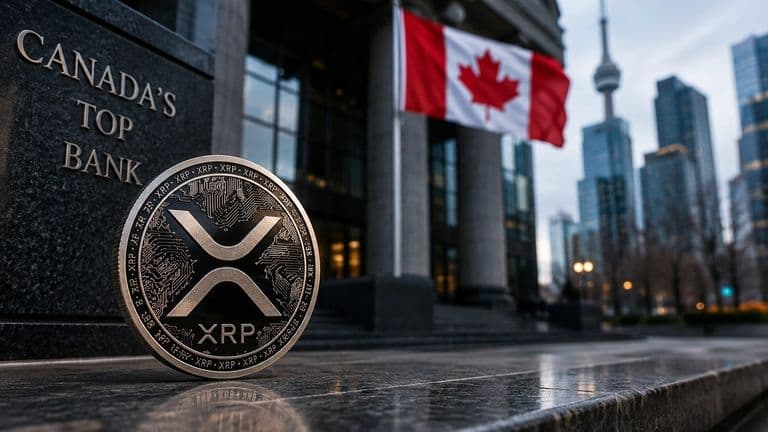
XRP is attracting fresh attention from institutional investors after Bank of Montreal (BMO), one of Canada’s largest financial institutions, disclosed positions in two XRP-linked exchange-traded funds (ETFs).
The bank reported combined exposure of approximately $2,970 across the two products in its latest quarterly filing with the U.S. Securities and Exchange Commission (SEC). While the amount is extremely small compared with BMO’s broader securities portfolio, the disclosure adds another major financial institution to the growing list of firms with exposure to regulated XRP investment products.
XRP was trading at around $1.02 at press time, down approximately 0.54% over the previous 24 hours.
BMO's second-quarter Form 13F filing, submitted on August 12, showed that the financial group held positions in two XRP-related ETFs as of June 30.
The reported positions were:
Together, the positions were valued at roughly $2,970.
That figure is tiny compared with the approximately $303.6 billion in securities reported by BMO.
As a result, the filing should not be interpreted as evidence of a significant XRP investment by the bank. Instead, its importance lies in the fact that XRP-linked investment products have appeared in the reported holdings of a major traditional financial institution.
Related: Bank of Montreal discloses XRP ETF holdings in $303B portfolio
The two ETFs give investors different types of exposure to XRP.
The REX-Osprey XRP ETF (XRPR) is designed to provide exposure to XRP's price movements through a regulated investment vehicle. The product began trading in the United States in September 2025.
This structure allows investors to gain exposure to XRP without having to directly purchase and hold the cryptocurrency.
The ProShares Ultra XRP ETF (UXRP) takes a more aggressive approach.
The leveraged ETF seeks to deliver approximately twice the daily performance of XRP through derivatives. Because it uses leverage, its returns can differ substantially from simply holding XRP, particularly when the investment is held over longer periods.
The presence of both products therefore shows exposure to two different XRP strategies rather than a single straightforward spot investment.
There is another important detail investors need to consider when interpreting the filing.
The positions are associated with Stalker Ostler Wealth Advisors, a BMO subsidiary and SEC-registered investment adviser. The firm appears in the filing under an additional manager designation.
Therefore, the reported holdings were disclosed on a consolidated basis and do not necessarily mean that BMO's central investment operation purchased the XRP ETFs directly for its own balance sheet.
This distinction matters because a 13F filing can include securities managed through investment advisory operations rather than representing a direct strategic investment by the parent company.
Still, the disclosure demonstrates that XRP-linked products have entered the reported investment exposure of a major Canadian financial group.
The BMO filing comes as regulated XRP investment products receive increasing attention from institutional investors.
ETFs provide traditional investors with a familiar investment structure while allowing them to gain exposure to cryptocurrency price movements without directly managing crypto wallets or holding the underlying asset themselves.
The BMO disclosure alone is unlikely to have a meaningful impact on XRP's price because of the relatively small size of the positions.
However, repeated disclosures from financial institutions could strengthen the broader narrative around institutional adoption.
If larger institutions continue reporting exposure to XRP ETFs, the trend could become more significant for the cryptocurrency's long-term market structure.
There is also a timing limitation to consider.
The latest Form 13F only covers positions held as of June 30. It therefore does not include any transactions BMO or its subsidiaries may have made during July or August.
The next quarterly filing could provide a better indication of whether the institution maintained its positions, increased its exposure or exited the ETFs.
For XRP investors, that future disclosure could be more meaningful than the current filing if the reported holdings change substantially.
The immediate price impact from BMO's holdings is likely to be limited.
A roughly $2,970 position is too small relative to XRP's overall market to create meaningful buying pressure on its own.
However, the development could become more relevant if it forms part of a wider trend.
If additional banks, asset managers and other traditional financial institutions continue disclosing holdings in XRP-linked ETFs, it could indicate that regulated XRP investment products are becoming increasingly accepted within conventional portfolios.
That could eventually contribute to stronger institutional demand for XRP exposure.
For now, however, the BMO filing is better viewed as a signal of growing institutional access rather than a major capital commitment.
XRP was trading near $1.02 at the time of writing, with the token down 0.54% over the previous 24 hours.
XRP's $1 support and short-term recovery outlook remain important for traders as the token attempts to stabilize.
The price remains close to the psychologically important $1 level, while the latest BMO disclosure provides a positive institutional development without changing XRP's immediate market structure.
For a sustained upside move, XRP would likely need broader buying pressure rather than relying on the relatively small BMO position.
The more important development to watch will be whether additional institutions disclose XRP ETF exposure and whether existing holders increase their positions in future filings.
If that trend continues, XRP could strengthen its position among crypto assets gaining acceptance through traditional investment products.

Blockchain.com is reportedly targeting a $500 million U.S. IPO at a valuation of $4 billion to $6 billion, well below its $14 billion peak in 2022.

Closing out TOKEN2049, the world’s largest digital assets conference series, AFTER 2049 takes over the 57th floor of the iconic Marina Bay Sands SkyPark Observation Deck.
NEAR Protocol fell 11.6% despite new Ondo tokenized stocks, confidential Hyperliquid perps and a coming NEAR ETF as broader market pressure returned.
 NEAR
NEAR
