Aave’s new stock-token market keeps lending open while stock feeds freeze. Here’s why USDC suppliers may carry the gap when feeds reopen.
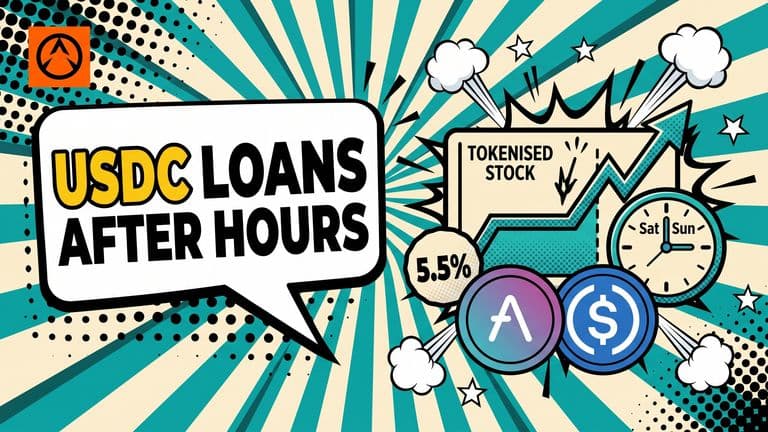
Aave’s new stock-token market on Base looks familiar from the outside. Borrowers put in tokenised shares, receive USDC and keep the position open. There is, however, a less familiar detail: while the stock price feed is frozen for the weekend, the loan does not wait with it.
That leaves USDC suppliers exposed to what the shares may be worth when the feed updates again. The market is designed for this risk, but CryptoSlate’s report on the Equities Hub says it is a possibility, not a documented loss.
Aave began accepting seven Coinbase stock tokens as collateral for USDC loans on Sept. 25. The accepted tokens are AAPLc, AMZNc, GOOGLc, METAc, MSFTc, NVDAc and TSLAc. They serve only as collateral. Borrowers can draw USDC, not the stock tokens themselves.
The catch sits in the Chainlink equity-linked feeds. They run from Sunday at 8 p.m. to Friday at 8 p.m. Eastern time. Between those hours, and during US market holidays, they keep their last published value instead of recording a fresh price.
Aave’s market remains open. Deposits, borrowing and liquidations continue, and interest can still accumulate. The stock tokens can also be traded while their oracle price is unchanged.
Here is the simple problem: a borrower can continue operating against an older price even as the real market moves. Aave may not see a price-driven deterioration in the position until the feed resumes Sunday evening. Interest alone can also push a position across its liquidation threshold while the feed is frozen.
When the feed updates, a position that looks healthy could become liquidatable in a single step. A liquidator may then have to repay the USDC debt and dispose of the seized stock tokens. If the underlying shares have fallen, the recovered value may be lower than the protocol expected.
That is where the USDC suppliers carry the risk. If the seized tokens cannot be sold, redeemed or hedged at the price and speed assumed by the risk model, the Equities Hub could be left with bad debt. Its opt-in USDC suppliers would be the creditors exposed to that shortfall.
A separate 5.5% maximum liquidation bonus is meant to compensate liquidators for selling, redeeming or hedging the collateral after repaying the USDC debt. It is compensation, not a guarantee that the collateral can be recovered without loss.
The market is also smaller than the headline numbers may first suggest. Its Mag-7 spoke has a $21 million borrowing cap and a $32 million cap on USDC additions. Those are limits, not balances. The available report does not show how much USDC suppliers have actually deposited, how much has been borrowed, or how many loans are active.
That missing on-chain snapshot matters. A small pool faces a different practical question from a large one: whether liquidators can handle the collateral attached to a loan without moving the market against themselves.
LlamaRisk recommended the market’s initial parameters. The seven stock tokens carry collateral factors from 65% to 79%. In Aave V4, each factor determines both the borrowing limit and the liquidation threshold for that token.
The risk model tests historical off-hours stock moves, allows a 0.5% gap between the published oracle value and the market, and charges debt at the top of the USDC borrow-rate curve, 24% annually, across the longest closure it considers. It also assumes liquidation is complete within five minutes of the next regular stock-market open.
Those assumptions give borrowers less room before liquidation and leave liquidators time to act. They do not remove the risk. LlamaRisk says its history cannot describe a decline rarer than anything in the data, so the parameters set a tolerance for expected moves rather than a promise that every move can be handled.
The same caution applies to selling the collateral. A Sept. 17 snapshot from LlamaRisk, taken before the market opened, showed about $270,000 to $1.08 million in Base sale depth for each token at a 2% price impact. That was a dated estimate, not a confirmed sale amount on Sept. 27. Larger liquidations may need to be split or sent to a party with redemption access.
The collateral tokens are B20 tokens, and redemption is not automatic for every secondary-market buyer. According to the risk assessment cited by CryptoSlate, a buyer initially holds an unvested position and must complete an issuer-controlled process before redeeming.
A liquidator without redemption status may sell on Base, look for an eligible redemption counterparty or hedge while waiting. Perpetual futures are included as a possible route in the assessment, but the report does not establish that enough futures capacity will always be available.
This makes the question larger than whether a token has fallen. Can the liquidator turn that token into value at the moment it is needed, and who is eligible to do it?
Aave has not extended this equity-backed exposure across its other markets. USDC suppliers must opt into the Equities Hub, according to LlamaRisk. That is a meaningful boundary. It is also different from Aave’s Arc market, which held $76 million in USDC and less than $100,000 in borrowing when reported.
The stock-token hub remains a careful bet that its collateral factors, liquidation bonus and sale assumptions can absorb an ordinary reopening gap. The documents describe a potential shortfall, not a realised bad debt, liquidation or weekend loss.
So the neat little shortcut at the centre of the product is also the risk. It lets stock-style collateral keep working through the weekend. It also asks USDC suppliers to accept that the market may learn what those shares are worth only on Sunday evening.
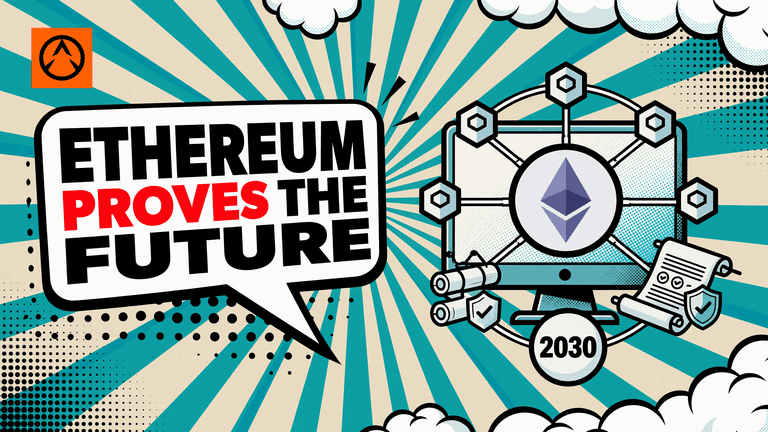
Ethereum’s post-Hegota roadmap would shift more work into proofs, shorter slots and fewer onchain signatures, but major engineering gaps remain.
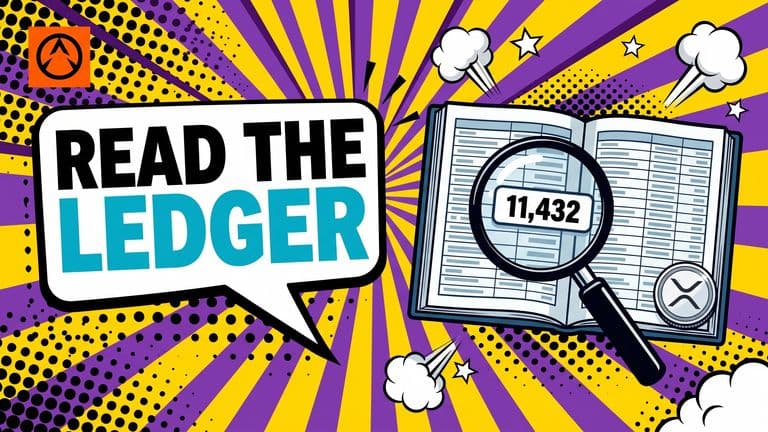
XRP Ledger logged 11,432 new accounts on September 24, more than triple its 30-day average. Here is what the chart does and does not say.
 XRP
XRP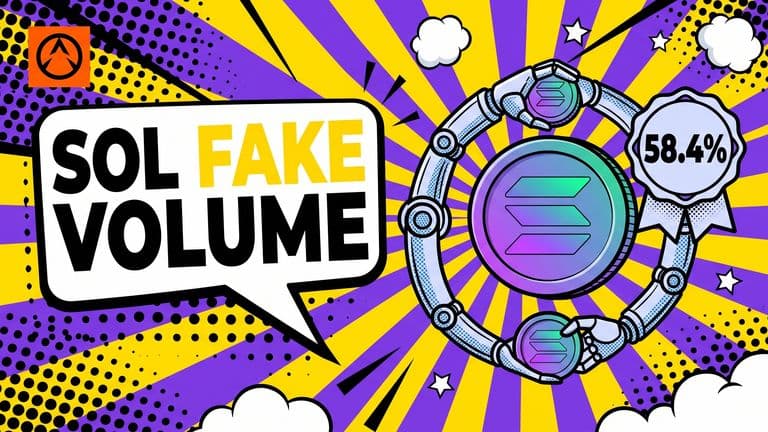
Bitquery classified 58.4% of its $201.4B Solana DEX sample as circular or botlike trading over 30 days.
 SOL
SOL

