BTCX is a new Solana token that sends 3% of every trade into a reward pool and pays eligible holders in xBTC, a leveraged Bitcoin-linked asset.
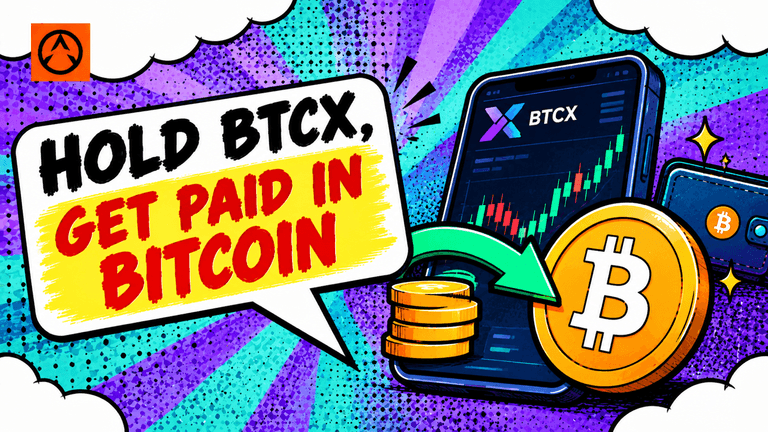
The idea is simple: every BTCX trade sends 3% of the transaction into a reward pool. That pool is then distributed to eligible holders in xBTC, a leveraged Bitcoin-linked asset built by Hylo.
BTCX launched on Solana in September 2026. It says the reward mechanism is built directly into the token and cannot be switched off by its creators.
The project combines two different ideas: trading-fee sharing and leveraged Bitcoin exposure.
BTCX charges a 3% fee on every buy, sell or send.
For a $100 transaction, $97 goes through the trade while $3 is added to the reward pool.
The pool is then converted into xBTC and distributed among wallets holding at least $20 worth of BTCX.
The payout is proportional to each wallet's share of the eligible BTCX supply. In simple terms, larger holdings receive a larger share of the pool.
There is no staking process or manual claim. BTCX says the xBTC rewards are sent directly to eligible wallets.
The model also means trading activity is central to the rewards.
If BTCX trading volume falls, the amount available for distribution falls as well.
The unusual part of the model is what holders receive.
Instead of paying rewards directly in Bitcoin, BTCX distributes xBTC, a leveraged Bitcoin-linked asset created by Hylo on Solana.
BTCX currently describes xBTC as moving about 2.6 times as much as Bitcoin in either direction.
For example, a 10% Bitcoin gain would translate to roughly a 26% xBTC gain under the project's simplified example. A 10% Bitcoin decline could also mean roughly a 26% loss for xBTC.
The project stresses that this is only approximate and that the leverage can change.
Unlike a conventional leveraged futures position, xBTC does not use traditional margin calls or forced liquidations, according to BTCX's description.
Hylo has previously described its xAsset system as a way to provide leveraged exposure through wallet-native tokens on Solana. Its products include xSOL and xBTC.
That makes BTCX different from a normal dividend token. The reward itself carries amplified Bitcoin exposure.
Its estimated daily payout is based on trading volume, the portion of the fee allocated to rewards and a holder's share of the supply.
The site currently describes the calculation using roughly 2.925% of trading volume, with the remaining portion of the 3% fee covering the project's stated mechanics.
That creates an important distinction between the advertised yield and a traditional fixed return.
BTCX cannot promise a fixed annual income because the reward pool depends on how much the token trades.
More trading can mean more rewards. Lower activity can mean less.
The project's own calculator also warns that its estimates assume trading volume and prices remain constant, which will not happen in real markets.
The project adds another incentive for long-term holders through an XP system.
BTCX says holders earn XP automatically based on the amount of BTCX they hold. The website currently states that 100,000 BTCX earns one XP per second.
The XP system can also increase the holder's earning rate over time, with the project's website saying the multiplier can grow to as much as 5x over a year.
BTCX says accumulated XP can qualify users for SOLX airdrops.
This gives the token another reason to hold rather than constantly trade, although the value of future airdrops is not guaranteed.
Users can acquire BTCX through Solana-based trading venues.
The project's website currently directs users to Jupiter and StonkFun. It lists the token's Solana contract as:
6iLrk475gh1yUv1tQKSC5nUugAHgxeTUf2GTo1Xvsz5m
BTCX says users need a Solana wallet, SOL for transaction fees and then a swap into BTCX. Once they hold enough BTCX to qualify, xBTC rewards are sent automatically.
The project's website also says the token launched on September 9, 2026.
Because BTCX is a new Solana token, liquidity and trading activity can change quickly. Third-party market data has also shown relatively small liquidity and periods of low trading activity for BTCX markets, underscoring the difference between a projected reward rate and actual realized returns.
Jeff Kirdeikis highlighted BTCX on September 8, describing the combination of leveraged Bitcoin exposure and holder rewards.
"This means you have leveraged Bitcoin exposure and you get paid to hold. This is the Bitcoin product that can onboard the masses. High ROI and daily income."
- Jeff Kirdeikis, @JeffKirdeikis, September 8, 2026.
The quote reflects the core pitch behind BTCX: users do not simply hold a token linked to Bitcoin. They receive leveraged Bitcoin exposure through xBTC while also receiving rewards generated by BTCX trading activity.
The same mechanics that make BTCX attractive also create significant risks.
First, the 3% trading fee is high compared with many conventional crypto trading products. A trader must therefore overcome that cost through price movement or other benefits.
Second, the rewards depend on continued trading activity.
If BTCX volume drops sharply, the reward pool can shrink. The project explicitly says that if nobody trades, nobody gets paid.
Third, holders receive xBTC rather than ordinary Bitcoin.
Because xBTC is leveraged, its value can fall much faster than Bitcoin during a market decline. BTCX itself warns that xBTC can fall faster than Bitcoin.
There is also token risk. BTCX describes itself as a speculative asset that can go to zero.
That makes the advertised APY or daily income figures different from a guaranteed yield product.
BTCX is effectively combining two popular crypto ideas into one token.
The first is fee sharing, where trading activity generates rewards for holders.
The second is leveraged Bitcoin exposure, where a token attempts to amplify Bitcoin's price movements without requiring users to manage a traditional leveraged position.
The combination could attract traders who want both Bitcoin exposure and an income-like reward stream.
But the model also means users are exposed to several variables at once: BTCX's own price, its trading volume, xBTC's performance and the broader Solana market.
For now, BTCX remains a small and speculative experiment rather than an established Bitcoin income product.
Its long-term success will depend on whether it can maintain meaningful trading volume and liquidity while keeping the reward mechanism functioning as designed.
BTCX's pitch is straightforward: trade the token, fund the reward pool, and hold BTCX to receive leveraged Bitcoin exposure in xBTC.
Quant's QNT token surged after The Clearing House selected its technology for a U.S. tokenized deposit network connecting blockchain-based money with RTP and CHIPS.
Robinhood plans to launch crypto perpetual futures for U.S. users, 24/7 weekend stock trading and AI-powered trading agents.

Blockchain.com is reportedly targeting a $500 million U.S. IPO at a valuation of $4 billion to $6 billion, well below its $14 billion peak in 2022.

