AltcoinBuzzAltcoinBuzz
Subscribe
  • Crypto News
  • Crypto Research
  • Technical Analysis
AltcoinBuzzAltcoinBuzz

An independent digital media outlet delivering crypto research, news, and technical analysis to a community of 600,000+ users.

Follow us on:

Discover

  • Crypto Research
  • Crypto News
  • Technical Analysis
  • Key Opinions
  • Upcoming Launches

Categories

  • Bitcoin BTC
  • RWA
  • Technology
  • Altcoins
  • Regulation

Company

  • Affiliates
  • Partners & Sponsors
  • Careers
  • Contact
  • Terms of Use
  • Subscription Terms
  • About the ALTCOIN BUZZ
  • Privacy Policy
  • Contact ALTCOIN BUZZ
  • Advertise with us

Copyright 2026 ALTCOIN BUZZ. All rights reserved.Something is buzzzzzzzing.
HomeCrypto NewsCircle opens Bitcoin-backed USDC borrowing to institutions via Morpho
Crypto NewsStablecoinsDeFi

Circle opens Bitcoin-backed USDC borrowing to institutions via Morpho

Circle's Digital Asset-Backed Borrowing lets institutions post cirBTC on Morpho to borrow USDC, with rates set by the lending market.
AAnmol Billa•Sep 21, 2026
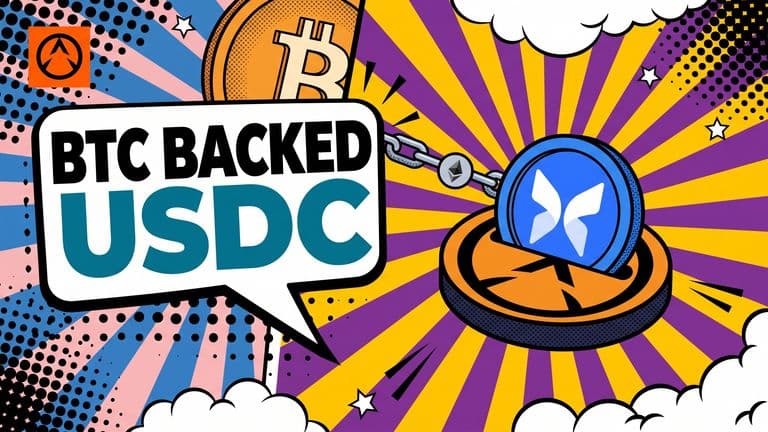
Pop-art comic illustration of a Bitcoin coin on the left connecting through a Morpho lending pad to a USDC coin on the right, with a headline reading BTC BACKED USDC.
MentionedBTC$86,505.00+6.52%USDCMORPHO$2.68-1.82%

Circle has opened a Bitcoin-backed USDC borrowing service to institutional clients through a new product called Digital Asset-Backed Borrowing, letting holders tap liquidity against their BTC without selling it. The new offering restricts access to eligible Circle Mint customers and excludes New York clients from the launch.

A client deposits BTC, mints Circle's wrapped Bitcoin token cirBTC, and posts that token as collateral on a supported third-party lending market on Arc or Ethereum, with Morpho the first protocol supported and Aave and others planned. The borrowed USDC lands directly in the customer's Circle Mint balance, the same account they would use to mint USDC directly.

The mechanics matter for the holder because Circle does not set the borrowing rate, the collateral requirement, or the liquidation threshold. Those belong to the underlying lending market, and positions are overcollateralized, with collateral moving through a customer-controlled wallet to the third-party DeFi protocol.

What this actually changes

For an institution sitting on BTC, the pitch is that they can now borrow USDC while keeping their Bitcoin exposure intact, because they do not sell into the spot market or unwind a position to raise cash. They mint a Circle-controlled wrapper, post it as collateral on a market Circle selected, and receive USDC that sits in their Circle Mint account.

The trade-off is counterparty, because the lending market, not Circle, sets the cost of capital and the liquidation line, so if Morpho's parameters are tighter than the institutional borrower wants, there is no Circle fallback rate. Circle has positioned itself as the issuer of the wrapper and the destination for the borrowed USDC, with the credit risk sitting on a third-party protocol.

Circle's push beyond pure issuance

The launch lines up with two pieces of infrastructure Circle is building. cirBTC went live on Arc, Circle's layer-1 blockchain, on the same day as the borrowing announcement, and Arc uses USDC as its native gas token and supports tokenized assets including BlackRock's BUIDL and Circle's USYC, with both launches following the Arc mainnet rollout days earlier.

cirBTC itself launched on Ethereum in June, backed 1:1 by Bitcoin held in custody by Circle National Trust, and the Arc deployment this week extends that wrapper onto Circle's own chain, where USDC is the native asset and the lending market is one Circle has picked.

That sequence is the signal, because Circle has spent the past year selling USDC as the dollar leg of crypto trading, and now it is building the rails on which USDC gets lent, borrowed, and collateralized on a blockchain where USDC is the native asset. The borrowing product wraps around cirBTC on Arc, meaning the collateral, the loan, and the gas all live inside Circle-controlled infrastructure.

It is not the first institutional borrowing product to use crypto collateral, because in February, Anchorage Digital partnered with Kamino to let institutions borrow against staked SOL held at Anchorage Digital Bank. In March, BitGo expanded its institutional lending with a portfolio-based financing platform that uses multiple assets as collateral rather than posting per loan.

What is still missing

Circle has not published loan-to-value ratios, liquidation thresholds, or interest rate ranges, even though those are set per market, and the product page does not give even indicative ranges. It also does not say whether cirBTC is natively deployed on Arc or only wrapped there for collateral use, and New York clients are excluded without Circle saying why.

The information discussed by Altcoin Buzz is not financial advice. This is for educational, entertainment, and informational purposes only. Any information or strategies are thoughts and opinions relevant to the accepted levels of risk tolerance of the writer/reviewers and their risk tolerance may be different than yours. We are not responsible for any losses that you may incur as a result of any investments directly or indirectly related to the information provided. Bitcoin and other cryptocurrencies are high-risk investments so please do your due diligence.

Copyright Altcoin Buzz Pte Ltd.

Related

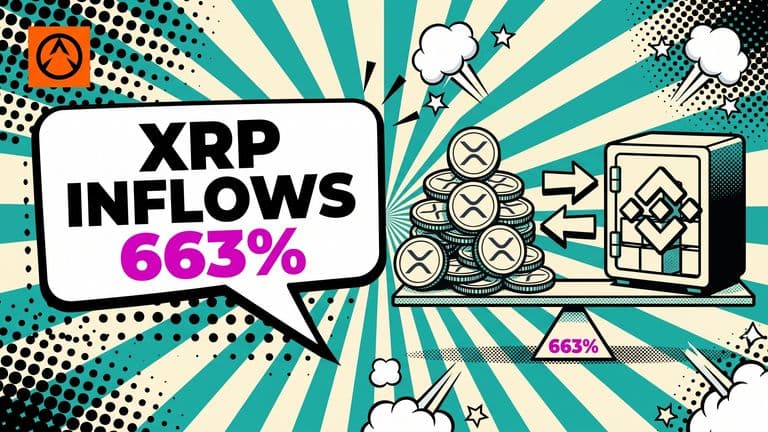
Pop-art comic illustration of XRP coins flowing into a Binance token vault through two counter-balanced arrows, with the vault resting on a flat scale to show that reserves barely moved despite the surge.
Altcoins
Sep 21, 2026

XRP Inflows Surge on Binance, but Selling Pressure Stays Low

XRP deposits to Binance hit 21.7M tokens daily, 663% above the quarterly baseline. Yet reserves rose just 0.22%, suggesting rotation rather than selling.

XRP
Anmol Billa
Pop-art comic cover showing a fishing hook lowering a glowing job-offer envelope onto a laptop, warning of fake recruiter scams that stole millions.
Technology
Sep 21, 2026

North Korean fake recruiters stole $10.7M from job seekers

North Korea's WaterPlum stole at least $10.7M posing as crypto recruiters, infecting 30,000+ devices in 100+ countries, a four-country advisory said.
Bikash Deka
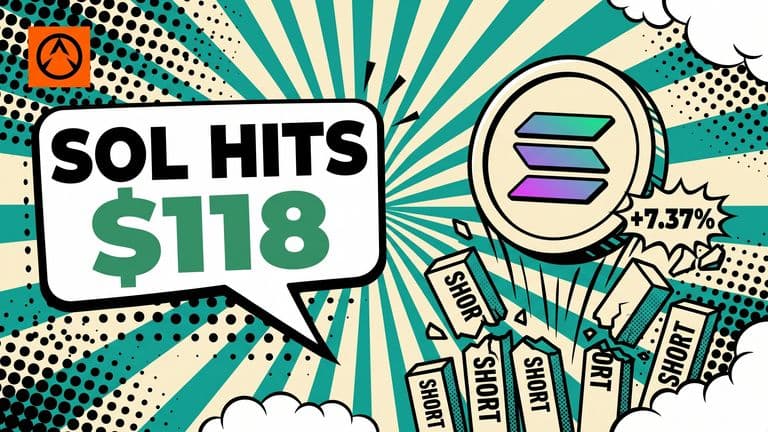
A pop-art comic illustration of a large Solana coin shooting upward as short-position bars crack and fall away beneath it, with a headline reading SOL HITS $118.
Altcoins
Sep 21, 2026

Solana pushes to $118 amid $18 million in short liquidations

Solana's SOL token reached $117.23 on Sept. 21, its highest level since January, as Bitcoin pushed above $86,000 and roughly $900M in leveraged crypto shorts

SOL
Shitij Gupta