Ethereum and Dogecoin gained as July US inflation fell to 3.4%, while Bitcoin slipped and Uniswap dropped 10% amid heavy selling pressure.

 ETH$2,685.64-0.24%
 DOGE$0.09729-0.27%
 UNI$9.58+0.02%
The crypto market is showing a mixed reaction on August 12 after the latest US inflation report came in line with expectations.
US Consumer Price Index (CPI) inflation fell to 3.4% in July from 3.5% in June, while core CPI rose 2.5% year over year. The July figures matched market expectations.
The softer inflation reading has eased some concerns about another Federal Reserve rate hike. However, Bitcoin remains under pressure near $64,000, showing that traders are still cautious.
Ethereum (ETH) and Dogecoin (DOGE) are among the stronger major cryptocurrencies, while Uniswap (UNI) has been one of the day's biggest losers, falling around 10%.
The July CPI report was released at 8:30 a.m. ET on August 12, as scheduled by the US Bureau of Labor Statistics.
Headline inflation increased 0.1% month over month and 3.4% year over year, while core CPI rose 0.2% month over month and 2.5% year over year. Both headline and core readings were in line with expectations.
The result is important for crypto because inflation plays a major role in the Federal Reserve's interest-rate decisions.
A lower inflation rate can reduce pressure on the Fed to raise rates. If markets begin pricing in a more supportive monetary policy, risk assets such as Bitcoin and other cryptocurrencies could benefit.
However, the CPI report was not weak enough to create a major risk-on move across the crypto market. Bitcoin remained below $65,000, while several altcoins posted modest gains.
Crypto Market Data August 12
Metric | Price / Reading |
Total Crypto Market Cap | $2.20T |
24H Trading Volume | $55.45B |
Bitcoin (BTC) | $64,190 (-0.22%) |
Ethereum (ETH) | $1,915 (+1.26%) |
XRP | $1.02 (+1.39%) |
Bitcoin Dominance | 58.6% |
Ethereum Dominance | 10.5% |
Altcoin Season Index | 41/100 |
Fear & Greed Index | 27 (Fear) |
The market remains cautious despite the softer inflation number. The Fear & Greed Index at 27 shows that fear continues to dominate investor sentiment.
Bitcoin is trading around $64,190, down roughly 0.22% on the day.
The reaction suggests that traders were already expecting inflation to cool toward 3.4%. Because the actual number matched expectations, the report did not deliver the major positive surprise that could have triggered a stronger Bitcoin rally.
For now, $65,000 remains an important psychological level.
A sustained move above $65,000 could improve market sentiment and encourage traders to increase exposure to riskier assets.
However, continued weakness below this level would keep Bitcoin in a consolidation phase and could put pressure on the broader altcoin market.
Bitcoin's dominance is currently around 58.6%, showing that capital remains concentrated in the largest cryptocurrency even as several altcoins outperform BTC on the day.

Ethereum is one of the stronger major cryptocurrencies today.
ETH is trading around $1,915, up more than 1% and approaching a major technical resistance level.
The 100-day EMA near $1,922 is the key hurdle for Ethereum. ETH has struggled to close above this level since late July.
A sustained break above $1,922 could strengthen the recovery and open the path toward the 200-day EMA near $2,138.
The RSI is around 55, which indicates that momentum has improved without reaching overbought conditions.
This gives Ethereum room to move higher if buyers maintain control.
However, failure to break the 100-day EMA could result in another pullback toward the lower support levels.

Ethereum's price strength is also being supported by signs of spot accumulation.
Recent market data indicated that managed funds were buying ETH in spot markets at several times their normal rate ahead of the CPI release.
At the same time, derivatives traders remained more cautious, with short positioning still significant.
This creates an interesting divergence: spot buyers are accumulating ETH while derivatives traders remain defensive.
If the spot demand continues after the CPI release, it could provide stronger support for an Ethereum recovery.
Dogecoin is another major altcoin outperforming Bitcoin today.
DOGE is trading around $0.071, up approximately 1.8%.
The bigger development is in the derivatives market.
Dogecoin's total derivatives volume has jumped by roughly 99% to $1.24 billion, while open interest has increased about 6.6%.
The rise in both volume and open interest suggests that traders are becoming more active in DOGE futures.
However, the long/short ratio remains below 1 at around 0.95, meaning short positions still have a slight advantage.
From a technical perspective, DOGE is moving inside a falling-wedge structure.
A break above $0.070-$0.077 could strengthen the bullish setup. However, losing the $0.070 area would increase the risk of a move toward $0.068.
The combination of rising derivatives activity and a relatively balanced market could make DOGE one of the more volatile large-cap altcoins in the short term.
Uniswap is moving in the opposite direction.
UNI has fallen around 10%, making it one of the biggest losers among major cryptocurrencies today.
The decline is accompanied by signs of increasing selling pressure.
The volume histogram has remained negative for several consecutive days, while the RSI near 40 shows that bearish momentum is becoming stronger.
The MACD is also turning lower, adding to the bearish technical setup.
If selling continues, the next major level to watch is the psychological $3 support.
A recovery would require UNI to first stabilize and then regain important short-term resistance levels.
The sharp decline is notable because Uniswap has recently been in focus due to developments around Robinhood Chain, Pools.trade and its expanding fee-and-burn model.

Crypto derivatives activity remains elevated following the CPI release.
Total open interest across the market has increased around 0.66% to $116.23 billion.
Bitcoin accounts for approximately $47 billion, while Ethereum contributes about $25 billion.
Total futures trading volume stands at roughly $138 billion, down from around $148 billion on August 11.
Liquidations have also increased.
Around $187 million in crypto positions were liquidated, affecting nearly 79,000 traders. Long liquidations accounted for approximately $122 million, compared with $64 million in short liquidations.
The imbalance shows that many traders positioned for higher prices were caught on the wrong side of the market during the recent volatility.
Bitcoin's funding rate is around 0.0066%, while Ethereum's is approximately 0.0040%, indicating that traders continue to pay to maintain bullish positions in perpetual futures.
The CPI report removes one major source of uncertainty, but it does not provide a clear bullish signal by itself.
Inflation has cooled from 3.5% to 3.4%, but the reading matched expectations rather than beating them.
That means traders will now shift their attention toward the Federal Reserve's next moves, economic data and broader risk sentiment.
For Bitcoin, the key level remains $65,000. A clean break above it could improve sentiment across the market.
Ethereum needs to reclaim the $1,922 area, while Dogecoin needs to hold its recent support and overcome resistance around $0.077.
Uniswap faces the opposite challenge after its 10% decline. Holding the $3 level could prevent a deeper correction, but continued selling would keep the short-term outlook bearish.
For now, the crypto market is cautiously constructive rather than fully bullish. Cooling inflation is helpful, but Bitcoin's inability to break higher shows that traders still want stronger confirmation before taking on more risk.
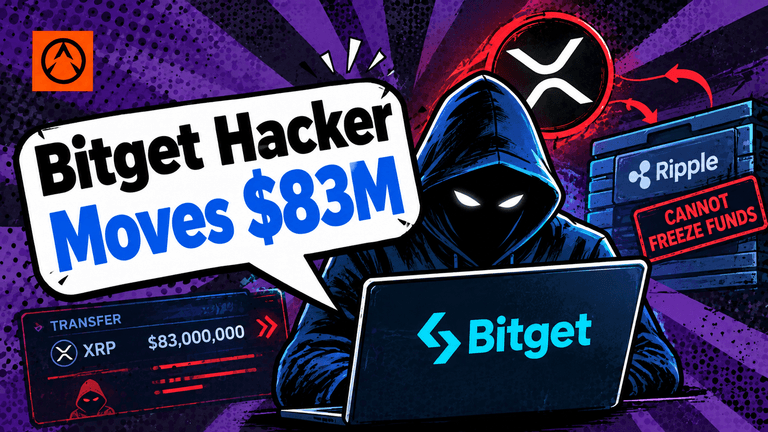
The Bitget hacker has moved about $83 million in stolen XRP from three wallets, while roughly $75 million remains across the original accounts that cannot be frozen on the XRP Ledger.
 XRP
XRP
A whitehat moved 3,832 NFTs from hundreds of wallets into protective custody after concerns surfaced about a Magic Eden vulnerability.

KelpDAO has sued LayerZero Labs and co-founder Bryan Pellegrino in British Columbia over the April 18, 2026 exploit of 116,500 rsETH worth about $292 million.
ETH
