KelpDAO sues LayerZero and Pellegrino over $292M rsETH exploit
KelpDAO has sued LayerZero Labs and co-founder Bryan Pellegrino in British Columbia over the April 18, 2026 exploit of 116,500 rsETH worth about $292 million.

By Anmol BillaSenior Analyst
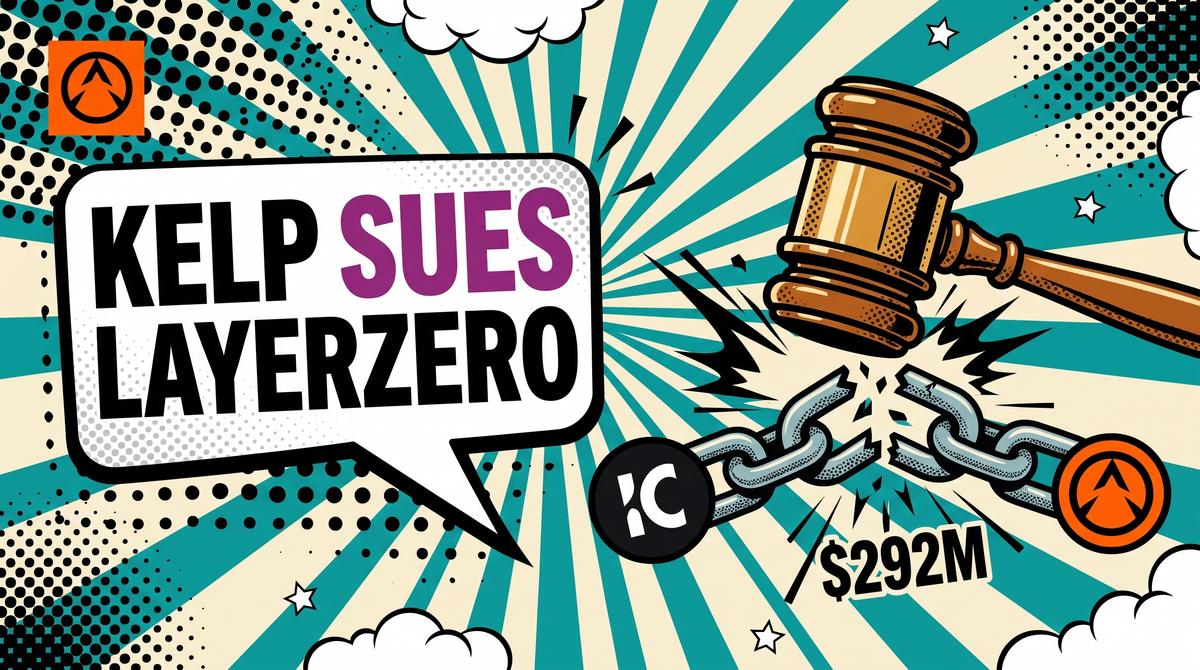
KelpDAO's parent company, Evercrest Technologies, has filed a civil claim in the Supreme Court of British Columbia against LayerZero Labs, its Canadian subsidiary and co-founder Bryan Pellegrino, blaming them for the April 18 exploit of 116,500 rsETH, a restaked Ether token, worth about $292 million. The lawsuit targets LayerZero directly, not the attacker and not the smart contract, but the bridge infrastructure Kelp says it trusted because LayerZero told it to.
Anyone who held rsETH, or used the KelpDAO layer on top of it, has already felt the aftershocks. Kelp says its users have pulled more than $650 million in assets out of the protocol since the exploit. The sbUSD stablecoin product was sunset. Aave, the largest DeFi lending pool, had to borrow $300 million to meet withdrawal demand. Roughly $20 billion in total value locked across DeFi disappeared in the days that followed, according to experts including those at JPMorgan.
The notice of civil claim, filed Thursday, sets out three causes of action: negligent misrepresentation, negligence and defamation, plus aggravated and punitive damages. Kelp's argument, in plain terms, is that LayerZero reviewed and signed off on a security configuration for the rsETH bridge to Unichain that relied on a single LayerZero-run verifier, then told Kelp the broader system had redundancy across multiple locations, monitoring and alerts.
The filing alleges that on March 21, 2024, LayerZero directed Evercrest to use the same single-verifier setup another bridge was already using. Evercrest says LayerZero never warned it that a one-of-one configuration using LayerZero's own verifier was a security risk, even though it had warned USDT0, another developer, about the same default-verifier risks before the exploit happened.
The attack unfolded at about 17:35 UTC on April 18. The claim says the attacker gained access to LayerZero's security infrastructure after using social engineering to install malware on a LayerZero developer's computer, then signed off on a forged cross-chain message that drained the 116,500 rsETH. At the time of the attack, Kelp was holding nearly a fifth of rsETH's circulating supply.
LayerZero's defence
LayerZero's final incident report said attackers had compromised its internal nodes and caused its verifier to approve a forged cross-chain message. But LayerZero also argued the loss was only possible because Kelp's bridge relied on a single LayerZero verifier as its only check, and said it had recommended using multiple verifiers. The company has since stopped acting as the sole required verifier for any application.
Bryan Pellegrino rejected the claim. "The claim continues to be meritless. I will meet them in Vancouver and defend myself accordingly," he said.
Why Pellegrino is named personally
Kelp is suing Pellegrino as well as the two corporate entities, a reminder that bridge operators now sit inside a legal perimeter where the company and the founder can both be on the hook. The defamation count tracks Kelp's claim that LayerZero publicly shifted blame onto Kelp's own configuration after the attack. The dispute has been running for months over whether the loss came from LayerZero's infrastructure being compromised, Kelp's bridge configuration, or both.
Kelp says it has already migrated rsETH's bridge to a more secure cross-chain security standard, with plans to move it to Chainlink's Cross-Chain Interoperability Protocol. The case now sits in the Supreme Court of British Columbia. A hearing date has not been set.

Anmol Billa
Anmol Billa is a Senior Analyst at Altcoin Buzz, with over five years of experience working across cryptocurrency markets and the broader digital asset industry. His work focuses on technical analysis, market research, investment insights, and evaluating emerging opportunities within the crypto ecosystem. At Altcoin Buzz, Anmol contributes to technical market analysis, research-driven insights, pitch decks, and funding-related initiatives. His experience combines analytical thinking with a practical understanding of crypto markets, helping translate market trends and emerging projects into clear, actionable insights for readers and industry stakeholders.
More from AnmolNext up
Initia Cloud Key Breach Drains $3.27 Million as Arcus Fixes Bug
Initia lost about $3.27 million after a compromised Google Cloud key, Arcus fixed a sub-account bug, and XRPL set a Testnet reset for 25 November.
 INIT
 XRP
Related
More in Crypto NewsRelated
UXLINK-Linked Whale Dumps $148M in ETH, SOL and XRP Longs on Hyperliquid.
 ETH
 SOL

Across Protocol Warns Users After Domain Hijack Sends Visitors to Phishing Site
ETH BTC
Tom Lee’s Bitmine Buys Another 9,587 ETH, Holdings Near 5% of Supply
ETHBTC
Crypto Hits Lowest Since August as $1.1 Billion in Longs Liquidate
BTCETH