Hedera’s Institutional Push Grows as Taurus Adds Full HBAR Stack, but Adoption Remains the Test
Hedera's institutional infrastructure is expanding as Taurus adds the full HBAR stack for custody, staking and tokenization, but real-world adoption remains the key test.

By Anmol BillaSenior Analyst
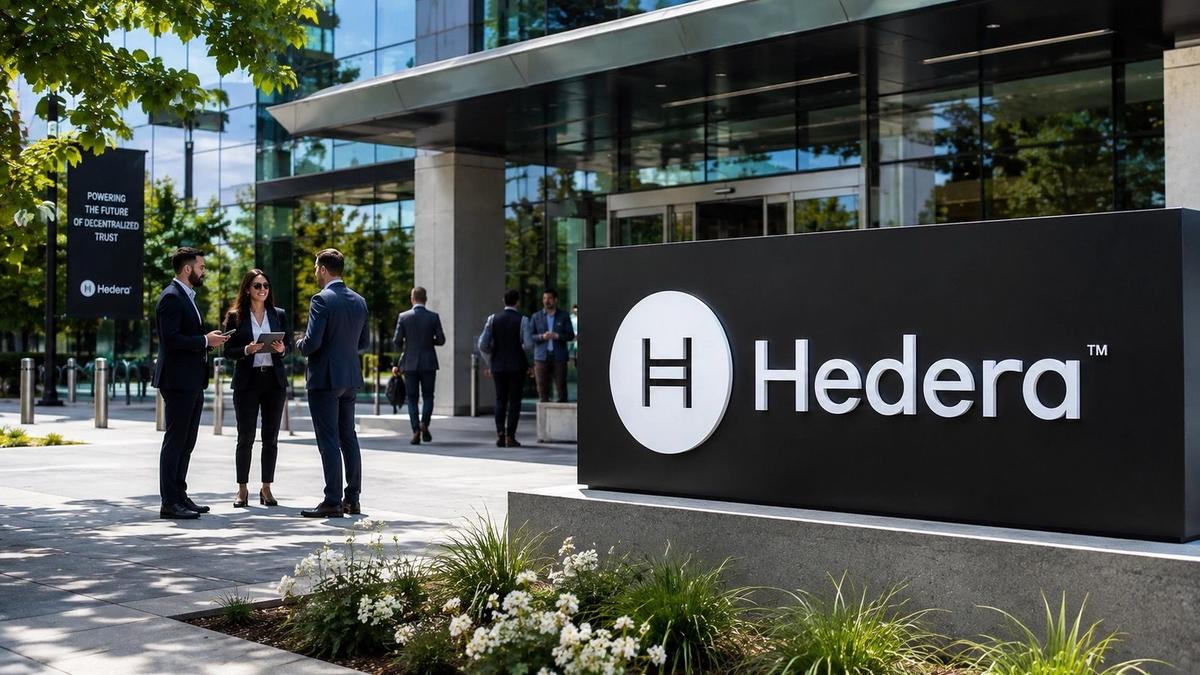
Hedera is building out the infrastructure needed for institutional adoption, but a key question remains: will real-world usage catch up with the technology?
The latest development comes from Taurus, a digital asset infrastructure provider whose technology is used by more than 40 banks and regulated financial institutions. Taurus has completed its integration of the full Hedera technology stack, giving institutions access to HBAR custody, staking, tokenization and smart-contract capabilities through its platform.
The development strengthens Hedera’s enterprise credentials. However, it also highlights the gap between having institutional infrastructure ready and actually seeing large-scale client activity on the network.
Taurus Brings Hedera Infrastructure to 40+ Financial Institutions
Taurus has spent roughly 18 months integrating Hedera’s technology in multiple stages.
With the latest phase complete, institutions using Taurus can access Hedera capabilities from a single platform. These include HBAR custody and staking, token issuance, smart contracts and tokenized financial products such as bonds, funds and stablecoins.
The significance comes from Taurus’ existing institutional reach.
The infrastructure provider says its technology is already used by more than 40 banks and regulated financial institutions worldwide, including major financial firms such as Deutsche Bank, CACEIS and State Street.
That does not mean all 40-plus institutions are now using Hedera. Instead, the integration makes Hedera’s technology available through infrastructure that those institutions already use.
That distinction is important when assessing the potential impact on HBAR.
Tokenized Bonds and Staking Could Expand Hedera's Institutional Use
The integration gives financial institutions access to more than simple HBAR custody.
Taurus says its Hedera integration supports use cases including tokenized assets, stablecoins and programmable financial products. This puts Hedera directly into the growing institutional tokenization market.
Hedera already highlights tokenization as one of its key ecosystem areas, with applications involving firms such as Aberdeen, Archax, Securitize and others listed in its ecosystem directory.
The network has also been used for institutional financial experiments. For example, Hedera's case study on Shinhan Bank describes stablecoin remittance pilots involving Shinhan Bank, Standard Bank and SCB TechX, with Hedera used for cross-border settlement.
This gives the Taurus integration a broader context: Hedera is trying to position itself as infrastructure for financial institutions rather than simply another general-purpose blockchain.
HBAR's Enterprise Narrative Gets Stronger
The latest development reinforces one of the central arguments behind the HBAR investment narrative: Hedera is targeting enterprise and institutional use cases where predictable costs, governance and compliance matter.
That strategy is also reflected in Hedera’s ecosystem. Its current dApp directory includes projects spanning tokenization, payments, decentralized finance, AI and data integrity.
Hedera's institutional positioning is not new either. The network is governed by a council that includes major organizations across technology, finance and other industries, giving it a different governance structure from many permissionless blockchain networks.
The challenge is moving from infrastructure availability to measurable demand.
The Big Problem: Infrastructure Does Not Guarantee Usage
This is where the bullish HBAR story becomes more complicated.
Crypto commentator HBARbarian highlighted the institutional significance of Taurus' integration in a recent post, while other market commentators have focused on the opposite side of the equation: whether actual client usage will follow the infrastructure rollout.
That is arguably the most important question for Hedera right now.
A bank being able to custody HBAR or issue a token on Hedera is not the same as that bank actually doing it at a meaningful scale.
The distinction matters because blockchain networks ultimately need transactions, users, assets and economic activity, not simply partnerships and integrations.
Cheeky Crypto also pointed to this tension, arguing that enterprise and government adoption could represent a major bullish case for HBAR while acknowledging the need for actual usage to materialize.
Grayscale's HBAR ETF Withdrawal Adds Another Layer
Hedera is also facing a less encouraging development on the investment-product side.
Grayscale recently withdrew the registration statement for its proposed HBAR ETF. The withdrawal was reported through an SEC filing dated August 7, 2026.
The development does not necessarily mean Grayscale has permanently abandoned HBAR ETF plans. The withdrawal itself does not establish why the filing was removed, and market observers have suggested several possible explanations, including changes to the regulatory environment or the possibility of a future refiling.
Still, the timing adds uncertainty to the institutional story.
Hedera had previously attracted significant attention around HBAR ETF products. Altcoin Buzz covered that earlier phase when the Canary HBAR ETF became one of the first spot altcoin ETFs and multiple additional HBAR-related filings were being discussed.
The current situation therefore looks considerably more mixed: institutional infrastructure is expanding, but one major ETF registration has now been withdrawn.
Can Real-World Adoption Catch Up With Hedera's Technology?
That is ultimately the question facing HBAR.
Taurus has made it easier for more than 40 banks and regulated financial institutions to access Hedera's full technology stack. Hedera already has examples of institutional experiments involving tokenization and cross-border payments, while its ecosystem continues to expand.
But none of this guarantees that those institutions will generate significant activity on Hedera.
The next stage of the story therefore needs to be measured in actual adoption.
Are banks issuing tokenized assets? Are stablecoins moving across the network? Is HBAR staking increasing? Are institutional transactions generating meaningful network activity?
Those metrics will matter more than another partnership announcement.
HBAR's Institutional Story Has Two Sides
Hedera currently presents a fascinating contradiction.
On one side, the infrastructure is becoming increasingly institutional. Taurus has integrated the full Hedera stack, giving its 40-plus banking and financial-institution clients a pathway to custody, staking and tokenization on the network.
On the other, the market still needs evidence that this infrastructure is translating into large-scale economic activity.
The withdrawal of Grayscale's HBAR ETF registration adds another uncertainty, although it should not automatically be interpreted as the end of Grayscale's HBAR ambitions.
For HBAR investors, the next major catalyst may therefore be less about another infrastructure announcement and more about seeing real institutions actually use Hedera at scale.
If that happens, the network's enterprise-focused strategy could become much more meaningful for HBAR. Until then, Hedera has built much of the infrastructure for institutional adoption, but the market is waiting to see whether the users arrive.

Anmol Billa
Anmol Billa is a Senior Analyst at Altcoin Buzz, with over five years of experience working across cryptocurrency markets and the broader digital asset industry. His work focuses on technical analysis, market research, investment insights, and evaluating emerging opportunities within the crypto ecosystem. At Altcoin Buzz, Anmol contributes to technical market analysis, research-driven insights, pitch decks, and funding-related initiatives. His experience combines analytical thinking with a practical understanding of crypto markets, helping translate market trends and emerging projects into clear, actionable insights for readers and industry stakeholders.
More from AnmolNext up

Hyperliquid $HYPE Holds Firm as Bitcoin Falls Below $69K
Hyperliquid $HYPE held near $72 as Bitcoin fell below $69,000 and Ethereum declined. Continued purchases by Hyperliquid's Assistance Fund are keeping attention on the token's fee-driven model.
 HYPE
Related
More in Crypto NewsRelated
TON Edges Past Robinhood Chain in Daily App Revenue, Fragment Drives the Lead

TAO Rises as Bitcoin Falls, Bittensor Subnet Revenue Gains Attention
 TAO

Arbitrum's Tokenized RWA Market Tops $1B as Holder Count Climbs 12%
 ARB

Chainlink Expands Integrations as Reserve Holdings Reach 6.68M LINK
 LINK

