AltcoinBuzzAltcoinBuzz
Subscribe
  • Crypto News
  • Crypto Research
  • Technical Analysis
AltcoinBuzzAltcoinBuzz

An independent digital media outlet delivering crypto research, news, and technical analysis to a community of 600,000+ users.

Follow us on:

Discover

  • Crypto Research
  • Crypto News
  • Technical Analysis
  • Key Opinions
  • Upcoming Launches

Categories

  • Bitcoin BTC
  • RWA
  • Technology
  • Altcoins
  • Regulation

Company

  • Affiliates
  • Partners & Sponsors
  • Careers
  • Contact
  • Terms of Use
  • Subscription Terms
  • About the ALTCOIN BUZZ
  • Privacy Policy
  • Contact ALTCOIN BUZZ
  • Advertise with us

Copyright 2026 ALTCOIN BUZZ. All rights reserved.Something is buzzzzzzzing.
HomeCrypto NewsJPYC Surges 4X as South Korea Considers Crypto Market Makers
Crypto NewsStablecoinsRegulation

JPYC Surges 4X as South Korea Considers Crypto Market Makers

A JPYC surge on Upbit has led South Korea’s FSC to consider a crypto market-making system as a possible cure for thin liquidity.
PPallavi•Sep 28, 2026
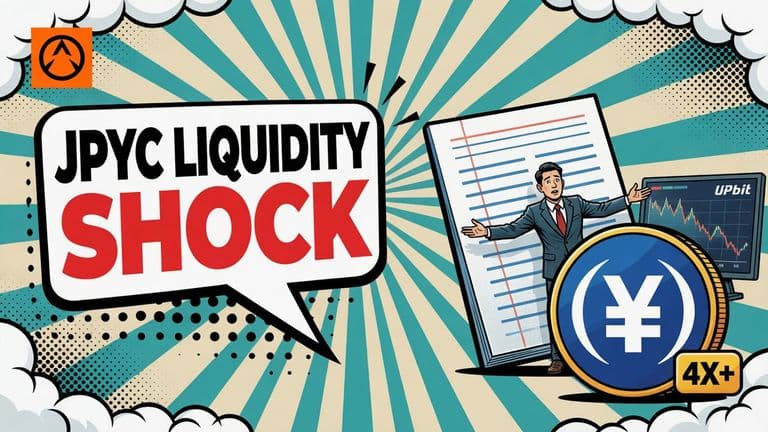
A pop-art cover shows a JPYC coin beside a sparse Upbit order book and a market-making figure, with a 4X+ badge highlighting the listing surge.

South Korea’s Financial Services Commission is considering a market-making system for digital assets after JPYC surged to more than four times its opening price on Upbit.

It is a striking example of how little buying and selling can move a new stablecoin market. But the regulator’s idea should not be mistaken for proof that market makers make such markets healthy.

Thin liquidity turned a listing into a price shock

Upbit opened trading in JPYC on Sept. 17. The yen-backed stablecoin began at 12 Korean won and reached 37.6 won an hour later, according to Cointelegraph’s report.

The spike was attributed to limited liquidity. In practical terms, there were not enough buyers and sellers available at prices traders were willing to accept. A few orders could therefore travel much further than they might in a busier market.

A market maker helps by continuously offering both bids and offers. That can make it easier to buy or sell without waiting for another trader to appear. It can also make a new listing feel smoother from the start.

The unresolved question is what happened next. The source does not give JPYC’s current price, trading volume, or whether it returned toward its target value after the initial spike. So the episode does not establish that market makers are the right answer. It does show why South Korean regulators are asking whether crypto markets need a formal liquidity role.

A legal gap keeps liquidity providers out

Market making currently has an awkward position in South Korea. The Virtual Asset User Protection Act does not provide an exemption for market makers from its provisions against market manipulation. According to Cointelegraph, that effectively prevents market makers from providing liquidity in crypto markets.

The concern is understandable. A market maker has to trade both sides of a market, while rules against manipulation are designed to stop traders from manipulating prices.

But the absence of a clear exemption can also leave exchanges without a defined group of professional liquidity providers. A 2024 peer-reviewed Seoul Law Review paper by KB Securities researcher Lee Min Jung said regulators at the time viewed crypto market making as possible market manipulation. Lee also argued that a carve-out could be considered once the market became more stable.

That gives the FSC a possible route: define who may act as a market maker, and make clear which activities are permitted. The research does not include proposed text, so the exact safeguards are still unknown.

Korea sees liquidity gaps across crypto

JPYC is not the only argument for a formal system. A Korbit Research Center paper by Yoonyoung Choi described serious liquidity problems in South Korea’s crypto market, including price discrepancies and high volatility. It cited the Kimchi premium as an example of inefficiency.

Still, bringing back the price of a thinly traded yen stablecoin does not show that a market is working properly. Buyers also need enough depth to enter or leave without excessive slippage, the difference between the price they expect and the price they receive. Volume matters here, though the source does not provide JPYC’s figures.

The market maker’s job would be to keep that door from being stuck. A thin, well-organised market can still carry real risk. It just makes the plumbing easier to see.

A wider crypto law is still taking shape

The market-making discussion sits inside a larger change in Korean policy. In July, the FSC said it planned a consolidated Digital Asset Basic Act covering stablecoins, exchanges, disclosures, internal controls and the wider digital asset market.

Lawmakers have not settled key parts of that legislation, including rules for won-denominated stablecoin issuers. The FSC’s comments suggest market makers are one piece of the liquidity question, not a complete policy package.

There is no announced timeline for a carve-out, and no draft regulation was available in the research. For now, JPYC’s opening hour is a clear warning about what thin liquidity can do. Whether formal market makers would reduce those swings, or simply put professional traders closer to the price, depends on rules that South Korea has not yet published.

The information discussed by Altcoin Buzz is not financial advice. This is for educational, entertainment, and informational purposes only. Any information or strategies are thoughts and opinions relevant to the accepted levels of risk tolerance of the writer/reviewers and their risk tolerance may be different than yours. We are not responsible for any losses that you may incur as a result of any investments directly or indirectly related to the information provided. Bitcoin and other cryptocurrencies are high-risk investments so please do your due diligence.

Copyright Altcoin Buzz Pte Ltd.

Related

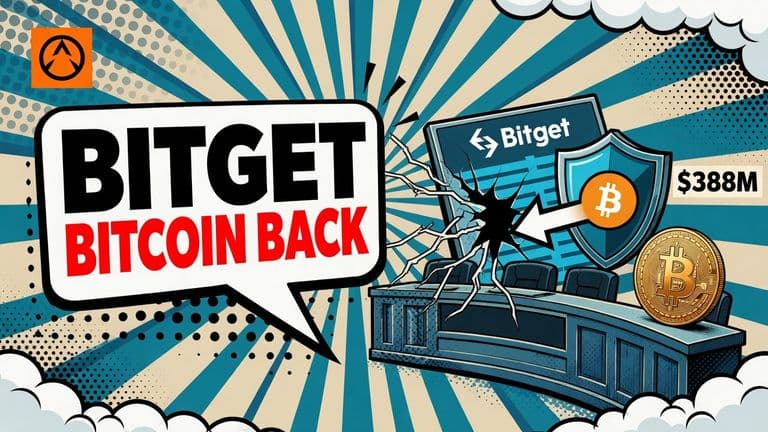
A comic cover shows Bitget restoring a Bitcoin withdrawal route while a large security breach and diverted transaction paths remain visible.
Bitcoin BTC
Sep 28, 2026

Bitget Reopens Bitcoin Withdrawals After $388M Exploit

Bitget has reopened Bitcoin withdrawals and scheduled ETH and USDT services next. User balance availability has not been independently verified.

BTC
Shashwat Gupta
Bitcoin ETFs attract $2.39 billion in weekly inflows as institutional demand returns
Bitcoin BTC
Sep 28, 2026

Bitcoin ETFs Attract $2.39B as Institutional Demand Returns

US spot Bitcoin ETFs attracted $2.39 billion in weekly inflows through September 25, their strongest week of 2026, as demand through traditional investment products rebounds.

BTC
Shitij Gupta
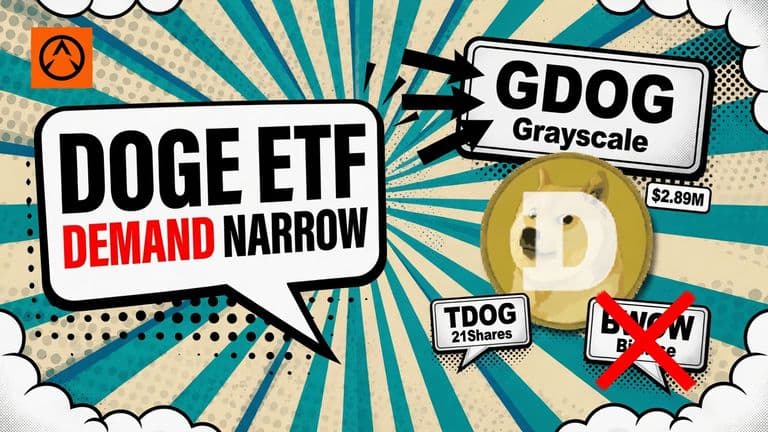
A Dogecoin coin and three ETF flow markers feed into one dominant Grayscale fund while two smaller funds shrink, illustrating a record but concentrated week of inflows.
MemecoinsAltcoins
Sep 27, 2026

Dogecoin ETFs Post a Record Week, but demand is Concentrated

Dogecoin ETFs posted their largest weekly inflow since launch, but one Grayscale fund took all of Friday's demand and most of the group's assets.

DOGEBTC
Shashwat Gupta