Quant’s QNT token surged after The Clearing House selected its technology for a US tokenized-deposit network, while seven UK banks completed live transactions using Quant infrastructure.
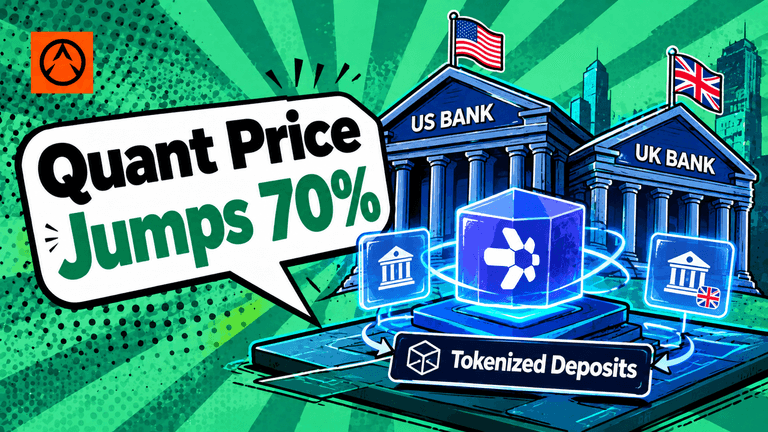
Quant’s QNT token jumped sharply as banks in the US and UK moved tokenized deposits from pilot projects toward real financial transactions.
The move came after The Clearing House selected Quant to power the interoperability layer for its US On-Chain Money Initiative. At almost the same time, seven major UK banks completed live customer transactions using tokenized sterling deposits on Quant-built infrastructure.
QNT climbed about 72% over 24 hours on September 27, briefly reaching $170.55 before trading around $104. The token had closed at $98 on September 25.

The Clearing House selected Quant to provide the interoperability, orchestration and transaction-management layer for its On-Chain Money Initiative.
The network is being designed to let financial institutions clear and settle tokenized deposits between banks while connecting blockchain-based transactions to existing payment infrastructure, including The Clearing House’s RTP and CHIPS networks.
The initiative is expected to become available to participating financial institutions in the first half of 2027.
The Clearing House says the network could support corporate treasury, liquidity management, cross-border payments and digital asset settlement. It also wants payments to settle immediately and transactions to execute automatically when predefined conditions are met.
The Clearing House processes more than $2 trillion in payments each day, giving the project a significantly larger potential footprint than a standalone blockchain pilot.
Quant’s US agreement arrived alongside a separate milestone in the UK.
Barclays, HSBC UK, Lloyds Banking Group, Monzo, Nationwide, NatWest and Santander completed the first live customer transactions using tokenized sterling deposits through the Great British Tokenised Deposit (GBTD) initiative.
The transactions included two remortgage completions and a consumer marketplace payment. In the mortgage tests, deposit funds could be locked and automatically released when the transaction was completed. The marketplace test used programmable deposits that released funds after the agreed conditions were met.
The GBTD platform was developed by Quant as shared infrastructure for tokenized commercial bank money. UK Finance says the pilot demonstrated that tokenized deposits can move between different banks on common infrastructure while maintaining the protections associated with conventional commercial bank deposits.
Tokenized deposits are different from stablecoins.
A tokenized deposit represents commercial bank money held with a financial institution. The digital representation can move on blockchain infrastructure and be programmed to execute under specific conditions, while remaining connected to the traditional banking system.
The Federal Reserve Bank of Dallas has described tokenized deposits as traditional bank deposits represented on digital ledgers. Unlike stablecoins, which are backed by reserves such as cash and Treasuries, deposit tokens represent a claim on the issuing bank and remain within the regulated banking system.
That distinction is becoming increasingly important as banks look for ways to bring blockchain-based settlement into existing payment infrastructure.
The development also follows other major financial institutions moving toward tokenized deposits. For example, IBM recently connected its Digital Asset Haven platform to Swift’s blockchain-based shared ledger, allowing banks to use familiar ISO 20022 payment instructions for tokenized deposit transactions.
Quant’s role in these projects is less about creating another blockchain and more about connecting different financial systems.
Its technology is designed to allow tokenized deposits issued by different institutions to interact while also connecting them to existing payment rails.
That interoperability is important because banks are unlikely to abandon the systems they already use. Instead, tokenized deposits need to work alongside networks such as RTP, CHIPS, RTGS and Faster Payments.
The UK project has already tested this model across multiple bank ledgers and payment systems. The US initiative now aims to apply a similar approach at a much larger scale.
The latest price move shows that investors are paying attention to Quant’s growing role in institutional blockchain infrastructure.
However, the banking announcements do not mean that banks are directly buying QNT.
The Clearing House and Quant have not disclosed whether the QNT token will be required for transactions on the new US tokenized-deposit network. Quant’s broader infrastructure has historically used QNT for certain Overledger licensing and transaction-related functions, but that should not be automatically equated with direct QNT demand from The Clearing House project.
That distinction matters when separating the institutional adoption of Quant’s technology from demand for QNT the token.
The two developments are nevertheless significant for the broader tokenization market.
In the UK, seven banks have now demonstrated live transactions using tokenized commercial bank money. In the US, The Clearing House is building an interoperable network designed to connect tokenized deposits across financial institutions and existing payment rails.
Together, the projects show how banks are experimenting with blockchain without replacing the regulated banking infrastructure underneath them.
For Quant, the next major test will be whether these pilots progress into larger production networks. The US initiative is currently targeting the first half of 2027, while the UK project is moving toward a broader framework after its live pilot transactions.

Zcash is massively outperforming Bitcoin as shielded activity hits a four-year high, institutional access expands and the network prepares for its NU7 upgrade.
 ZEC
ZEC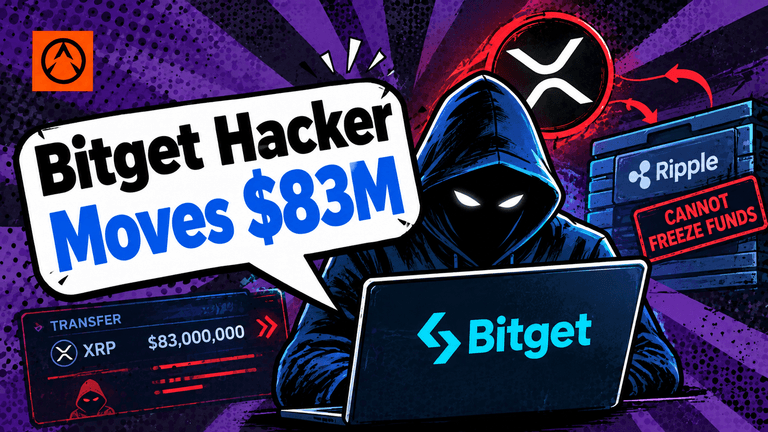
The Bitget hacker has moved about $83 million in stolen XRP from three wallets, while roughly $75 million remains across the original accounts that cannot be frozen on the XRP Ledger.
 XRP
XRP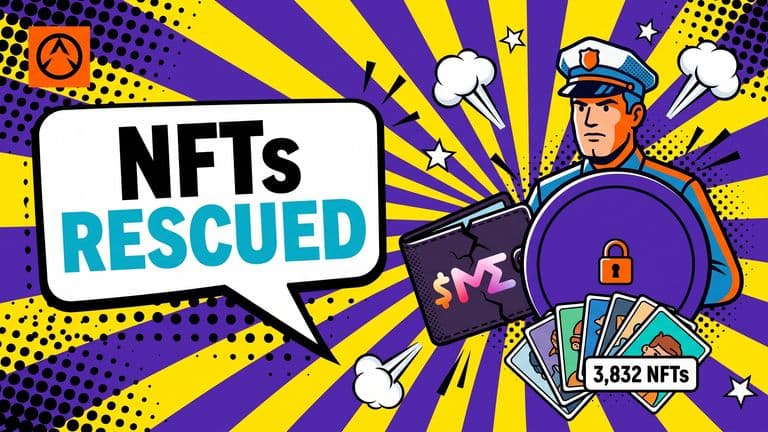
A whitehat moved 3,832 NFTs from hundreds of wallets into protective custody after concerns surfaced about a Magic Eden vulnerability.

