AltcoinBuzzAltcoinBuzz
Subscribe
  • Crypto News
  • Crypto Research
  • Technical Analysis
AltcoinBuzzAltcoinBuzz

An independent digital media outlet delivering crypto research, news, and technical analysis to a community of 600,000+ users.

Follow us on:

Discover

  • Crypto Research
  • Crypto News
  • Technical Analysis
  • Key Opinions
  • Upcoming Launches

Categories

  • Bitcoin BTC
  • RWA
  • Technology
  • Altcoins
  • Regulation

Company

  • Affiliates
  • Partners & Sponsors
  • Careers
  • Contact
  • Terms of Use
  • Subscription Terms
  • About the ALTCOIN BUZZ
  • Privacy Policy
  • Contact ALTCOIN BUZZ
  • Advertise with us

Copyright 2026 ALTCOIN BUZZ. All rights reserved.Something is buzzzzzzzing.
HomeCrypto ResearchSEC Says Automated Buybacks Aren’t Enough for Crypto Networks
Crypto ResearchRegulation

SEC Says Automated Buybacks Aren’t Enough for Crypto Networks

The SEC’s revised buyback FAQ offers relief to functional networks without a central party, leaving many issuer-run programs outside its protection.
SShashwat Gupta•Oct 1, 2026
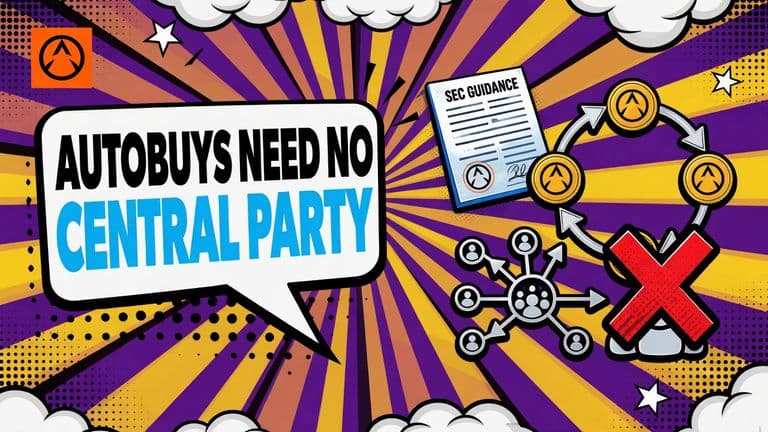
A pop-art SEC document sits beside an automated token buyback loop and a network control symbol divided between distributed nodes and one controlling party.

The SEC’s buyback guidance now offers a clearer path for crypto issuers, but only on one condition: the network must have no central party. An automatic buyback is useful evidence, but automation alone doesn’t satisfy the test.

The Division of Corporation Finance updated FAQ 2.5 on Sept. 28, adding “and has no central party” to its answer. That small phrase narrows the earlier guidance to networks that are both functional and free from operational, economic or voting control by a person or group.

That distinction decides which announcements can be treated as routine asset management and which may be read as promises to support token holders.

What Changed in the SEC Buyback FAQ

The SEC’s revised FAQ says a buyback announcement on a functional system with no central party would not represent a promise to undertake essential managerial efforts. In plain English, announcing that an issuer or protocol will retire tokens doesn’t automatically create an obligation to manage the network on holders’ behalf.

The answer changes for a system that isn’t functional. There, a buyback presented as producing yield or return could constitute a promise of essential managerial efforts. The SEC may then examine whether another party has effectively taken over those promises.

The staff lists several ordinary reasons for a buyback:

  • Treasury management
  • Reducing supply
  • Protocol-funded burns
  • Rebalancing

The update doesn’t make buybacks illegal. It draws a boundary around when this particular staff guidance applies.

There’s still an important limit. The FAQ represents the views of Division of Corporation Finance staff. It is not a rule, regulation or formal statement by the full SEC.

Why ‘No Central Party’ Matters

A central party can have operational, economic or voting control over a crypto system. That includes a company that runs the system, a committee that can direct decisions, or a group whose voting power is enough to influence outcomes.

Automation helps describe how a buyback works. It doesn’t answer who controls the system around it. A self-running program can still sit on a network controlled by one organization or a concentrated group.

That makes the control question more important than the button that executes the buyback.

The SEC also says the crypto asset itself doesn’t separate from an investment contract if another party assumes an issuer’s promises of essential managerial efforts. Moving a promise from an issuer to a foundation or committee won’t necessarily change its legal treatment.

Which Buyback Programs Fit the Test?

The largest 2026 programs reviewed by Unchained did not clearly fit the new test. None passed clearly when it checked for operational, economic or voting control.

Hyperliquid came closest because its buybacks execute automatically. However, validators run by its foundation hold nearly half of the network’s votes. Automatic execution reduces one form of intervention, but concentrated voting influence leaves the project short of the FAQ’s clearest reading.

Other major programs face different control structures. PUMP, JUP and LINK have company-run buybacks, according to Unchained. AAVE, SKY and LDO use committees or token-holder votes. Those arrangements don’t make the tokens securities or the programs unlawful. They do put them outside the scope of this FAQ’s stated protection.

Aave’s program is paused, though that does not resolve the underlying control question.

Decentralization Carries the Relief

The revision’s main premise is straightforward. If no central party controls a functional network, statements made by an issuer about that network likely would not create a new investment contract, according to another question in the SEC staff FAQ. The reasoning is that neither the issuer nor another person can affect the system’s success or failure.

That is why the SEC’s definition matters. A buyback can be automatic while the surrounding network remains centralized. In that case, the project cannot use this staff guidance to settle the legal question.

Centralized, functional projects still require a case-by-case analysis. The FAQ doesn’t label their buybacks illegal or automatically turn the relevant tokens into securities. It simply means they can’t point to this answer for protection.

The buyback boom is substantial. Token repurchases reached $638 million during the first eight months of 2026, based on Allium data cited by Unchained. Much of that spending came with a market narrative: fewer tokens, possible price support and a visible way to return value.

The SEC’s revised answer keeps that distinction plain. The program’s mechanics tell you how the buyback runs. Control over the network determines whether this guidance is available at all.

The information discussed by Altcoin Buzz is not financial advice. This is for educational, entertainment, and informational purposes only. Any information or strategies are thoughts and opinions relevant to the accepted levels of risk tolerance of the writer/reviewers and their risk tolerance may be different than yours. We are not responsible for any losses that you may incur as a result of any investments directly or indirectly related to the information provided. Bitcoin and other cryptocurrencies are high-risk investments so please do your due diligence.

Copyright Altcoin Buzz Pte Ltd.

Related

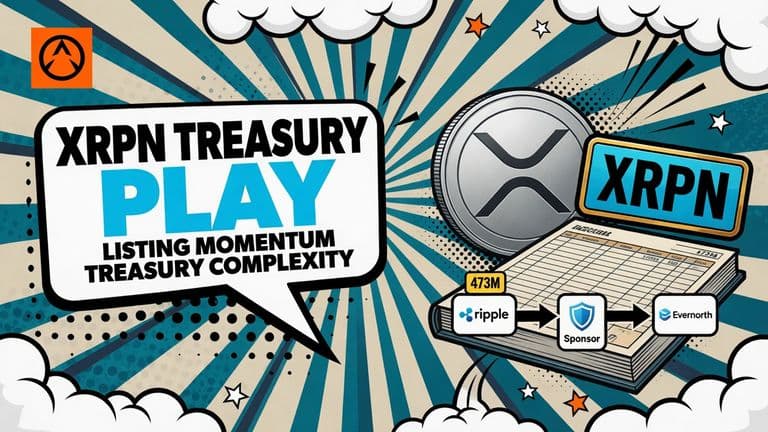
A pop-art illustration shows an XRP coin, an XRPN Nasdaq listing badge, and connected treasury contributions inside a speech-bubble cover.
AltcoinsRegulation
Oct 1, 2026

Evernorth’s $1 Billion XRP Treasury Moves Closer to Nasdaq Listing

Evernorth plans an XRP treasury of at least 473 million coins, but most would come from contributions rather than cash purchases.
XRP
Pallavi Malviya Gupta
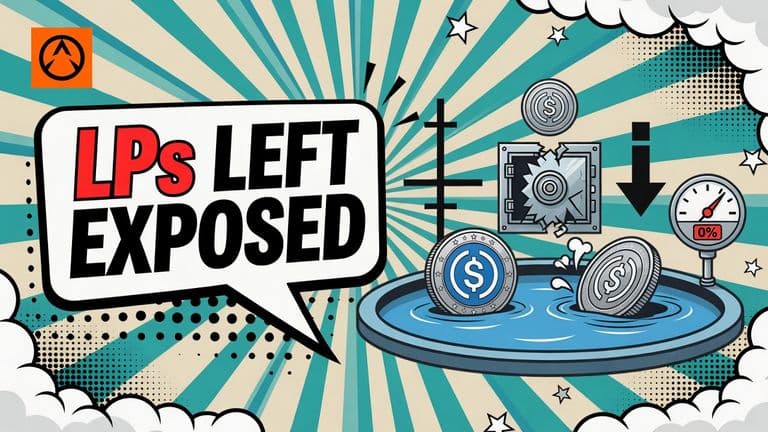
A comic cover shows a Uniswap stablecoin pool with USDC and a sinking stablecoin, a fixed reference marker, and an LP position exposed as the fee gauge reaches zero.
StablecoinsDeFi
Oct 1, 2026

Three Hidden Flaws in Uniswap’s StablePair Hook Could Hit LP Returns

StablePair uses a fixed reference price and cached data that can leave LPs exposed when a stablecoin weakens. The available data does not prove better returns.
USDC
Saloni Rathi
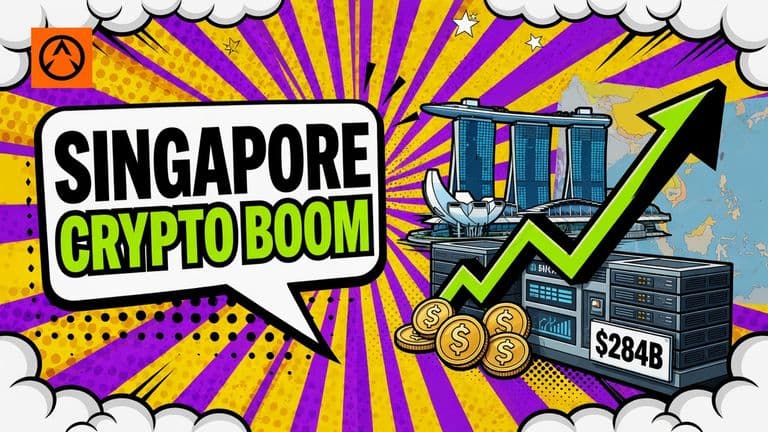
A comic-style illustration of Singapore’s skyline and regional map connected to institutional crypto trading infrastructure, exchange screens, flow arrows and stablecoin coins.
Altcoins
Oct 1, 2026

Singapore’s Crypto Economy Grew to $284 Billion in 2026

Singapore led its region in measured crypto activity as institutional platforms rose 94%. The data shows less about individual adoption.

Shashwat Gupta