Senate Democrats say Tether fails to Block Iran-Linked Wallets
Senate Democrats say Tether has missed Iran-linked wallets. Tether points to $550 million in 2026 freezes as wider US sanctions pressure grows.

By Anmol BillaSenior Analyst
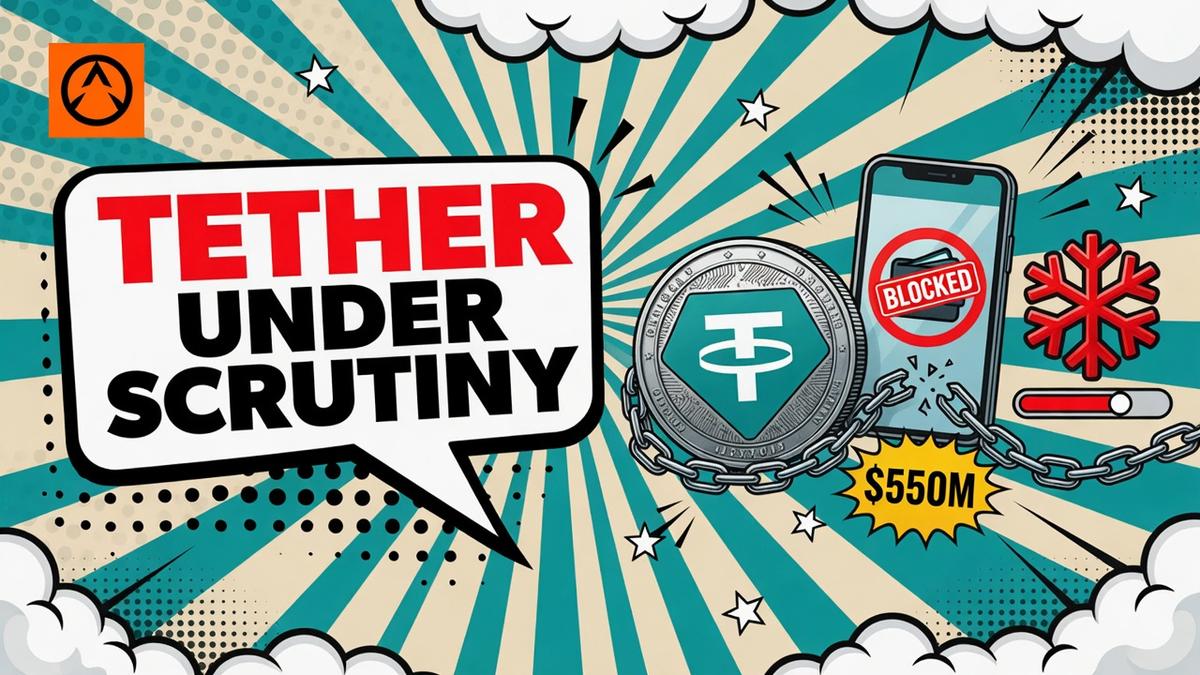
Senate Democrats have accused Tether of repeatedly failing to block wallets linked to Iran, arguing that USDT gives the Iranian government a lifeline outside the traditional banking system. The claim could lead to tighter sanctions compliance, but the report did not produce a new rule or action against the stablecoin issuer.
The report from the Senate Permanent Subcommittee on Intelligence was published on Monday, Sept. 28, 2026. It estimates that the Iranian government made about $2 billion in transactions last year, but does not say how much of that involved USDT.
That distinction matters. A large transaction total is not a verified measure of Tether's involvement.
The report targets Tether's response time
The report says Tether sometimes takes weeks to freeze wallets. It also alleges that the company sometimes answers requests from authorities without adding the relevant wallets to its blacklist.
The senators also argue that, before 2024, Tether did not consistently freeze wallets designated by counter-terrorism agencies. They say this lack of enforcement helped push Hamas toward USDT. That allegation is part of the report, not an independently established finding from the underlying wallet analysis.
The report goes further than Iran. It argues that cryptocurrencies are undermining allied efforts to restrict funding for Iran's regional terrorism. That broader claim covers many digital assets, but the report's case against Tether rests on Tether's role as a dollar-linked stablecoin and its power to freeze tokens at the issuer level.
Tether points to $550 million in freezes
Tether disputed the implication that it does not act on Iran-linked activity. In a statement published the same day, the company said it had frozen about $550 million in assets during 2026.
Tether said those actions covered wallets that US authorities linked to Iran's Central Bank and sanctions networks. It listed two examples:
- More than $344 million frozen across two addresses in April, based on information from the Office of Foreign Assets Control and US law enforcement. OFAC designated the addresses the next day.
- More than $130 million frozen across four wallets in July after Treasury expanded its Iran Central Bank designation to four additional TRON addresses.
The company also said its cooperation had supported more than 2,900 investigations globally, including more than 1,600 involving US law enforcement. Those figures conflict with lower totals in the body of the same statement, so they should be treated with some caution.
CEO Paolo Ardoino said USDT is not a haven for sanctioned actors and argued that public blockchains give authorities more visibility than cash. He said Tether can act when law enforcement supplies credible information.
What changes for you
The report does not announce new sanctions, legislation or wallet controls for ordinary USDT holders. The confirmed policy backdrop is already in place: Treasury's Operation Economic Outcast identifies digital assets as one of five sectors that could face expanded sanctions.
For USDT users, the practical risk is more likely to come through enforcement of existing rules than a direct ban. Tether says it has aligned its wallet policy with the OFAC Specially Designated Nationals list, including secondary-market wallets listed there. That means a wallet linked to a sanctioned party can lose access to its USDT even if the user did not trade through a sanctioned exchange.
The Senate report also leaves an important gap. It does not provide an overall USDT figure for Iranian government transactions. No USDT market reaction was verified for publication, either.
The dispute now turns on enforcement rather than Tether's general ability to freeze tokens. The senators say responses were delayed or incomplete. Tether says it froze about $550 million in Iran-linked assets this year. Both sides are making their case, and the full Senate report and underlying wallet analysis would be needed to test their figures directly.

Anmol Billa
Anmol Billa is a Senior Analyst at Altcoin Buzz, with over five years of experience working across cryptocurrency markets and the broader digital asset industry. His work focuses on technical analysis, market research, investment insights, and evaluating emerging opportunities within the crypto ecosystem. At Altcoin Buzz, Anmol contributes to technical market analysis, research-driven insights, pitch decks, and funding-related initiatives. His experience combines analytical thinking with a practical understanding of crypto markets, helping translate market trends and emerging projects into clear, actionable insights for readers and industry stakeholders.
More from AnmolNext up
$38,206 Drained From Curve Fee Contract in Signature Flaw
An attacker stole about $38,200 in Curve DAO fee revenue from the CowSwapBurner contract on 10 November 2026.
 CRVUSDC
Related
More in Crypto NewsRelated
DBS and Circle Bring 24/7 USDC Minting and Redemption to Asian Institutions
Crypto News Today: Russia's Crypto Shift, Institutional ETF Moves and Trezor Data Breach
 BTC

Crypto Derivatives Get US Approval as Backpack, tZERO Win Licences
NVIDIA Posts 103% Revenue Growth as AI Crypto Projects Watch GPU Demand
 TAORENDER