Visa Survey: Stablecoin Interest Jumps to 56% With Hypothetical “Bank-Level”
American stablecoin interest jumps from 36% to 56% with hypothetical bank-level protections in a Visa survey of 2,192 U.S. adults.

By Anmol BillaSenior Analyst
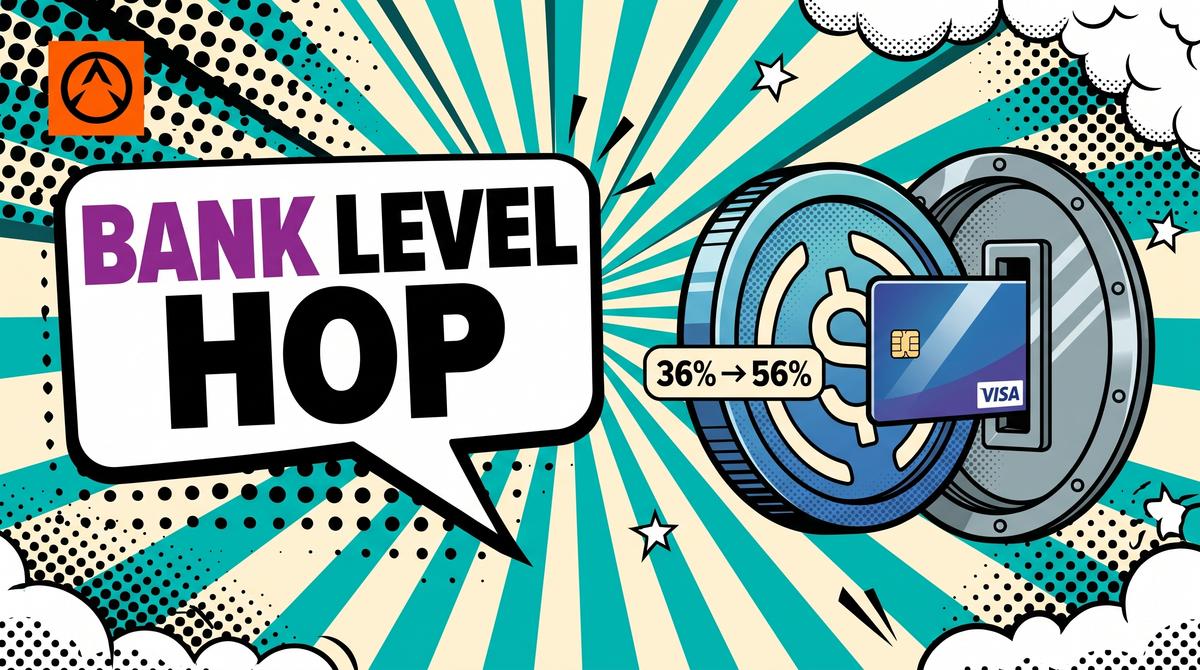
American interest in using stablecoins jumps from 36% to 56% when paired with hypothetical bank-level fraud protection and deposit insurance, a Visa survey of 2,192 U.S. adults found. The lift tells you less about stablecoins and more about what Americans expect from the bank account they already have.
In practice, "bank-level" means two things: fraud protection, the kind that reimburses a customer when a card is used without permission, and deposit insurance, the federal backstop that pays out when a bank fails. Neither exists on a stablecoin today. Tether's USDT and Circle's USDC, at about $183.4 billion and $76 billion respectively, make up the bulk of the more than $295 billion of U.S. dollar-pegged stablecoin supply. If their issuers ran into trouble, holders would stand in line with other unsecured creditors, not file an FDIC claim.
The Visa report, titled Money Travels 2026, was based on a Morning Consult survey conducted between February 24 and March 2 of this year. Respondents were given definitions of key terms, including what a stablecoin is, before answering, per a Visa statement shared with The Block.
The hypothetical framing
The "bank-level" protections in the survey are explicitly hypothetical. The questions describe conditions attached to a scenario, not protections currently available on any stablecoin product.
What the survey did test, separately: willingness to use a stablecoin offered through an existing financial provider. That smaller lift moved the number from 36% to 45%, nine points lower than the bank-level version. The provider matters more than the technology to most respondents. Sixty-four percent said trust depends more on the payment provider than on the underlying rails.
Who's trusted to issue the dollars
When asked which providers they would trust with digital currency services, 61% of respondents named traditional commercial banks, and 60% named global payment networks. Visa, the survey's sponsor, is one of the latter. The overlap is worth flagging: earlier in September the company said its stablecoin settlement had surpassed a $20 billion annualized run rate, more than 15 times the year-earlier figure, with more than 160 stablecoin-linked card programs live globally.
The Limits of the Survey
The article did not disclose the survey's margin of error, weighting methodology, or confidence interval. It also did not say whether Money Travels 2026 covers markets beyond the U.S. or when Visa itself published the report.
One finding lands harder than the adoption headline. Fifty-six percent of U.S. respondents said they had never heard of stablecoins. Some of those who had heard of them incorrectly assumed stablecoins fluctuate like bitcoin. The number who say they would use them is being counted off a base that mostly does not know what they are.

Anmol Billa
Anmol Billa is a Senior Analyst at Altcoin Buzz, with over five years of experience working across cryptocurrency markets and the broader digital asset industry. His work focuses on technical analysis, market research, investment insights, and evaluating emerging opportunities within the crypto ecosystem. At Altcoin Buzz, Anmol contributes to technical market analysis, research-driven insights, pitch decks, and funding-related initiatives. His experience combines analytical thinking with a practical understanding of crypto markets, helping translate market trends and emerging projects into clear, actionable insights for readers and industry stakeholders.
More from AnmolNext up

Crypto Liquidations Near $1B as Bitcoin Squeezes Shorts Above $80K
Nearly $1 billion in leveraged crypto positions were liquidated in 24 hours, about 59% of them shorts, as Bitcoin climbed back above $80,000 after the midterms.
 BTC
Related
More in Crypto NewsRelated
US Midterms: Crypto's Stalled CLARITY Act Awaits a New Congress
BTC ETH

TRUMP and MELANIA Memecoins Hit Record Lows as Democrats Win House
 TRUMP
House Democrats Weigh Crypto Bill Giving the SEC More Power

BitMart Founder Flags 'Severely Understaffed' Security After New Hack
BTCETH