Bitcoin holders could lose real BTC if they sell coins from a BIP-110 fork before replay protection is active. Developers urge caution if the chain splits.
 BTC$78,372.00+2.26%
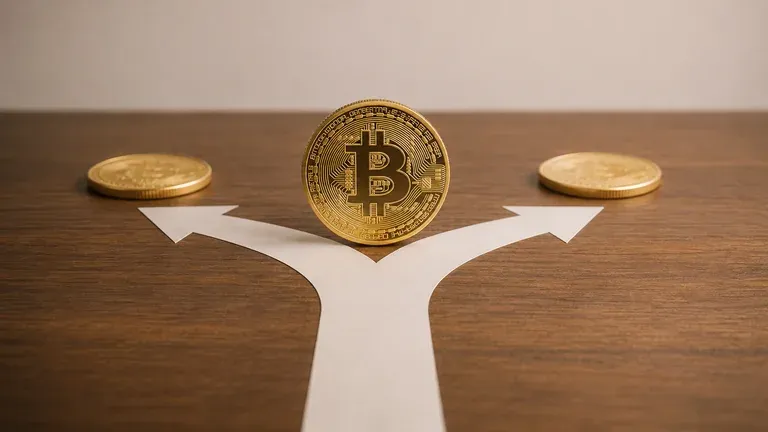
Bitcoin holders could face a serious risk if the network splits because of BIP-110.
If a minority Bitcoin chain appears, users may receive coins on both chains. Selling the new forked coins could look like an easy way to make money. However, without replay protection, the same signed transaction could potentially be used on the main Bitcoin chain.
This means a user trying to sell forked coins could accidentally send their real BTC as well. Developers are therefore warning holders to avoid moving their coins until the two chains can be safely separated.
If Bitcoin splits into two chains, every holder will initially have the same balance on both networks.
For example, someone holding 1 BTC before the split could end up with:
The forked coin may have little or no value. But if someone offers to buy it at a high price, holders may try to sell.
This is where the danger begins.
A transaction signed to send the forked coin could also be accepted by the main Bitcoin chain if both networks still recognize the same transaction format. The buyer could then replay that transaction on Bitcoin and receive the seller's real BTC.

Imagine you hold 1 BTC and 1 fork coin after a chain split. You agree to sell the fork coin.
You sign a transaction sending the fork coin to the buyer. Because replay protection is not active, the buyer could copy that transaction and broadcast it on the main Bitcoin network.
The result could be:
Fork chain: Your fork coin goes to the buyer.
Bitcoin chain: Your real 1 BTC also goes to the buyer.
The attack does not mean someone can drain an entire wallet automatically. Only coins involved in a signed transaction are at risk. That is why developers say coins that are never moved cannot be replayed.
Bitcoin developer Kevin Loaec warned about the replay risk in a recent post on X.
He said large Bitcoin holders could become attractive targets if a minority chain appears. His advice is simple: users who are unsure how to separate their coins should avoid making transactions until the networks have proper protection.
The key issue is that a signed transaction can potentially be copied and used on another chain. Waiting avoids creating a transaction that an attacker could replay.
The potential replay attack is linked to BIP-110, a Bitcoin proposal that would change how the network handles certain types of data in transactions.
Bitcoin upgrades normally depend heavily on miner support. BIP-110 requires miners to signal their support by marking blocks they produce. The proposal requires 1,109 marked blocks out of a 2,016-block period, equal to about 55% of blocks.
However, BIP-110 also includes another activation mechanism.
Starting around block 961,632, nodes running BIP-110 could begin rejecting blocks that do not contain the required signal. This creates a potential problem because most miners currently appear to be mining blocks without the BIP-110 signal.
If enough BIP-110-compatible miners continue building their own chain, two competing versions of Bitcoin's transaction history could emerge.
A split is not certain. If only a small number of miners support BIP-110, the minority chain may produce blocks very slowly. It could also stop growing completely if miners do not continue supporting it.
Current signaling levels are low, which makes the creation of a lasting minority chain uncertain. However, even a temporary split could create problems for users who try to trade coins from the fork.
The main concern is that the fork does not initially provide automatic replay protection.
Replay protection prevents a transaction created on one blockchain from being accepted on another chain.
Without it, the same signed transaction may be valid on both networks.
For BIP-110, the important protection does not become active immediately. The proposal's transaction restrictions are expected to take effect around block 965,664, which could arrive around the beginning of September.
That creates a period in which users could potentially hold coins on two chains without having a simple built-in way to separate them. Users would need to deliberately split their coins between the networks before safely spending them.
For ordinary Bitcoin holders, the safest approach is to avoid moving coins connected to a potential BIP-110 fork until the situation becomes clearer.
In particular, users should be cautious about:
The key point is simple: do not sign a transaction unless you understand which chain it affects and whether replay protection is active.
The outcome will depend largely on miner support for BIP-110 and whether a minority chain can continue producing blocks.
If no viable minority chain develops, the replay risk may never become a major issue.
If a split does occur, however, Bitcoin holders will need to be especially careful until the two chains can be safely separated.
For now, the simplest rule is also the safest: if you are unsure, do not move your Bitcoin or forked coins until replay protection and a safe separation method are available.

Eric Balchunas says Bitcoin ETFs could eventually hold three times the assets of gold ETFs. Scenario math shows what $1.85 trillion in ETF assets could mean for BTC.
BTC
CV Summit 2026 will bring global financial and technology leaders to Zurich on September 29 - 30 to discuss digital assets, AI, tokenization and the future of financial infrastructure.
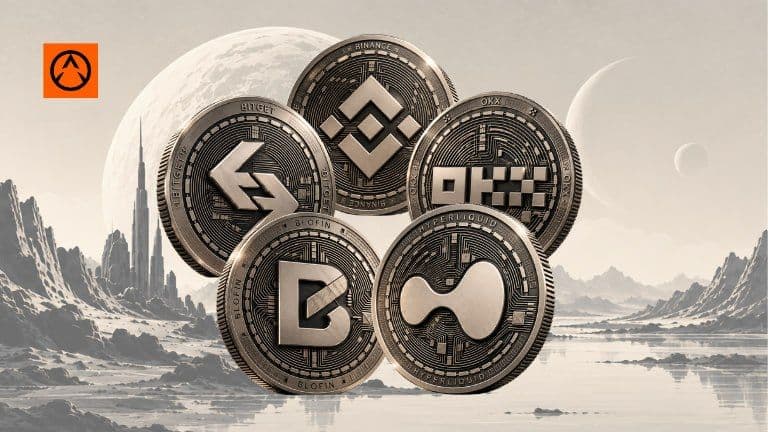
Compare the leading crypto derivatives exchanges by open interest in 2026, with Binance ranking first, followed by Hyperliquid, Bybit, Bitget, OKX, and BloFin.
⚠️IMPORTANT⚠️In the next couple of days, a new shitcoin will fork off Bitcoin. It is a big security risk for people who just believe they will get an "airdrop" and want to sell it, to get more bitcoin. I will write more about it, but here is the TLDR: 👇 Show more


