FSB Warns G20 Multi-Issuer Stablecoins Could Face Concentrated Runs
The FSB told G20 ministers that multi-issuer stablecoins could see redemptions pile onto one entity in stress, while crisis plans remain undeveloped.

By Anmol BillaSenior Analyst
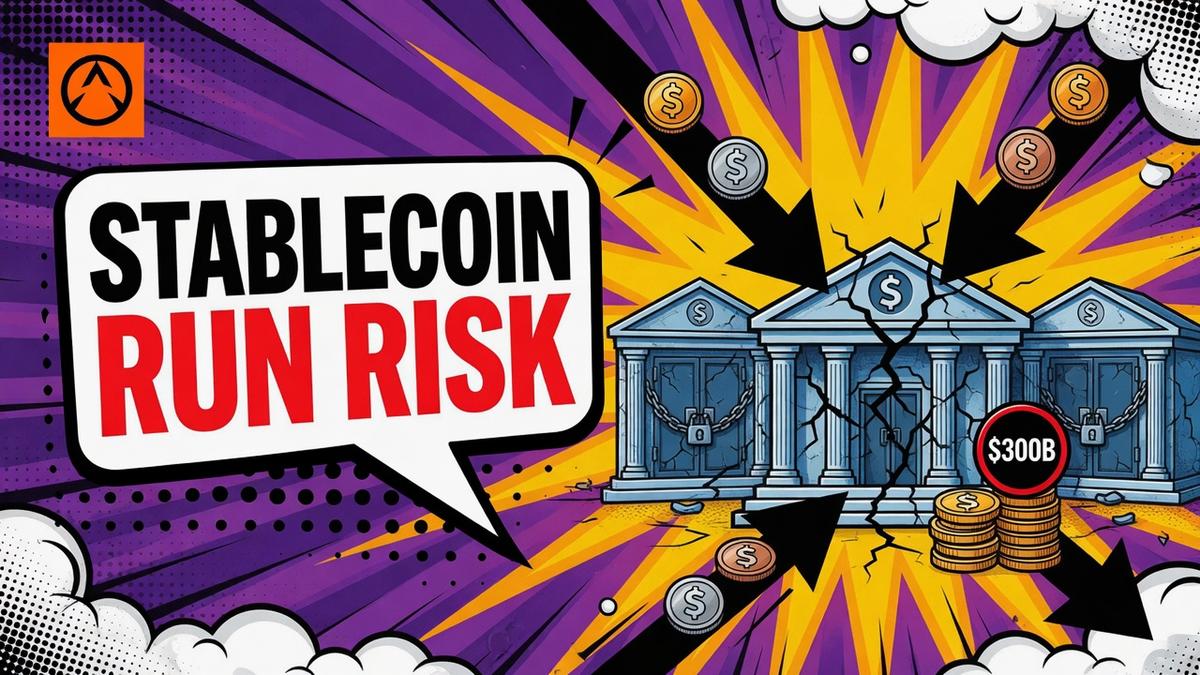
The Financial Stability Board has told G20 finance ministers that stablecoins issued jointly by affiliated companies in different countries could see redemptions pile onto a single entity in a crisis. In a note dated 12 October 2026, the global standard-setter said plainly that "global stablecoins and national regulatory frameworks remain untested in severe stress and insolvency."
For someone holding one of these tokens, the problem is simple. In a run, it may not be clear which company in the group owes you the dollar, or which country's law decides your claim. The FSB wrote that if holders' locations are hard to pin down, "the attribution of liabilities to individual issuers and the legal claims of holders may be unclear in stress and in insolvency."
How a Multi-Issuer Stablecoin Can Break Under Stress
The note singles out what it calls the "multi-issuer" case. Here, affiliated issuers "jointly share liability for a single global stablecoin but hold separate reserves, whose rebalancing may face frictions during stress."
Holders in this setup might be able to redeem with any of the affiliates. That sounds convenient. The FSB sees the catch:
"if holders can redeem with any issuer regardless of where their tokens were issued, redemption demand could concentrate on a single entity in the group."
Put together, one affiliate could face most of the withdrawals while the reserves that back the token sit with its sister companies in other jurisdictions. Moving that money across borders is exactly the step the FSB says may get stuck when markets are under strain.
The note does not say which stablecoins use this structure today.
A $300 Billion Market Built Mostly on the Dollar
The FSB put the total stablecoin market at around $300 billion as of mid-2026, "essentially unchanged from a year earlier." It said 99% of that value is pegged to the US dollar.
The regulator also described how a run could leak out of crypto. A run on a global stablecoin "could potentially spill over to the traditional financial system via reserve-asset fire sales and banking deposit withdrawals to fund redemptions." In plain terms, an issuer under pressure may have to dump the assets backing its token and pull cash from banks, all at once.
The note adds that emerging and developing economies face extra risks, including currency substitution and capital flow problems, so stablecoins "could become systemic at a lower threshold of use" there.
Regulators Admit They Lack the Data
The FSB is candid about its own blind spots. It said authorities "currently rely mostly on private compilers of stablecoin data that use a range of methods." That, it said, creates "comparability and credibility risks."
It also said international rules have helped produce complex cross-border structures. Those rules have also "provided opportunities for regulatory arbitrage, with some issuers choosing to locate in and operate from more lightly regulated or unregulated jurisdictions."
Andrew Bailey chairs the FSB and also runs the Bank of England. He went further in his covering letter, dated 8 October. He wrote that national rules "are taking shape at different speeds and cross-border cooperation in this area is still in its infancy." Mechanisms for cross-border oversight, crisis management and cooperation in insolvency "remain immature or are not yet developed," he said.
Bailey added that the treatment of foreign-issued stablecoins remains "uncertain or undefined in many jurisdictions."
No Crisis Plan, Only Areas for Further Work
For all the warnings, the note proposes no fix of its own. It lists three areas that "may warrant continued consideration":
- enhancing monitoring of cross-border vulnerabilities
- supporting the FSB's 2023 stablecoin recommendations, especially cross-border cooperation and information-sharing
- gathering information on emerging approaches to planning for distress or failure
The FSB does not write law. Its recommendations only bite when member countries turn them into their own rules, so nothing in this note changes how any stablecoin operates today.
The note was one of several deliverables requested by the US, which holds the G20 presidency this year. Finance ministers and central bank governors meet in Bangkok on 15 October, according to the US Treasury's G20 schedule. That same Treasury announcement lists "endorsing a vibrant digital assets ecosystem" among Washington's priorities, which sits awkwardly beside a report whose central finding is that nobody has yet planned for a global stablecoin failing.

Anmol Billa
Anmol Billa is a Senior Analyst at Altcoin Buzz, with over five years of experience working across cryptocurrency markets and the broader digital asset industry. His work focuses on technical analysis, market research, investment insights, and evaluating emerging opportunities within the crypto ecosystem. At Altcoin Buzz, Anmol contributes to technical market analysis, research-driven insights, pitch decks, and funding-related initiatives. His experience combines analytical thinking with a practical understanding of crypto markets, helping translate market trends and emerging projects into clear, actionable insights for readers and industry stakeholders.
More from AnmolNext up

Why Are Strategy and Metaplanet Leaving MSCI Indexes on Nov. 30?
MSCI's November 2026 review removes Strategy from the MSCI USA Index and Metaplanet from its Japan Small Cap Index, effective at the close of Nov. 30.
Related
More in Crypto NewsRelated
JPMorgan's Crypto-Linked Holdings Near $1B as Strategy Stake Jumps 36%
 BTCCOIN
Bitcoin Wallet Named in $260B Lawsuit Moves 75 BTC After 15 Years
BTC
Visa Opens Its Settlement Network to Anchorage Digital's Stablecoins