AltcoinBuzzAltcoinBuzz
Subscribe
  • Crypto News
  • Crypto Research
  • Technical Analysis
AltcoinBuzzAltcoinBuzz

An independent digital media outlet delivering crypto research, news, and technical analysis to a community of 600,000+ users.

Follow us on:

Discover

  • Crypto Research
  • Crypto News
  • Technical Analysis
  • Key Opinions
  • Upcoming Launches

Categories

  • Bitcoin BTC
  • RWA
  • Technology
  • Altcoins
  • Regulation

Company

  • Affiliates
  • Partners & Sponsors
  • Careers
  • Contact
  • Terms of Use
  • Subscription Terms
  • About the ALTCOIN BUZZ
  • Privacy Policy
  • Contact ALTCOIN BUZZ
  • Advertise with us

Copyright 2026 ALTCOIN BUZZ. All rights reserved.Something is buzzzzzzzing.
HomeCrypto NewsHegota could be Ethereum’s last ‘normal’ fork
Crypto NewsEthereum ETHTechnology

Hegota could be Ethereum’s last ‘normal’ fork

Hegota could be Ethereum’s last familiar hard fork. Its settled changes include stronger transaction inclusion and more account control.
AAnmol Billa•Sep 28, 2026
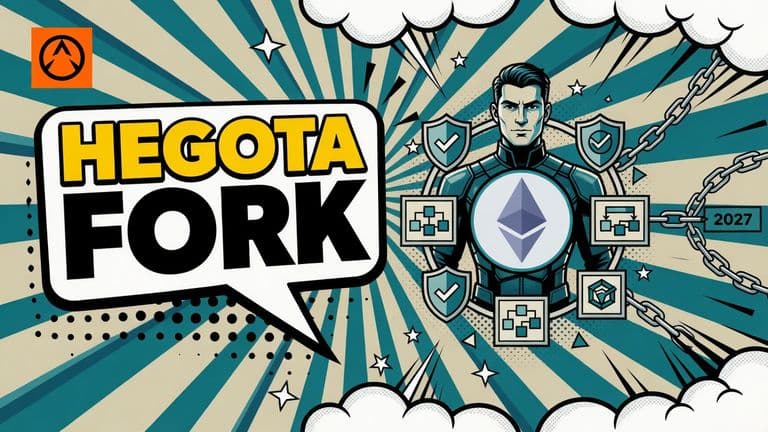
A comic-style Ethereum upgrade scene shows Hegota connecting familiar blockchain blocks to validator-led transaction inclusion and future cryptographic research.
MentionedETH$2,675.64-1.44%

Vitalik Buterin has described Hegota as Ethereum’s likely last “normal” fork, with the network’s development then moving into research-heavy systems for proving computation and strengthening its cryptography. For ETH holders, Hegota is more concrete than that longer-term vision: it is set to include stronger rules for transaction inclusion and greater control over how accounts verify transactions.

The upgrade is still in early planning. Ethereum.org says no date has been set, although Buterin described Hegota as planned for 2027 in a September 27 essay covered by Cointelegraph.

What Buterin meant by ‘normal’

Buterin’s phrase does not mean Ethereum will stop upgrading. He said Hegota would probably be the last upgrade whose technology would still be recognisable to someone who followed Ethereum in 2015.

“If you look at the Strawmap, Hegota, the fork planned for next year, is likely to be Ethereum’s last ‘normal’ fork, with features and technology that would be recognizable to someone in 2015.”

His broader vision calls Ethereum a “cryptographic world computer.” Instead of requiring every node to download and re-execute each block, future nodes would sample data through PeerDAS and verify a cryptographic proof that the block was executed correctly.

The proposed change would also move Ethereum toward four-to-eight-second slots and finality within roughly eight to 32 seconds, compared with blocks of about 17 seconds and a 200-second confirmation window in Ethereum’s 2015 design.

That future is not yet a development schedule. Blockhead reports that much of the work, including real-time block proving and quantum-safe signatures, remains in research or early implementation. Each component would still have to pass Ethereum’s core developer process.

FOCIL limits a single party’s power to censor

Hegota’s main scheduled change is FOCIL, covered by Ethereum’s EIP-7805. It would spread transaction inclusion decisions across a committee of validators rather than leaving one block builder in control.

Under the proposal, committee members would each propose a list of transactions that should be included. Protocol rules would require the block builder to honour those lists. Ethereum.org says this would mean one party could no longer censor a transaction alone.

For holders, that does not remove validators or the protocol. It changes who can make the decision. FOCIL would add a required committee process to block building, so its effect depends on how the proposal is implemented and tested.

Frame transactions give accounts more control

The other scheduled change is frame transactions, EIP-8141. They would let an account use its own verification rules instead of following only the current account model.

Ethereum.org says an account could also choose a signature scheme that a quantum computer could not break. That is a step towards quantum resistance, not a completed migration to quantum-safe cryptography.

For an ETH holder, the practical significance depends on wallet and account support. The proposal gives accounts more flexibility, but the sources reviewed do not set out which wallets will implement it or how existing holders will use the new rules.

The harder work starts after Hegota

Buterin says the work after Hegota includes recursive STARKs, automated formal verification, optimised consensus and quantum safety. These are part of his proposed direction, not confirmed changes for the next fork.

The aim is to reduce the work required from nodes while preserving direct verification. Light clients could check data availability and computation themselves rather than relying entirely on full nodes. Computation could also move offchain while Ethereum commits to and proves the results.

There are unresolved questions. Buterin acknowledged that zero-knowledge proofs remain difficult to make efficient and safe. He also expects access to very large amounts of state to be an even harder challenge. Crypto lawyer Gabriel Shapiro questioned whether financial services will demand continuous cryptographic verification when many rely on reputation, regulation and legal enforcement.

Ethereum.org lists FOCIL and frame transactions as Hegota’s two scheduled changes. Dozens more have been proposed, but none of the others are settled. The upgrade’s final scope, testnet schedule and mainnet date therefore remain open.

The information discussed by Altcoin Buzz is not financial advice. This is for educational, entertainment, and informational purposes only. Any information or strategies are thoughts and opinions relevant to the accepted levels of risk tolerance of the writer/reviewers and their risk tolerance may be different than yours. We are not responsible for any losses that you may incur as a result of any investments directly or indirectly related to the information provided. Bitcoin and other cryptocurrencies are high-risk investments so please do your due diligence.

Copyright Altcoin Buzz Pte Ltd.

Related

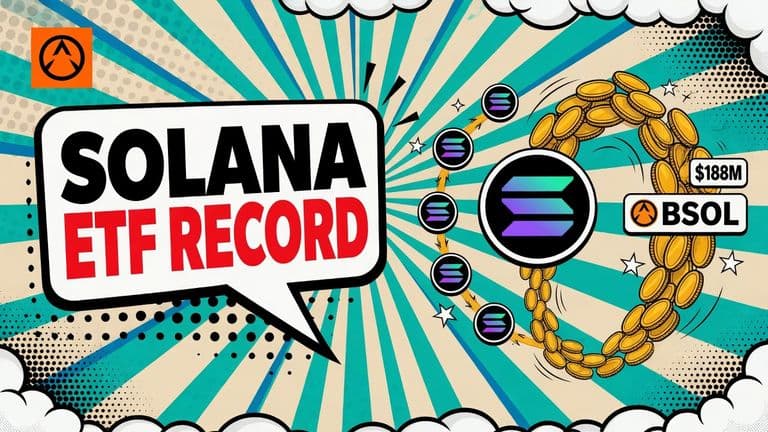
A pop-art cover shows $188 million flowing into seven Solana ETF badges, with the largest stream going to Bitwise's BSOL fund and smaller streams going to the others.
Altcoins
Sep 28, 2026

Solana ETFs Draw Record $188 Million, but Demand Is Uneven

Seven US spot Solana ETFs drew a record $188 million last week, but fund-level data shows demand remained concentrated.
SOL
Shashwat Gupta
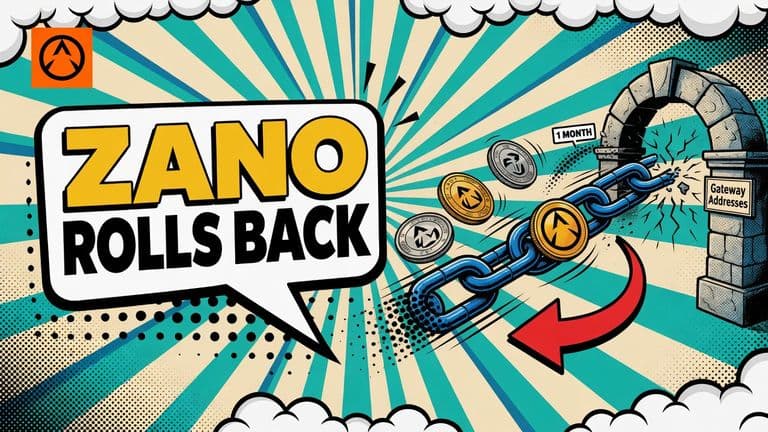
A pop-art illustration shows the Zano blockchain being rewound through a broken Gateway Addresses gateway, with ZANO and fUSD coins caught in the rollback.
AltcoinsStablecoins
Sep 28, 2026

Zano Rolls Back a Month After Gateway Address Exploit

Zano erased about a month of transactions after Gateway Addresses allowed unauthorized ZANO and fUSD into circulation.

Anmol Billa
A pop-art cover shows a JPYC coin beside a sparse Upbit order book and a market-making figure, with a 4X+ badge highlighting the listing surge.
StablecoinsRegulation
Sep 28, 2026

JPYC Surges 4X as South Korea Considers Crypto Market Makers

A JPYC surge on Upbit has led South Korea’s FSC to consider a crypto market-making system as a possible cure for thin liquidity.

Pallavi