The CLARITY Act is heading toward a September Senate vote, putting Coinbase and Circle stocks in focus as investors assess the impact of potential U.S. crypto rules.
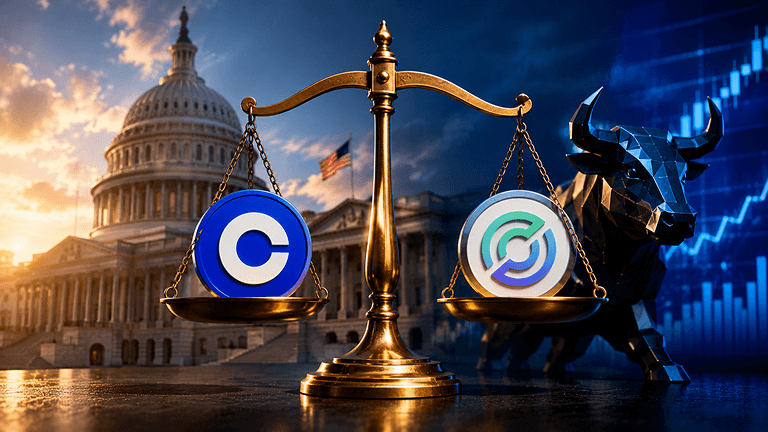
The U.S. Senate is preparing to consider the CLARITY Act in September after Senate Majority Leader John Thune filed cloture on the legislation before the August recess.
The move brings the crypto market structure bill closer to a Senate vote, but it does not guarantee that the legislation will pass. The bill still needs enough support from both Republicans and Democrats to move forward.
For crypto investors, the September vote could become an important event for U.S.-listed crypto companies. Coinbase (COIN) and Circle (CRCL) are two stocks likely to attract attention because their businesses are closely connected to cryptocurrency trading, stablecoins and the wider digital asset market.
The CLARITY Act aims to establish clearer rules for the U.S. crypto industry by defining regulatory responsibilities between the Securities and Exchange Commission (SEC) and Commodity Futures Trading Commission (CFTC).
The latest development came when Thune filed cloture on the motion to proceed to the CLARITY Act before the Senate entered its August recess.
A cloture filing does not mean the bill has passed. Instead, it is a procedural step that can allow the Senate to move toward formally considering the legislation.
The bill still faces a major hurdle. The Senate generally needs 60 votes to overcome a filibuster, meaning Republicans will need support from Democrats to move the legislation forward.
This makes September an important test for the bill and the broader U.S. crypto industry.
Related: The latest development follows the Senate's earlier decision to push the CLARITY Act vote into September. Senate delays CLARITY Act vote until September, confirms Majority Leader Thune explains how lawmakers reached that decision and what Thune said about the next stage of the process.
The biggest potential impact of the CLARITY Act would come from greater regulatory certainty.
Crypto companies operating in the U.S. have faced years of uncertainty over whether certain assets, products and services fall under SEC or CFTC oversight.
The proposed framework could establish clearer boundaries between the two agencies. The SEC has also taken steps in 2026 to clarify how existing securities laws apply to different types of crypto assets.
For publicly traded crypto companies, clearer rules could make it easier to plan new products and services. They could also reduce some of the regulatory uncertainty investors consider when valuing crypto businesses.
However, the impact would not necessarily be immediate.
A failed vote could increase uncertainty, while progress on the legislation could initially improve market sentiment. The final effect will depend on the bill's provisions and how regulators implement the new framework.

Coinbase (NASDAQ: COIN) is one of the most important crypto stocks to watch ahead of the September vote.
Coinbase operates one of the largest cryptocurrency trading platforms in the U.S., making regulatory policy an important factor for its business.
The company has also expanded beyond cryptocurrency trading, with products covering custody, stablecoins, payments and other digital asset services.
That makes the CLARITY Act particularly relevant to Coinbase.
If investors view the legislation as a step toward clearer rules for U.S. crypto companies, COIN could benefit from stronger market sentiment.
On the other hand, another delay or failed vote could keep regulatory uncertainty elevated.
The stock could therefore remain sensitive to headlines surrounding Senate negotiations even before lawmakers hold a final vote.

Circle (NYSE: CRCL) is another crypto stock to watch.
Circle is closely linked to the stablecoin market through USDC, meaning changes to U.S. rules for digital assets and stablecoins could affect investor expectations for the company.
A clearer regulatory framework could make it easier for financial institutions and businesses to expand their use of stablecoins. That could strengthen the long-term growth case for USDC and Circle.
However, investors should also pay close attention to the details of the legislation. Not every regulatory change would necessarily benefit Circle, while competition in the stablecoin market remains an important factor.
For that reason, the September vote should be viewed as a potential catalyst rather than a guaranteed bullish event for CRCL.

A successful Senate vote would likely be viewed positively by crypto investors because it would move the industry closer to a formal market structure framework.
For Coinbase, the potential benefit would come from greater clarity around its exchange and digital asset businesses.
For Circle, investors could focus on whether the new framework supports wider institutional and commercial use of stablecoins.
Other U.S.-listed crypto companies could also react, particularly exchanges, miners, custodians and companies with large digital asset operations.
However, the market could price in much of the optimism before the vote if traders become increasingly confident that the bill will pass.
A failed vote would probably extend regulatory uncertainty across the U.S. crypto industry. That does not mean crypto stocks would automatically fall.
The broader market would still depend on Bitcoin prices, trading volumes, interest rates, ETF flows and company-specific earnings.
The SEC has also continued developing its own crypto regulatory framework, meaning regulatory changes can continue even without new legislation.
The September CLARITY Act process could become an important catalyst for U.S.-listed crypto stocks.
Coinbase gives investors exposure to crypto trading and a growing range of digital asset services, while Circle provides exposure to the expanding stablecoin market.
Both stocks could react to changes in expectations around the legislation.
For now, investors should focus less on whether the CLARITY Act is simply "good" or "bad" for crypto and more on which provisions survive the Senate process and how regulators ultimately implement them.
September could therefore bring significant volatility to crypto stocks, but the direction of that move will depend on both the legislative outcome and what investors expect before the vote.

Trueo will move its primary prediction-market deployment from Base L2 to Ethereum mainnet.
 ETH
ETH
Arch Lending will lend against tokenized equities 'pretty soon,' co-founder Himanshu Sahay said, as tokenized-stock value climbed to $3.15 billion from $630
 BTC
BTC
Circle renewed its USDC deal with Binance for five years. Distribution costs already absorb 61% of reserve income, and the new fee rate is undisclosed.
 BNB
BNB
