AltcoinBuzzAltcoinBuzz
Subscribe
  • Crypto News
  • Crypto Research
  • Technical Analysis
AltcoinBuzzAltcoinBuzz

An independent digital media outlet delivering crypto research, news, and technical analysis to a community of 600,000+ users.

Follow us on:

Discover

  • Crypto Research
  • Crypto News
  • Technical Analysis
  • Key Opinions
  • Upcoming Launches

Categories

  • Bitcoin BTC
  • RWA
  • Technology
  • Altcoins
  • Regulation

Company

  • Affiliates
  • Partners & Sponsors
  • Careers
  • Contact
  • Terms of Use
  • Subscription Terms
  • About the ALTCOIN BUZZ
  • Privacy Policy
  • Contact ALTCOIN BUZZ
  • Advertise with us

Copyright 2026 ALTCOIN BUZZ. All rights reserved.Something is buzzzzzzzing.
HomeCrypto NewsEthereum Drops Plan to Burn Staking Rewards in Hegotá Upgrade
Crypto NewsEthereum ETHTechnology

Ethereum Drops Plan to Burn Staking Rewards in Hegotá Upgrade

Ethereum’s proposed staking reward burn, EIP-8363, has been withdrawn from consideration for the Hegotá upgrade.
SShashwat Gupta•Oct 1, 2026
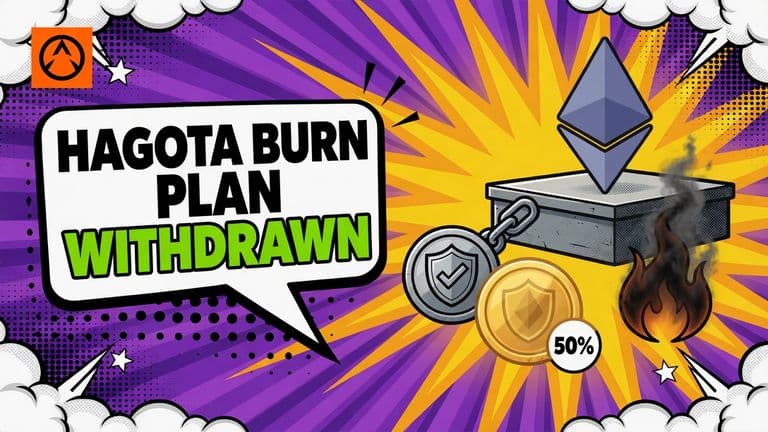
An Ethereum upgrade block sits beside a crossed-out reward flame, while a validator reward coin fades inside the pop-art cover.
MentionedETH$2,689.44+0.24%

Ethereum’s proposed staking reward burn, EIP-8363, has been withdrawn from consideration for the Hegotá upgrade. Co-proposer Jérôme de Tychey announced the withdrawal on October 1.

That removes the proposal from this upgrade, not necessarily from the debate about Ethereum’s issuance policy.

What EIP-8363 Would Change

EIP-8363, titled Tapered Issuance Burn, would burn a growing share of validator rewards as more ETH is staked. Its burn fraction rises with the staking ratio until it reaches 100% at a fixed saturation balance, whose natural value is half the ETH supply.

The practical effect would be a smaller net staking yield as the amount of ETH secured by validators increases. Issuance would stop rewarding stake growth beyond a 50% staking ratio. Under the proposal, that limit applies from day one, although the reduction in rewards would be phased in over 18 months.

The idea is to stop Ethereum’s monetary policy from giving validators a continuing reason to push the staking ratio higher. De Tychey argued that the change was urgent because, with staking entry remaining saturated and few stakers leaving, more than 70 million ETH, or over 55% of supply, could be staked by January 1, 2028.

But in a discussion on Ethereum Magicians, he also acknowledged the political problem. A larger staked base creates a larger group earning rewards from the existing system. Previous issuance debates had shown how that constituency can delay change.

The timetable drew criticism as well. One commenter said EIP-8363 appeared only 48 hours before the Hegotá proposal deadline, leaving too little time to review a change of this scale. De Tychey replied that inclusion in the proposal schedule opens a period for feedback and does not guarantee inclusion in the upgrade.

Why the Opposition Grew

The proposal faced opposition from Aave founder Stani Kulechov, etherfi CEO Mike Siljadze and key Lido contributors. Their argument was straightforward: reducing staking rewards could discourage smaller independent stakers while giving large institutions a greater relative advantage.

That concern lines up with the EIP’s own analysis. Its authors cite studies that found solo stakers to be the most vulnerable to changes in Ethereum’s issuance curve, while institutional and retail delegators were comparatively less likely to change their behaviour.

There is also an unresolved difference in where stakers earn rewards. The EIP estimates that, with roughly 40 million ETH staked, consensus issuance pays about 1,054,000 ETH a year. Execution-layer rewards are at most about 0.20%, meaning consensus issuance accounts for at least 93% of staking yield today.

One group of opponents modelled a 12% mean-return advantage for large pools, widening to 13% to 15% under reduced issuance without an MEV burn. The proposal’s authors say they do not solve the imbalance between MEV and DeFi stacking. They describe it as the strongest open objection and say proposals such as MEV burn could work alongside EIP-8363.

A Separate Path for Issuance Policy

The withdrawal followed objections over validator economics and over how quickly such a monetary policy change was being considered. The Ethereum Foundation had previously said that a hard fork feature schedule was not the right place to settle emission policy, although the exact foundation statement could not be checked against a primary source.

The EIP’s authors now plan a separate issuance-policy process, with Lido among the ecosystem partners offering to help. The team also plans to advance those discussions during the November Devcon. A specific successor proposal or confirmed Devcon agenda item has not been established.

So EIP-8363 still has a path forward, but it now sits outside Hegotá. The useful distinction is between the upgrade decision and the wider policy question. The proposal is no longer trying to make a sweeping change to Ethereum’s staking economics in one hard fork. Its next test is whether a separate process can give validators and the wider ecosystem enough time to agree on the tradeoff.

The information discussed by Altcoin Buzz is not financial advice. This is for educational, entertainment, and informational purposes only. Any information or strategies are thoughts and opinions relevant to the accepted levels of risk tolerance of the writer/reviewers and their risk tolerance may be different than yours. We are not responsible for any losses that you may incur as a result of any investments directly or indirectly related to the information provided. Bitcoin and other cryptocurrencies are high-risk investments so please do your due diligence.

Copyright Altcoin Buzz Pte Ltd.

Related

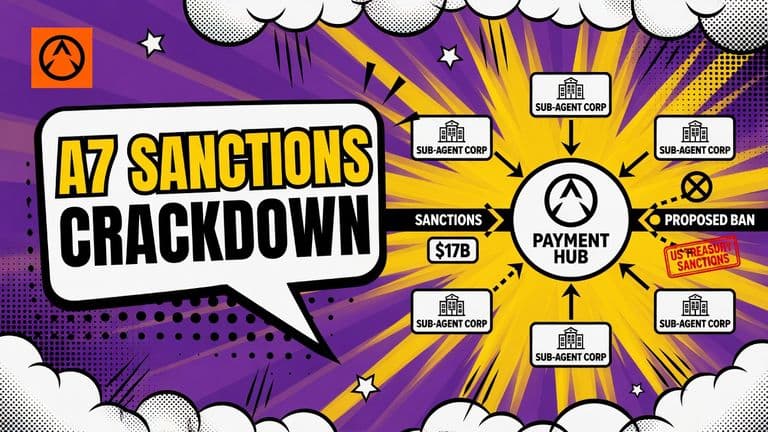
A pop-art A7 payment network is hit by US sanctions while a separate proposed payment ban remains marked as pending.
Regulation
Oct 1, 2026

US Sanctions A7 Network and Proposes Sub-Agent Payment Ban

Treasury sanctioned the A7 Network as a transnational criminal group. FinCEN has separately proposed blocking funds tied to its Sub-Agents.
Shashwat Gupta
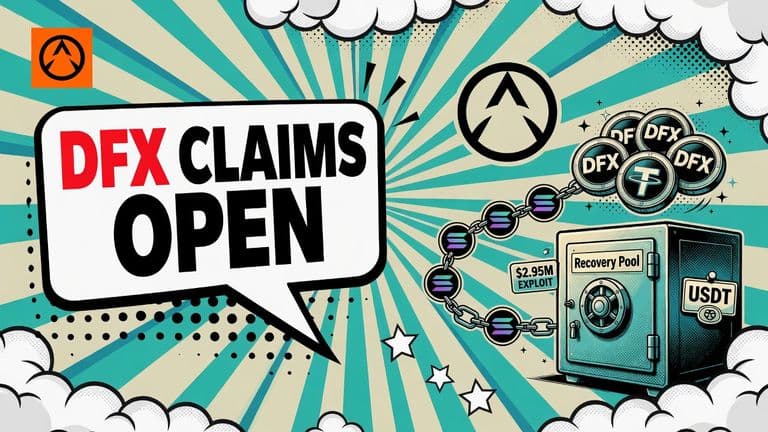
A pop-art cover shows Drift's DFX recovery token beside a partially funded USDT pool, symbolising claims opened for users affected by a $2.95 million exploit.
DeFiAltcoins
Oct 1, 2026

Drift Opens DFX Claims for Users Hit by $2.95M Exploit

Drift opened DFX claims for verified April exploit losses. The first redemption value is about 0.0104 USDT per token, backed by a 3.1 million USDT pool.

SOL
Saloni Rathi
A pop-art crypto company is shown between connected New York and Wyoming oversight symbols, representing coordinated regulation.
Regulation
Oct 1, 2026

New York and Wyoming Regulators Coordinate Crypto Oversight

New York and Wyoming regulators will coordinate licensing reviews, examinations and potential enforcement involving digital asset businesses.

Shashwat Gupta