AltcoinBuzzAltcoinBuzz
Subscribe
  • Crypto News
  • Crypto Research
  • Technical Analysis
AltcoinBuzzAltcoinBuzz

An independent digital media outlet delivering crypto research, news, and technical analysis to a community of 600,000+ users.

Follow us on:

Discover

  • Crypto Research
  • Crypto News
  • Technical Analysis
  • Key Opinions
  • Upcoming Launches

Categories

  • Bitcoin BTC
  • RWA
  • Technology
  • Altcoins
  • Regulation

Company

  • Affiliates
  • Partners & Sponsors
  • Careers
  • Contact
  • Terms of Use
  • Subscription Terms
  • About the ALTCOIN BUZZ
  • Privacy Policy
  • Contact ALTCOIN BUZZ
  • Advertise with us

Copyright 2026 ALTCOIN BUZZ. All rights reserved.Something is buzzzzzzzing.
HomeCrypto NewsEuropean Stablecoin Issuer AllUnity Launches USDAU Across Six Blockchains
Crypto NewsStablecoinsRegulation

European Stablecoin Issuer AllUnity Launches USDAU Across Six Blockchains

AllUnity's USD-pegged USDAU targets European businesses with regulated issuance, 1:1 redemption and support across six blockchains.
PPallavi Malviya Gupta•Oct 1, 2026
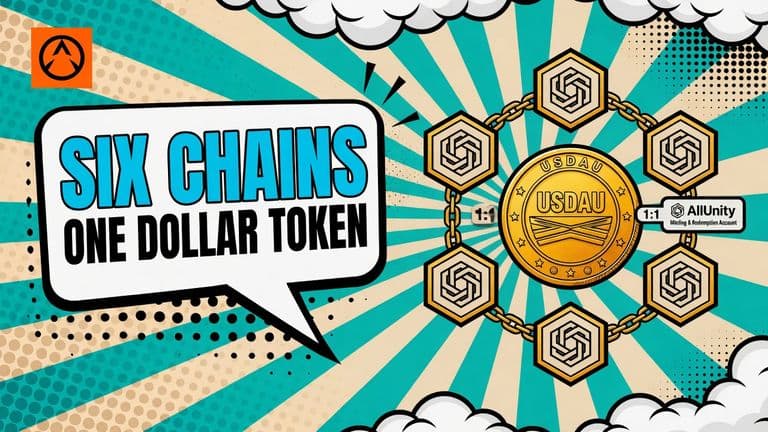
A comic cover shows the USDAU stablecoin connected through a business minting and redemption account to six named blockchain marks.

AllUnity has launched USDAU, a US dollar stablecoin for European businesses. It is pegged 1:1 to the dollar, backed by segregated reserves and redeemable at par through AllUnity's Business Mint Account.

That redemption structure is the detail worth holding on to. A stablecoin can be convenient on screen while still making its holder wait, or accept a price different from par, to get back to ordinary dollars. USDAU gives holders a statutory right to redemption against AllUnity under Article 49 MiCAR.

A Stablecoin Built for Business Payments

USDAU is structured as an E-Money Token, or EMT. AllUnity issues it through a BaFin-licensed e-money institution within Europe's regulated framework.

Banking Circle will provide reserve and transaction banking services for the dollar reserves. Flowdesk is the designated liquidity provider, while Hercle serves as the off-ramp and foreign-exchange partner for institutional clients converting between USDAU and fiat currencies.

Archax is also a direct minting and redemption partner. Its role is aimed at institutional treasury and settlement uses, rather than a casual crypto purchase. Fully onboarded institutional clients can mint and redeem USDAU without charge through the Business Mint Account.

The launch announcement is deliberately narrow. AllUnity says its materials are for legal entities and business customers, not consumers. That focus is sensible for a stablecoin built around treasury operations, settlement and cross-border payments, but it also means USDAU is not presenting itself as a retail wallet product.

Six Chains, One Business Account

USDAU is available through the Business Mint Account, supported exchanges and ecosystem partners. Its first network lineup is broad for a business-focused launch: Ethereum, Solana, Base, Tempo, Arc and Polygon. AllUnity plans to add more networks later in the year.

The supported exchanges, individual contract addresses and the network referred to as Arc were not specified in the launch material. Those details will matter for institutions deciding whether the token fits their existing treasury setup.

The six-chain choice also needs some restraint. Availability across networks can make settlement easier, but it does not by itself show how much activity USDAU will attract. Circulating supply, reserves held and market capitalization have not been disclosed in the launch announcement.

AllUnity does have a MiCAR white paper at allunity.com/whitepapers. The document is intended to contain the material information required under Article 51, including holders' redemption rights.

Why AllUnity Wants Its Own Dollar Token

AllUnity already offers euro-, Swiss franc- and Swedish krona-backed tokens. USDAU extends that lineup to the currency used most heavily across borders.

That is a business decision, not just a product launch. Dollar-pegged tokens dominate the wider stablecoin market, so an issuer serving European companies has a practical reason to offer one under a European regulatory structure. The emphasis is on supervised issuance and enforceable redemption, rather than promising that a token fixes every friction involved in moving dollars.

The launch still carries its own limits. MiCAR compliance means the product has been designed around the framework, not that EU authorities have endorsed the marketing claim. AllUnity notes that its launch communication has not been reviewed or approved by any competent authority in an EU Member State.

The early test for USDAU will be ordinary use by businesses. Minting, redemption, settlement volume and where the token is actually used will tell readers more than its six-chain debut.

The information discussed by Altcoin Buzz is not financial advice. This is for educational, entertainment, and informational purposes only. Any information or strategies are thoughts and opinions relevant to the accepted levels of risk tolerance of the writer/reviewers and their risk tolerance may be different than yours. We are not responsible for any losses that you may incur as a result of any investments directly or indirectly related to the information provided. Bitcoin and other cryptocurrencies are high-risk investments so please do your due diligence.

Copyright Altcoin Buzz Pte Ltd.

Related

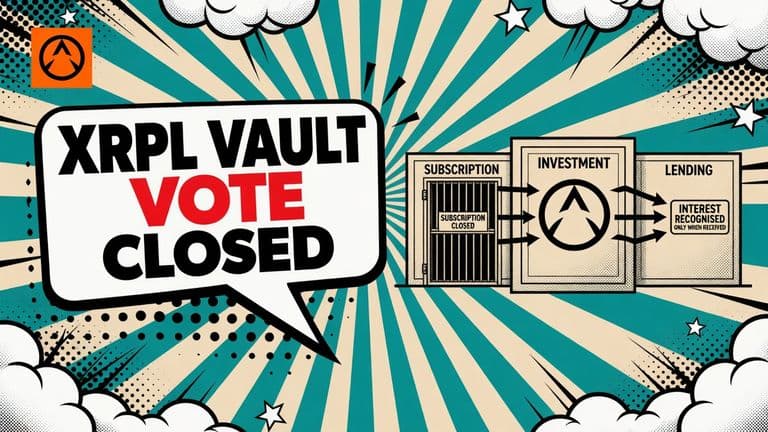
A pop-art illustration of an XRPL lending vault divided into subscription, investment, and redemption stages, with a closed subscription gate and interest recognised when payment arrives.
DeFiTechnology
Oct 1, 2026

XRP Ledger Opens Vote on New Lending Upgrade with Vaults and Interest Rules

XRPL validators are voting on lending changes that add closed-ended vaults, cash accounting and new restrictions for loan brokers.

XRP
Anmol Billa
A comic cover shows OUSD connected across Ethereum, Solana, Base and Tempo, with uneven liquidity pools and a question mark highlighting the uncertainty.
StablecoinsEthereum ETH
Oct 1, 2026

Open Standard Launches OUSD Across Four Chains, but Liquidity Is Unclear

Open Standard launched OUSD on Ethereum, Solana, Base and Tempo on 30 September 2026, giving the dollar stablecoin a four-chain start.
Anmol Billa
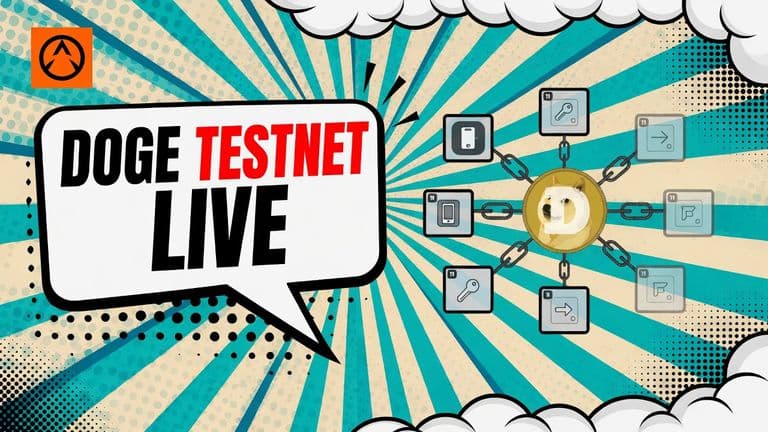
A comic illustration shows Dogecoin connected to the DogeOS testnet, with a mix of application tiles and several unfinished plans inside a speech bubble about the live testnet.
Upcoming LaunchesTechnology
Oct 1, 2026

DogeOS Opens Testnet With 11 Dogecoin Apps in Sight

DogeOS has opened an EVM-compatible testnet for DOGE apps. Here is what works now, what is unverified and what comes before mainnet.

DOGE
Saloni Rathi