AltcoinBuzzAltcoinBuzz
Subscribe
  • Crypto News
  • Crypto Research
  • Technical Analysis
AltcoinBuzzAltcoinBuzz

An independent digital media outlet delivering crypto research, news, and technical analysis to a community of 600,000+ users.

Follow us on:

Discover

  • Crypto Research
  • Crypto News
  • Technical Analysis
  • Key Opinions
  • Upcoming Launches

Categories

  • Bitcoin BTC
  • RWA
  • Technology
  • Altcoins
  • Regulation

Company

  • Affiliates
  • Partners & Sponsors
  • Careers
  • Contact
  • Terms of Use
  • Subscription Terms
  • About the ALTCOIN BUZZ
  • Privacy Policy
  • Contact ALTCOIN BUZZ
  • Advertise with us

Copyright 2026 ALTCOIN BUZZ. All rights reserved.Something is buzzzzzzzing.
HomeCrypto NewsOpen Standard Launches OUSD Across Four Chains, but Liquidity Is Unclear
Crypto NewsStablecoinsEthereum ETH

Open Standard Launches OUSD Across Four Chains, but Liquidity Is Unclear

Open Standard launched OUSD on Ethereum, Solana, Base and Tempo on 30 September 2026, giving the dollar stablecoin a four-chain start.
AAnmol Billa•Oct 1, 2026
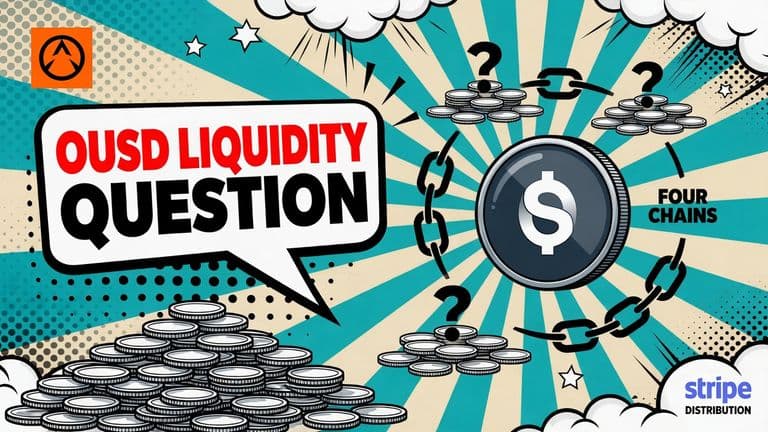
A comic cover shows OUSD connected across Ethereum, Solana, Base and Tempo, with uneven liquidity pools and a question mark highlighting the uncertainty.

Open Standard launched OUSD on Ethereum, Solana, Base and Tempo on 30 September 2026, giving the dollar stablecoin a four-chain start. The practical question for holders is whether those networks offer enough liquidity, reliable redemption and useful distribution to support real payments.

The evidence so far is strongest on distribution. It is weakest on chain-by-chain liquidity.

Stripe Opens OUSD to Businesses

Stripe launched OUSD support across Treasury, Issuing, Global Payouts, Crypto Onramp and Payments on the same day. Businesses can use the token to receive, hold, send and spend funds through Treasury, operate global card programmes and pay recipients overseas.

Stripe also says OUSD has no minting or burning fees. Businesses may receive rewards based on activity, including balances held through Stripe. Finance platform Ramp plans to use Stripe for stablecoin accounts that hold OUSD, while Bridge orchestration APIs can convert OUSD into fiat or other stablecoins.

That gives Open Standard a distribution route through Stripe's products. It does not show how many OUSD balances Stripe currently holds or whether customers can readily buy and sell the token.

Each Network Has a Different Role

OUSD is now Stripe's default stablecoin configuration on Tempo. Stripe says customers can still choose another stablecoin and blockchain, and existing balances will not be forced into OUSD. Tempo therefore has the clearest launch role inside Stripe's product stack.

Solana offers OUSD a high-speed network outside Stripe's default configuration. Its early supply was 18.01 million tokens across 47 wallets as of 19:24 UTC on 30 September, according to Solana Compass. USDC on Solana had 7.86 billion tokens across 9.31 million wallets two minutes later, underlining how small OUSD's launch footprint was.

OUSD is also live on Ethereum and Base, but the research found no network-specific supply, holder or liquidity figures for either chain. Open Standard has not said how total supply will divide among its four networks. Without that split, it is not possible to compare the depth of OUSD markets on Ethereum, Base, Solana and Tempo.

Reserves Are Named, but the Mix Is Unclear

Bridge, a Stripe company, issues OUSD, while Open Standard runs the stablecoin. Launch information identifies BlackRock, Lead Bank and BNY as reserve holders. Bridge publishes monthly reserve attestations, which allow users to examine the reported reserve position rather than rely only on Open Standard's claims.

The available information does not set out the allocation between those reserve holders or show how much reserves are attributable to each chain. That matters. A common issuer and reserve structure can support trust across networks, but it does not create equal liquidity on every network.

For now, all four chains carry the same OUSD ticker and issuer relationship. Their practical liquidity may still differ sharply.

Distribution Is Clearer Than Liquidity

OUSD's access points include Stripe and a wider group of on-ramps and trading venues. Open Standard has also assembled a partner network that includes major financial and technology companies. The backing announcements therefore focus less on crypto-native liquidity pools and more on payments companies, banks and business infrastructure.

That may help distribution, but it leaves several questions for holders:

  • How much OUSD was issued on each chain at launch?
  • How deep are the secondary-market pools and trading pairs?
  • How quickly can users redeem through banks or payment partners?
  • Do monthly attestations disclose any chain-specific reserve allocation?

Until those figures are published, OUSD is best viewed as a new stablecoin with confirmed business integrations, not yet a proven four-chain liquidity market.

Holders should also check the token address before trading on Solana: ousd2mJsPEckLHcSCDxyKD7NDGARZcfLbDZkKiatYHB. Origin Dollar also uses the OUSD ticker, but it is a separate project.

The ticker collision is an avoidable operational risk. Comparing liquidity across the four chains is harder because Open Standard has not yet supplied the basic chain-level numbers needed to make that comparison.

The information discussed by Altcoin Buzz is not financial advice. This is for educational, entertainment, and informational purposes only. Any information or strategies are thoughts and opinions relevant to the accepted levels of risk tolerance of the writer/reviewers and their risk tolerance may be different than yours. We are not responsible for any losses that you may incur as a result of any investments directly or indirectly related to the information provided. Bitcoin and other cryptocurrencies are high-risk investments so please do your due diligence.

Copyright Altcoin Buzz Pte Ltd.

Related

A pop-art illustration of an XRPL lending vault divided into subscription, investment, and redemption stages, with a closed subscription gate and interest recognised when payment arrives.
DeFiTechnology
Oct 1, 2026

XRP Ledger Opens Vote on New Lending Upgrade with Vaults and Interest Rules

XRPL validators are voting on lending changes that add closed-ended vaults, cash accounting and new restrictions for loan brokers.

XRP
Anmol Billa
A comic cover shows the USDAU stablecoin connected through a business minting and redemption account to six named blockchain marks.
StablecoinsRegulation
Oct 1, 2026

European Stablecoin Issuer AllUnity Launches USDAU Across Six Blockchains

AllUnity's USD-pegged USDAU targets European businesses with regulated issuance, 1:1 redemption and support across six blockchains.
Pallavi Malviya Gupta
A comic illustration shows Dogecoin connected to the DogeOS testnet, with a mix of application tiles and several unfinished plans inside a speech bubble about the live testnet.
Upcoming LaunchesTechnology
Oct 1, 2026

DogeOS Opens Testnet With 11 Dogecoin Apps in Sight

DogeOS has opened an EVM-compatible testnet for DOGE apps. Here is what works now, what is unverified and what comes before mainnet.

DOGE
Saloni Rathi