South Korea’s Jeonbuk Bank Partners With Ripple for Cross-Border Payments
Ripple has partnered with South Korea’s Jeonbuk Bank to deploy Ripple Payments for faster 24/7 cross-border transfers aimed at businesses.

By Saloni RathiSenior Editor
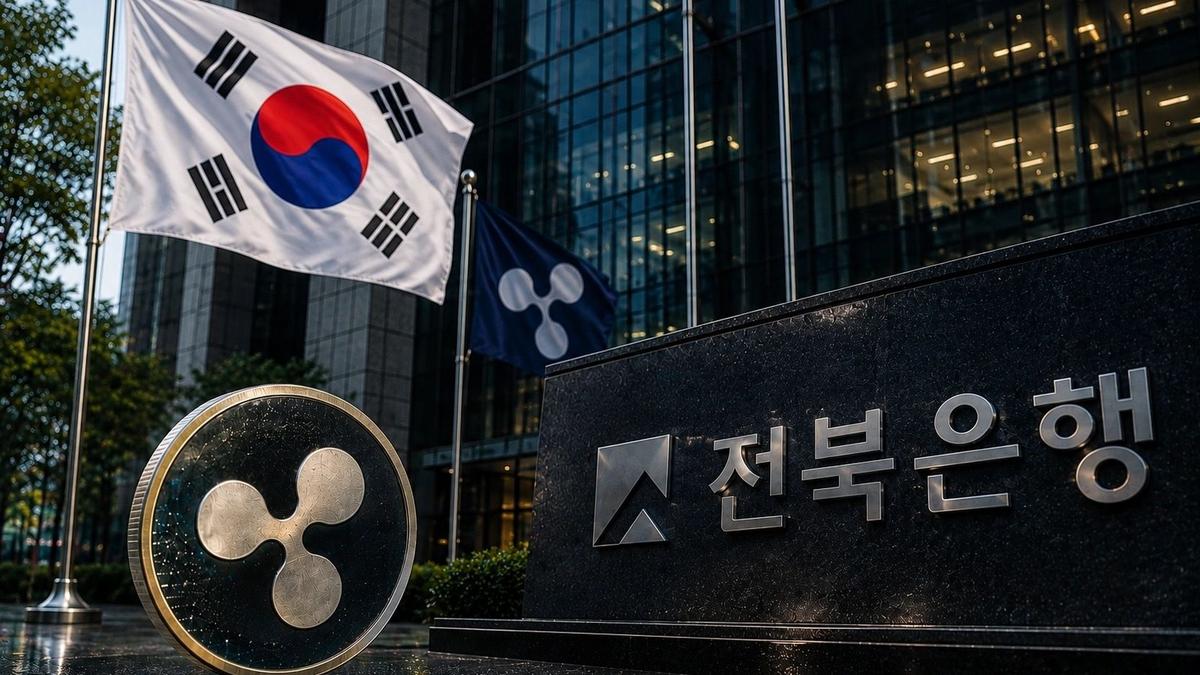
South Korea’s Jeonbuk Bank has partnered with Ripple to bring Ripple Payments to its business customers, aiming to make international transfers faster and more efficient.
The partnership gives businesses access to cross-border payment infrastructure designed to process overseas transfers within seconds to minutes, rather than relying solely on traditional banking routes that can take several days.
Jeonbuk Bank to Use Ripple Payments for International Transfers
Ripple said its Ripple Payments platform will support Jeonbuk Bank’s business customers with around-the-clock cross-border payment capabilities.
The service is aimed at businesses that regularly send or receive international payments, including import-export companies, technology startups and online content creators.
Traditional international transfers often involve intermediary banks and the SWIFT messaging network. Depending on the payment route, these transfers can take several days to settle and may involve additional costs.
Ripple's platform is designed to provide a faster alternative, allowing payments to move across borders within seconds or minutes.
For Jeonbuk Bank, the partnership could therefore provide its business customers with a more streamlined way to handle international transactions.
Ripple and Jeonbuk Bank Leave Key Details Undisclosed
While the partnership highlights Ripple's expanding presence in South Korea, several important details remain unclear.
Ripple and Jeonbuk Bank have not disclosed whether the service is already available to customers or when it will officially launch.
The companies also have not revealed:
- Which international payment corridors will be supported
- Which currencies customers will be able to use
- The fees associated with transfers
- Expected transaction volumes
- Which settlement assets or payment rails will be used
Importantly, the announcement does not confirm that XRP will be used for Jeonbuk Bank's transactions.
It is also unclear whether the service will use XRP, Ripple's RLUSD stablecoin, another digital asset or fiat-based settlement infrastructure.
That distinction is important because Ripple Payments can provide cross-border payment infrastructure without every implementation necessarily requiring XRP as the settlement asset.
The partnership is also notable in the context of Ripple's expanding ecosystem around XRP and RLUSD. XRP is gaining additional utility beyond payments, with FXRP recently becoming approved as collateral for RLUSD lending on Ethereum.
Jeonbuk Bank Deal Expands Ripple's South Korean Footprint
The partnership represents Ripple's third deal with a South Korean financial institution this year.
Ripple previously partnered with Kyobo Life Insurance to explore the use of blockchain infrastructure for government bond settlement.
The company also partnered with internet-only bank Kbank on institutional wallet infrastructure.
The latest agreement with Jeonbuk Bank therefore adds another use case to Ripple's growing presence in South Korea's financial sector.
Rather than focusing solely on cryptocurrency trading, these partnerships show Ripple targeting areas where blockchain technology could potentially improve existing financial infrastructure.
Cross-Border Payments Remain a Key Blockchain Use Case
International payments are one of the areas where blockchain companies have long sought to challenge traditional financial infrastructure.
Conventional cross-border transfers can involve multiple intermediaries, different banking systems and varying settlement times. Blockchain-based payment systems aim to reduce some of those steps and allow transactions to move continuously rather than being restricted by traditional banking hours.
Ripple is positioning Ripple Payments around this use case, particularly for businesses that need to move money internationally on a regular basis.
For Jeonbuk Bank's customers, the potential benefit is straightforward: faster international payments with fewer intermediaries.
However, the actual impact of the partnership will depend on how the service is implemented and how widely businesses adopt it.
What the Partnership Means for XRP
The Jeonbuk Bank announcement is likely to attract attention from XRP investors because of Ripple's connection to the XRP ecosystem.
However, it would be premature to treat the partnership as direct evidence of new XRP demand.
Ripple has not confirmed which asset will be used to settle the bank's transactions. Until the company or Jeonbuk Bank provides those details, there is no basis for claiming that the partnership will directly increase XRP usage.
While Ripple continues expanding its institutional payment footprint, XRP's market performance remains a separate question. Recent network activity has provided some support for XRP around the $1 level, but the token still needs stronger buying pressure to establish a sustained recovery.
If future announcements confirm XRP or RLUSD as part of the settlement process, that could provide additional insight into how Ripple's digital assets are being integrated into institutional payment flows.
For now, the Jeonbuk Bank partnership represents another step in Ripple's effort to bring blockchain-based cross-border payments into established banking infrastructure, while the details around its actual implementation remain to be seen.
Ripple recently minted another 10 million RLUSD as the stablecoin's market capitalization continued to grow, highlighting the company's broader push into institutional payment infrastructure.

Saloni Rathi
Saloni Rathi has been part of Altcoin Buzz for over five years, working across content and marketing within the crypto and Web3 space. Her work focuses on creating clear, engaging and accessible content that helps readers understand complex cryptocurrency and blockchain topics. With a strong interest in storytelling and audience engagement, Saloni brings together research, creativity and marketing insight to turn complex ideas into simple and relatable stories. She believes great content starts with curiosity, creates clarity, and ultimately builds meaningful connections with readers.
More from SaloniNext up

Binance Lets Users Spend Against BTC, ETH and BNB With Pay Later
Binance opens Pay Later in Argentina and Mexico, letting users borrow up to 1,000 USDC against BTC, ETH or BNB, with liquidation at a 44% collateral drop.
 BTC
 BNB
Related
More in Crypto NewsRelated
$38,206 Drained From Curve Fee Contract in Signature Flaw
 CRVUSDC
Withdrawals Resume at Lighter After Leak Drained $10.39M
 ETH

Gnosis Safe Wallet Loses $6.45M With No Owner Signature
 XMR

Lighter Blames Leaked API Key for Reported $15.5M Drain
 LITUSDC