AltcoinBuzzAltcoinBuzz
Subscribe
  • Crypto News
  • Crypto Research
  • Technical Analysis
AltcoinBuzzAltcoinBuzz

An independent digital media outlet delivering crypto research, news, and technical analysis to a community of 600,000+ users.

Follow us on:

Discover

  • Crypto Research
  • Crypto News
  • Technical Analysis
  • Key Opinions
  • Upcoming Launches

Categories

  • Bitcoin BTC
  • RWA
  • Technology
  • Altcoins
  • Regulation

Company

  • Affiliates
  • Partners & Sponsors
  • Careers
  • Contact
  • Terms of Use
  • Subscription Terms
  • About the ALTCOIN BUZZ
  • Privacy Policy
  • Contact ALTCOIN BUZZ
  • Advertise with us

Copyright 2026 ALTCOIN BUZZ. All rights reserved.Something is buzzzzzzzing.
HomeCrypto NewsSaylor’s Digital Rights Plan Is a Proposal, Not Crypto Law
Crypto NewsRegulationBitcoin BTC

Saylor’s Digital Rights Plan Is a Proposal, Not Crypto Law

Michael Saylor proposes five digital asset rights. The plan could widen Bitcoin banking, but no law or rule has adopted it.
AAnmol Billa•Sep 27, 2026
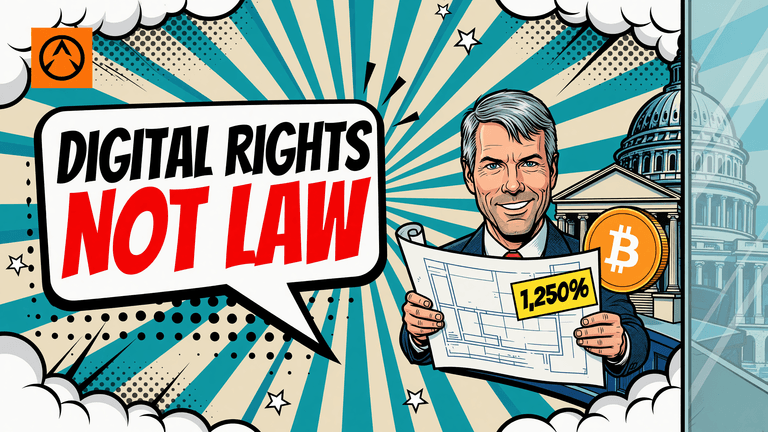
A pop-art illustration shows Michael Saylor with a digital-rights blueprint beside a bank and Bitcoin coin, while a Congressional building remains behind a barrier.
MentionedBTC$84,773.00+0.92%

Michael Saylor has proposed a “bill of digital rights” for digital assets, including the right to issue tokens, choose a custodian, transfer assets and use them for payments, investment or borrowing. For Bitcoin holders, the main effect would be greater access to banking, not a change in the law today.

The proposal, reported by Cointelegraph, appeared in an essay Saylor posted on X. It sets out five rights:

  • The freedom to create digital assets.
  • The right to issue them to raise capital.
  • The right to hold them or choose a custodian.
  • The right to transfer them between people, companies, wallets and service providers.
  • The right to use them to spend, invest, earn income or borrow against them.

No legislation, regulation or agency action has adopted this framework. The actual X post and the full essay were not independently checked, so the available sourcing is limited to news reports quoting and paraphrasing it.

What changes for Bitcoin holders

The most concrete proposal concerns banks. Saylor wants banks to custody Bitcoin for customers and offer loans backed by it under workable rules. Wider access could allow owners to borrow against their Bitcoin without selling it, although the proposal does not set loan standards, interest rates or eligibility rules.

He also wants customers to choose between self-custody and a third-party custodian without giving up ownership or control. That language sets a policy direction, but it does not guarantee that every bank will offer Bitcoin services or that a depositor will retain the same legal protections as with cash.

Saylor is using the Basel framework to argue that current policy is too restrictive. Its riskiest class of crypto holdings carries a 1,250% risk weight, according to BeInCrypto. Saylor wants policymakers to reconsider that treatment. A risk weight affects how much capital a bank must hold against an exposure, so lowering it could make Bitcoin custody and lending more practical for some institutions.

Banks and fintechs would compete for deposits

Saylor also wants banks, financial technology companies and technology platforms to offer digital dollars through devices and applications people already use. He argues that these products should compete on yield, while disclosing their risks.

His wider policy package includes tokenized securities that investors can hold directly and move between providers. It also calls for larger de minimis thresholds for routine transactions, tax relief for small digital asset payments and reuse of identity checks between institutions.

The practical test is whether these proposals give people meaningful control without removing the compliance checks banks need. Higher yields are useful only if investors understand the risks, and direct ownership through a token is not the same as legal ownership of the underlying asset. The available reports do not explain how Saylor would address those distinctions.

Congress has not adopted the framework

Saylor presented the plan after speaking at a Freedom Tech DC event organised by the Bitcoin Policy Institute. He says the next two years of progress should run through the SEC, CFTC, Treasury, the White House and banking regulators, while lawmakers replace the CLARITY Act.

BeInCrypto reported that the Senate voted 49-50 against advancing CLARITY on September 15. The brief did not include a primary legislative record confirming that vote, and the report’s dates could not be checked against one. Saylor’s plan therefore remains a policy proposal, not enacted law.

Saylor’s ambition is to help 10 million new companies raise capital. Strategy’s Bitcoin Banking Adoption Index put major-bank uptake at 32% in July, according to BeInCrypto. That figure describes reported adoption, not the terms, profitability or legal treatment of any bank’s service.

His broader argument is straightforward: an asset is more useful when its owner can use, transfer and borrow against it. Whether that argument changes Bitcoin banking depends on regulators and banks writing rules that permit those activities, rather than on the essay itself.

The information discussed by Altcoin Buzz is not financial advice. This is for educational, entertainment, and informational purposes only. Any information or strategies are thoughts and opinions relevant to the accepted levels of risk tolerance of the writer/reviewers and their risk tolerance may be different than yours. We are not responsible for any losses that you may incur as a result of any investments directly or indirectly related to the information provided. Bitcoin and other cryptocurrencies are high-risk investments so please do your due diligence.

Copyright Altcoin Buzz Pte Ltd.

Related

A bold comic cover showing the SEC separating a functioning network from issuer-dependent promises while token buybacks continue in the background.
RegulationAltcoins
Sep 27, 2026

SEC Staff Says Token Buybacks Aren’t Essential if the Network Works

SEC staff say buybacks alone aren’t essential managerial efforts for a functional crypto network, but the guidance is not a binding SEC position.

Shashwat Gupta
A tokenized stock breaches a volume limit and is suspended from trading while its traditional stock counterpart remains active.
RegulationRWA
Sep 27, 2026

Tokenized Stocks Can Face Three-Month Pauses After Volume Breaches

Repeated volume breaches can pause one tokenized stock across affiliated exchanges for three months, even while investors retain their economic rights.
Bikash Deka
Clarity Act Blocked
Regulation
Sep 27, 2026

Clarity Act Fails After a Last-Minute Ethics Deal Is Killed

A procedural vote failed, but negotiations reached the final yard. Here is what broke the Clarity Act and what could revive it.

Pallavi