The SEC has proposed new crypto rules that could give token issuers exemptions and a safe harbor as Congress struggles to advance the CLARITY Act.
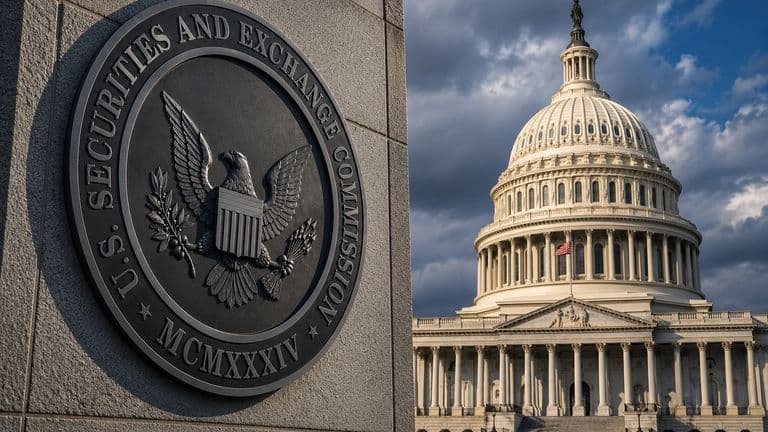
The U.S. Securities and Exchange Commission (SEC) has proposed a new framework for certain crypto assets, giving digital asset companies a potential path to raise capital without automatically having their tokens treated as investment contracts.
The proposal comes as Congress struggles to advance the Digital Asset Market CLARITY Act, leaving the cryptocurrency industry facing continued uncertainty over how federal agencies will divide responsibility for digital assets.
The SEC announced its proposed “Regulation Crypto Assets” framework on August 18. The agency said the rules are intended to create a “clear and fit-for-purpose” framework for certain investment contracts involving crypto assets.
Under the proposed rules, certain crypto projects would receive a more clearly defined framework for raising capital while remaining subject to investor-protection requirements.
The proposal introduces the concept of “covered investment contracts,” creating a specific offering regime for certain crypto-related investments. The SEC said the framework is intended to account for the unique characteristics of crypto markets rather than applying traditional securities rules without modification.
The proposal also includes exemptions that could allow eligible issuers to sell tokens within specified limits.
Under the framework described in the proposal, issuers could raise up to $5 million in tokens over a four-year period under one exemption and up to $75 million within 12 months under another. Token issuers would still face disclosure and ongoing reporting requirements.
The proposed rules would also establish a safe harbor under which certain crypto assets would not automatically be treated as investment contracts.
That could be significant for companies that have struggled to determine whether their tokens fall under U.S. securities laws.
The timing of the proposal is particularly important.
Congress has been working on the CLARITY Act, which is designed to establish a broader regulatory framework for digital assets and clarify the responsibilities of the SEC and the Commodity Futures Trading Commission (CFTC).
However, the legislation has faced delays in the Senate.
Previously the Senate delayed the CLARITY Act vote until September, extending uncertainty for the crypto industry. That earlier delay followed concerns that lawmakers had limited time to advance the legislation before the August recess.
The SEC's latest proposal therefore provides the industry with a potential regulatory framework while Congress continues working on legislation. SEC Chair Paul Atkins nevertheless stressed that legislation remains important.
He said the SEC would continue supporting Congress in delivering the CLARITY Act to President Donald Trump, arguing that legislation is necessary to create durable rules that cannot simply be reversed by a future regulator.
One of the biggest potential changes for crypto companies is the ability to raise capital through token offerings under more clearly defined exemptions. The SEC's proposed framework would not simply remove regulatory obligations.
Companies using the proposed exemptions would have to provide financial information and comply with ongoing reporting requirements. This means the framework attempts to balance easier access to capital with continued investor protections.
For crypto startups, that could create a more predictable route for launching tokens in the United States.
However, the proposal is not yet final.
The SEC will accept public comments for 60 days after the proposal is published in the Federal Register. The agency could then modify the rules before adopting them.
The SEC's announcement comes just before a scheduled meeting of the CFTC, which is expected to discuss cryptocurrency, artificial intelligence and prediction markets.
The commodities regulator said it intends to examine areas where regulatory action could complement future legislation from Congress.
That could further shape the division of responsibilities between the two major U.S. financial regulators.
The issue has been one of the central problems facing the crypto industry: companies often need to determine whether a particular digital asset or activity falls under SEC securities rules, CFTC commodities oversight, or potentially both.
A clearer division could reduce some of that uncertainty.
Despite the SEC's proposal, Congress remains central to the future of U.S. crypto regulation.
Before the August recess, Senate Majority Leader John Thune filed cloture on a motion to take up the CLARITY Act once lawmakers return in September.
However, the legislative calendar is becoming increasingly tight.
According to the information provided in the proposal's timeline, the Senate has only 14 days in session after returning from the August recess before breaking again ahead of the November election.
If lawmakers fail to complete the process during that window, they will have another 22 legislative days before the end of 2026.
That leaves a relatively narrow opportunity for the bill to move forward before a new Congress is sworn in.
Related: CLARITY Act faces uncertain future as Senate runs out of time
The SEC's move could provide the crypto industry with some regulatory relief even if Congress takes longer to pass the CLARITY Act.
A tailored framework for token offerings and a safe harbor could make it easier for companies to understand the rules around launching and selling digital assets.
However, the proposal does not replace comprehensive legislation.
The SEC itself has acknowledged the importance of congressional action, while the final shape of the framework will depend on the public-comment process and any changes made before adoption.
For the crypto market, the next few months could therefore be important on two fronts: the SEC's proposed rules and the Senate's attempt to revive the CLARITY Act in September.
If both efforts progress, U.S. crypto companies could move closer to having the clearer regulatory framework the industry has been seeking for years.

ESMA wants EU crypto firms barred from custody and transfers involving stablecoins that fail MiCA rules. It is a proposal, not current law.

BlackRock built three portfolio strategies for Ondo. Each is wrapped as one token that automates allocation, rebalancing and fees.

Business and commercial programs generated about 17% of Visa's stablecoin-linked card volume, as payment growth across its programs approached 200% year over

