SOL, SUI, BNB and PUMP are entering the second half of 2026 with major catalysts ranging from network upgrades to regulation and token buybacks.
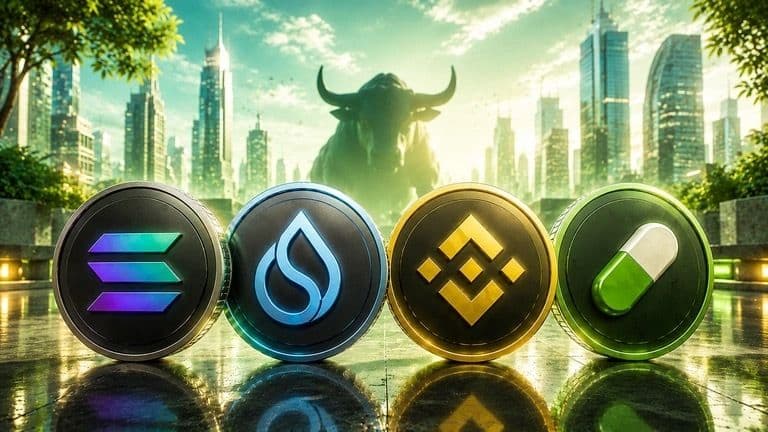
 SOL$106.22+5.63%
 SUI$0.787386+8.79%
 BNB$754.76+3.85%
 PUMP$0.004232+8.59%
The crypto market is heading into the second half of 2026 with several major catalysts developing across regulation, blockchain infrastructure and token economics.
The CLARITY Act remains a key regulatory story in the United States, while Solana, BNB Chain and Sui are pushing upgrades designed to improve speed, payments and network activity. At the same time, Pump.fun's PUMP token is benefiting from platform revenue and buyback activity, although a large token unlock adds another risk.
None of these developments guarantees a crypto bull run or a rally in the tokens involved. But they create several themes worth watching as the market looks for its next major catalyst.
Before looking at individual tokens, regulation could have the biggest impact on the broader market.
The U.S. Senate left Washington for its August recess without advancing the Digital Asset Market CLARITY Act, creating a setback for the bill. However, the legislation has not been abandoned.
Senate Majority Leader John Thune filed a cloture motion before the recess, with the Senate scheduled to vote on the motion on September 15. A cloture vote would be a procedural step toward considering the bill; it would not by itself mean the CLARITY Act has passed.
The legislation still needs enough support to move forward, and the timeline is becoming tighter. Reuters reported that the bill faces significant hurdles, including opposition over provisions related to stablecoin rewards, government officials and anti-money-laundering protections.
For crypto markets, the importance is broader than any one token. A clearer U.S. regulatory framework could reduce uncertainty for exchanges, developers and financial institutions.
The September 15 procedural vote is therefore one of the main dates to watch.
Related: CLARITY Act faces September challenge as Senate support remains uncertain
The network is preparing further upgrades to improve block production and reduce resource costs. Solana's recent development updates show a planned reduction in slot times from roughly 400 milliseconds to 350 milliseconds as the upgrade progresses through testing.
The longer-term target is around 200 milliseconds, according to the source material.
Faster slots could make applications feel more responsive, while lower storage costs could give developers more room to build applications that generate large amounts of on-chain data.
This matters because Solana's ecosystem is no longer driven only by speculative meme-coin trading. Payment activity is becoming another part of the network's story, with July reportedly setting a record for Solana crypto card spending at around $69.5 million.
The question for SOL investors is whether these infrastructure improvements translate into sustained economic activity. Faster technology is useful, but the market ultimately needs developers, users and applications to take advantage of it.
Pump.fun's native PUMP token has also attracted attention after gaining more than 30% over the past week, according to the source data.
It would be easy to connect that move directly to Solana's upcoming upgrades. However, the stronger explanation comes from Pump.fun itself.
The platform has tied a portion of its revenue to PUMP buybacks and burns. Pump.fun's official token page says 50% of platform revenue is allocated toward buying PUMP on the open market and burning the tokens.
That creates a direct link between platform activity and the token's supply dynamics. If revenue rises, the amount allocated to buybacks can also increase, although this does not guarantee a higher token price.
Pump.fun has also continued expanding its product offering, including social and trading features designed to increase activity across the platform.
That gives PUMP three potential drivers:
Solana's upgrades could strengthen these factors indirectly. A faster and cheaper network could make launching and trading tokens easier, potentially creating more activity for Pump.fun.
But there is also a major risk: token unlocks.
The source material points to approximately 6.875 billion PUMP tokens scheduled to unlock around August 12. New tokens entering circulation can create additional selling pressure and offset some of the impact from buybacks.
That leaves PUMP caught between two forces: growing platform activity on one side and additional token supply on the other.
Related: PUMP price rallies 30%: can the rally survive the next token unlock?
BNB Chain is taking a similar approach, but its roadmap focuses heavily on scaling infrastructure.
During the first half of 2026, BNB Smart Chain reduced its block interval from 750 milliseconds to 450 milliseconds. Benchmark throughput also increased to around 5,200 transactions per second, according to BNB Chain's official H2 roadmap.
The network is now working toward another major performance jump.
BNB Chain says its next-generation Layer 1 architecture is being designed around a much larger long-term performance target. The roadmap describes a path toward 1 million TPS as an end-of-life goal, while earlier reporting around the new architecture has highlighted a 100,000-plus TPS design target.
The project is also exploring features such as resource isolation, more specialized gas pricing and other infrastructure changes.
However, investors should not treat the roadmap as an immediate catalyst. The new Layer 1 is still under development, with testing expected later in 2026 and mainnet deployment expected afterward.
BNB has also gained exposure through institutional market infrastructure. A digital-asset index launched by S&P Dow Jones Indices and Pantera Capital in July included BNB among its five largest assets at launch, alongside ETH, SOL, TRX and HYPE.
That could give BNB additional visibility among investors looking for blockchain assets with measurable network activity and revenue.
Sui has a different growth story.
In May, the network introduced gasless stablecoin transfers, allowing users and businesses to send supported stablecoins without holding SUI to pay transaction fees. Sui says the feature makes stablecoin transfer fees $0 for supported transactions.
That removes one of the most common friction points in blockchain payments.
A new user may already understand USDC or another dollar-backed stablecoin. Requiring that user to first purchase SUI simply to pay a network fee adds another step. Gasless transfers remove that requirement.
The feature has coincided with a sharp increase in reported stablecoin activity. Sui's press center cited reports of roughly $65 billion in stablecoin volume after activity surged in June.
But volume needs context.
Large transfer figures do not automatically mean millions of new users. Trading systems, arbitrage strategies and repeated transfers can all inflate transaction volume.
There is also a technical caveat. CertiK noted that Sui's rollout of Address Balance and gasless stablecoin transfers was followed by several mainnet halts in May, highlighting the complexity of integrating the payment system into the network's execution and settlement layers.
So the key question is not simply whether Sui can generate a large volume spike. It is whether stablecoin usage remains high over time and turns into sustained payment activity.
Each project has a different potential catalyst.
Asset | Main catalyst | Key risk |
SOL | Network upgrades, payments and ecosystem growth | Broader market weakness and competition |
PUMP | Platform revenue, buybacks and new products | Token unlocks and meme-coin volatility |
BNB | Scaling roadmap and institutional exposure | Long development timeline |
SUI | Gasless stablecoin payments | Whether high transfer volume becomes sustained usage |
SOL has one of the strongest infrastructure and ecosystem stories. PUMP offers a more direct connection between platform revenue and token supply, but carries greater tokenomics risk. BNB has an ambitious scaling roadmap and growing institutional visibility. SUI has built a simple payments narrative around making stablecoins easier to use.
The CLARITY Act could also become a market-wide catalyst if the Senate makes meaningful progress in September.
The next few months could determine whether these narratives turn into real market momentum.
For SOL, investors should watch whether the network upgrades improve performance without creating new reliability issues and whether payment and application activity continues to grow.
For PUMP, revenue, buyback activity and token unlocks will be especially important. A sustained increase in platform activity could support the token's supply-demand setup, while large unlocks could work in the opposite direction.
For BNB, the key question is how quickly its next-generation infrastructure moves from roadmap to testing and eventually mainnet.
For SUI, stablecoin volume needs to remain elevated and translate into real users, payments and applications.
And across the entire market, the September 15 CLARITY Act vote could become one of the most important regulatory events to watch. A successful advance could improve the regulatory backdrop for crypto, while another delay could keep uncertainty elevated.
The 2026 bull case for these assets therefore depends on more than price momentum. Infrastructure upgrades, real network usage, token supply and regulation will all matter. If those factors begin moving in the same direction, SOL, BNB, SUI and PUMP could have stronger foundations for the next phase of the market. But none of those outcomes is guaranteed.
Eric Balchunas says Bitcoin ETFs could eventually hold three times the assets of gold ETFs. Scenario math shows what $1.85 trillion in ETF assets could mean for BTC.
 BTC
BTC
CV Summit 2026 will bring global financial and technology leaders to Zurich on September 29 - 30 to discuss digital assets, AI, tokenization and the future of financial infrastructure.
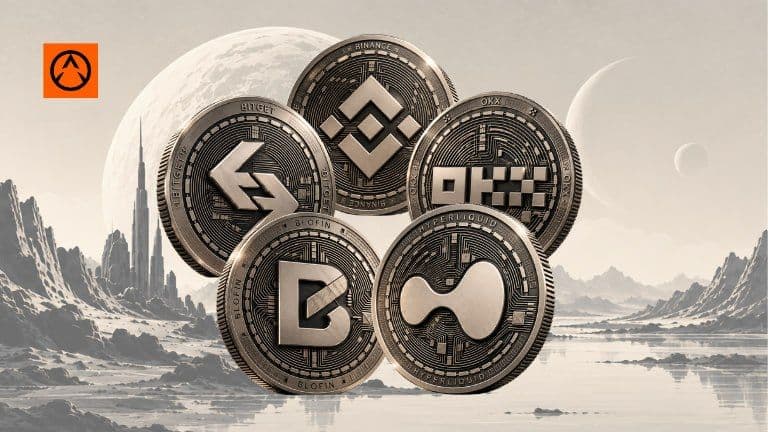
Compare the leading crypto derivatives exchanges by open interest in 2026, with Binance ranking first, followed by Hyperliquid, Bybit, Bitget, OKX, and BloFin.
🚨 BREAKING: U.S. Senate pushes CLARITY Act vote to SEPTEMBER 🇺🇸 According to Politico, Senate Majority Leader John Thune confirmed the crypto market structure bill will be taken up after lawmakers return from the August recess. Crypto regulation is still moving forward, just a Show more


