Robinhood Chain's early meme economy is taking shape around CASHCAT, HMM, TENDIES, Artificial Inu and STONKBROKER. Here's what makes each token stand out in 2026.
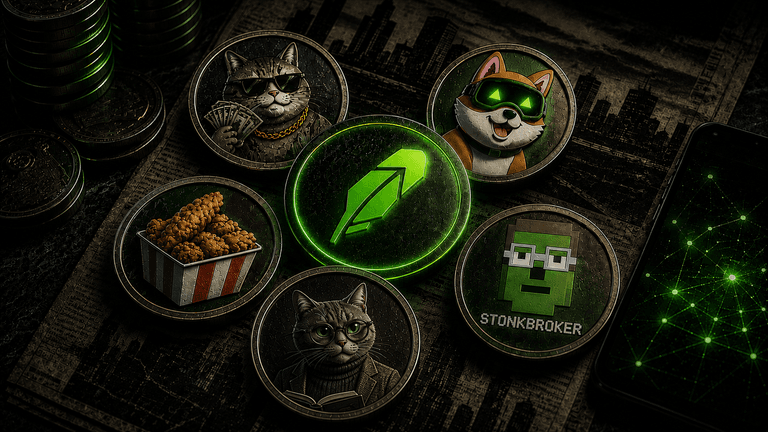
 CASHCAT$0.120283+8.87%
 AI PRICE$0.000082+4.76%
Five names stand out from the first wave: CASHCAT, HMM, TENDIES, Artificial Inu and STONKBROKER
These tokens represent some of the clearest examples of how Robinhood Chain's early meme economy has developed, from the chain's unofficial mascot to tokens built around retail trading culture.
This is Part 1 of our two-part guide to the top Robinhood Chain memecoins in 2026. Part 2 will cover YOLO, PIPEDOG, microduck, BONER (HIMS) and DOGO.
CASHCAT is arguably the most recognizable memecoin to emerge from Robinhood Chain.
The name comes from an interesting piece of Robinhood history. The company was reportedly close to being called Cash Cat before settling on Robinhood. When the new blockchain launched, an anonymous community revived the name and turned it into a token.
The meme gained additional attention after Robinhood CEO Vlad Tenev followed the account and later acknowledged that the new chain "works great for memes too."
That helped CASHCAT become one of the earliest breakout tokens on the network.
CASHCAT eventually developed a large community and became one of the default meme identities associated with Robinhood Chain. Dexscreener has shown the token with more than 90,000 holders at points during its growth.
The token has also experienced the extreme volatility typical of new memecoins.
Datawallet previously documented a dramatic initial surge followed by a decline of more than 90% from its first peak. CASHCAT subsequently returned to the spotlight as activity on Robinhood Chain picked up again.
Its market capitalization has moved through a wide range, with recent snapshots placing it around the $180 million - $230 million area and its previous peak market capitalization near $256 million.
CASHCAT's importance therefore comes less from any official connection to Robinhood and more from its position as the chain's first major community meme.
If CASHCAT represents the confident side of Robinhood Chain's meme culture, HMM represents hesitation.
The Thinking Cat token, commonly traded under the ticker HMM, built its identity around the sound people make when they are trying to decide what to do next.
That simple concept has given the project a recognizable social-media identity.
HMM became one of the more prominent second-wave cat memecoins on Robinhood Chain, following CASHCAT's early success.
Its community has focused heavily on reaction images, custom profile pictures and other social content. The project has also experimented with an AI profile-picture generator and mechanisms allowing users to buy the token through Telegram-based tools.
The token has traded around the $0.03 range in recent snapshots, with a market capitalization of roughly $29 million - $31 million.
That is significantly smaller than CASHCAT, but HMM has carved out its own niche rather than simply copying the original cat meme.
Its appeal is largely cultural.
Where CASHCAT became associated with Robinhood's brand history, HMM is built around a more universal internet reaction: uncertainty before making a questionable decision.
That distinction has helped it remain one of the more recognizable community memes on the chain.
Related: What is the Thinking Cat (HMM) Coin?
Robinhood and WallStreetBets have long been connected to the retail trading boom. It was therefore almost inevitable that the vocabulary of retail trading would appear on Robinhood Chain.
"Tendies" became popular among retail traders as slang for trading profits, particularly during the GameStop-era meme-stock boom.
On Robinhood Chain, that culture has been turned into a dedicated memecoin.
TENDIES is built around the simple idea of trading profits and the broader retail-investor culture that became synonymous with meme stocks.
The token has developed a recognizable community and has reached roughly 16,000 holders in recent snapshots.
Its market capitalization has moved around the $19 million - $26 million range, although the usual volatility of Robinhood Chain memecoins means those figures can change quickly.
TENDIES also has substantial trading activity relative to many smaller tokens on the network.
Its importance goes beyond the token itself because it demonstrates one of the clearest narratives developing on Robinhood Chain: the blockchain is importing the language and culture of retail stock trading into crypto.
That theme becomes even clearer when TENDIES is compared with another major token from the same ecosystem: YOLO.
But there is another project that takes the WallStreetBets concept in a different direction.
STONKBROKER takes the stock-market meme concept and turns it into a character.
The project centers around a pixel-style stockbroker and has built an ecosystem around StonkBrokers NFTs.
Each NFT is associated with a fixed amount of STONKBROKER tokens, with project documentation describing allocations of 666,666 tokens per NFT.
The mechanism gives the meme a little more structure than a simple token launched around a popular image.
According to the project's model, buying a broker out of its associated vault results in the corresponding tokens being burned.
The project has also attracted a sizable holder base, with Dexscreener showing more than 30,000 token holders at points during its growth.
Its market capitalization has fluctuated significantly, with snapshots ranging from approximately $25 million to $45 million.

The core message is deliberately simple: clock in, trade stocks, collect your tendies.
That makes STONKBROKER a natural part of the same retail-trading culture represented by TENDIES and, later, YOLO.
But it is differentiated by its NFT component and its pixel art broker identity.
Artificial Inu is one of the more unusual memecoins on Robinhood Chain because it connects meme trading with tokenized NVIDIA exposure.
Rather than relying solely on a conventional WETH trading pair, $AI has traded against tokenized NVIDIA, creating a link between meme-coin speculation and Robinhood Chain’s real-world-asset infrastructure.

That makes Artificial Inu particularly interesting within the ecosystem.
The token's rise also highlights a broader trend: Robinhood Chain memecoins are beginning to experiment with combinations of memes, tokenized stocks and DeFi mechanics that are less common on other networks.
Artificial Inu will be examined in greater detail in our upcoming article on $AI and microduck and why Robinhood Chain memecoins are trading against tokenized NVIDIA.
The rise of these tokens is important because it shows that Robinhood Chain has developed a culture that extends beyond its original pitch.
Robinhood launched the network as an Ethereum-compatible Layer 2 focused heavily on tokenized stocks and real-world assets. Yet memecoins quickly became a major source of trading activity. That dynamic has continued.
By late August, Robinhood Chain was generating hundreds of millions of dollars in daily DEX volume, while tokens such as CASHCAT, HMM and STONKBROKER were among the recognizable names driving attention.
The interesting part is that the ecosystem is no longer built around just one type of meme.
That variety could become one of Robinhood Chain’s biggest advantages in attracting speculative traders.
CASHCAT, HMM, TENDIES, AI and STONKBROKER are not simply five random tokens competing for liquidity.
Together, they show how Robinhood Chain's meme economy is developing along several recognizable themes.
CASHCAT is built around Robinhood's own brand lore.
HMM represents internet-native reaction culture.
TENDIES brings WallStreetBets terminology into the blockchain.
Artificial Inu ($AI) connects memecoin speculation with Robinhood Chain's tokenized NVIDIA infrastructure.
STONKBROKER turns the stock trader character into an NFT and token ecosystem.
That makes the first wave of Robinhood Chain memecoins different from the typical collection of unrelated animal tokens found on other networks.
The chain's identity is increasingly being shaped by its connection to retail trading, stocks and Robinhood's brand.
The irony is that the network was designed with tokenized real-world assets in mind, yet some of its most visible early activity has come from speculative meme trading.
As we covered in our earlier analysis of Robinhood Chain's record DEX activity, the network recorded $874.8 million in DEX volume on August 30, with meme-driven trading playing a major role.
The question now is whether that activity can survive after the initial novelty fades.
Related: Robinhood Chain Hits $2.66M in 24 Hour App Revenue, Surpassing Ethereum and Hyperliquid
The first five tokens only represent part of Robinhood Chain's emerging meme ecosystem.
Other recognizable names include YOLO, PIPEDOG, microduck, BONER (HIMS) and DOGO.
Some are built around WallStreetBets culture. Others introduce a more unusual concept, including memecoins paired directly with tokenized NVIDIA.
That second group could prove particularly interesting because it represents something relatively unusual in the memecoin market: a meme token trading against a tokenized stock rather than a conventional crypto asset such as WETH.
We have covered these projects in Part 2 of our Robinhood Chain memecoin series.
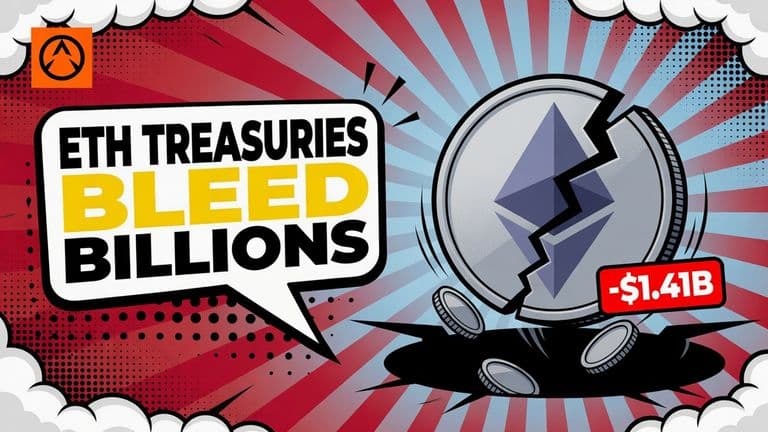
Everstake's review of 15 ETH treasury companies found $1.41 billion in FY2025 net losses, with staking making up 60% of revenue on average at six firms.
 ETH
ETH
A Bitquery audit found Polymarket's primary favorites won 87% of 273 races, yet a dollar on each lost 4 cents. The losses came from the mid-priced favorites.
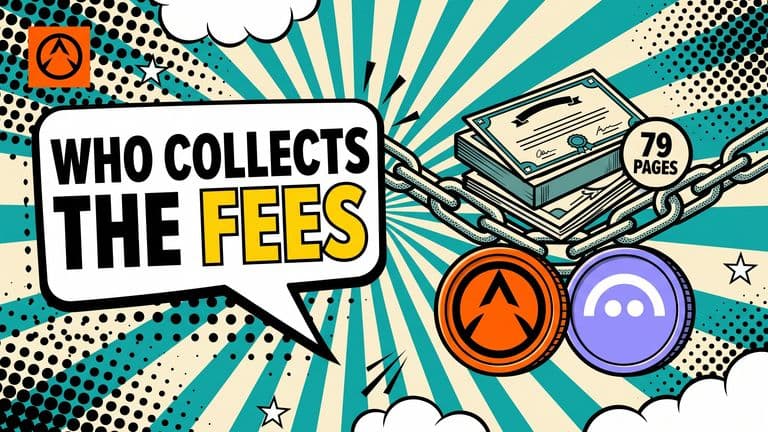
Citrini Research's report names Securitize, Coinbase, Circle, Aerodrome, Aave and Ondo as tokenization winners, and says fees matter more than activity.
 BTCETH+2 more
New asset now available to trade in the app and on Robinhood Legend. $CASHCAT (Cash Cat)

Market moves fast. The ones who think move faster. thinking-cat:native 🤔🐈


