AltcoinBuzzAltcoinBuzz
Subscribe
  • Crypto News
  • Crypto Research
  • Technical Analysis
AltcoinBuzzAltcoinBuzz

An independent digital media outlet delivering crypto research, news, and technical analysis to a community of 600,000+ users.

Follow us on:

Discover

  • Crypto Research
  • Crypto News
  • Technical Analysis
  • Key Opinions
  • Upcoming Launches

Categories

  • Bitcoin BTC
  • RWA
  • Technology
  • Altcoins
  • Regulation

Company

  • Affiliates
  • Partners & Sponsors
  • Careers
  • Contact
  • Terms of Use
  • Subscription Terms
  • About the ALTCOIN BUZZ
  • Privacy Policy
  • Contact ALTCOIN BUZZ
  • Advertise with us

Copyright 2026 ALTCOIN BUZZ. All rights reserved.Something is buzzzzzzzing.
HomeCrypto NewsXRP Ledger Adds New Controls for Banks, Stablecoins and Tokenized Funds
Crypto NewsAltcoins

XRP Ledger Adds New Controls for Banks, Stablecoins and Tokenized Funds

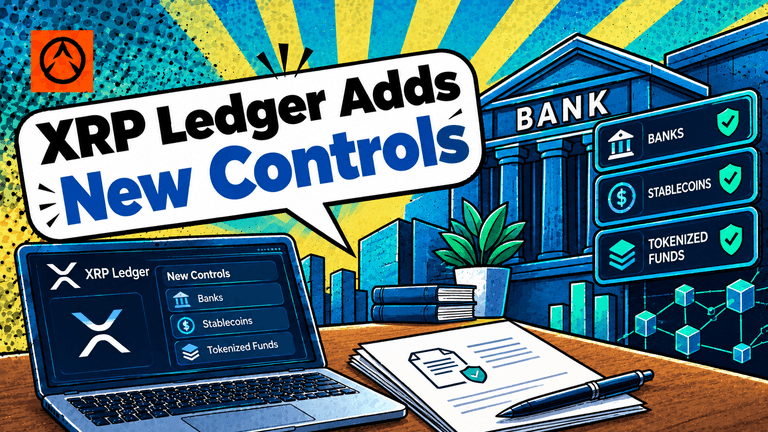
The XRP Ledger has activated PermissionDelegationV1_1, allowing financial institutions to delegate specific account tasks while keeping primary signing keys under tighter control.
SShitij Gupta•Oct 9, 2026
XRP Ledger adds permission delegation controls for banks, stablecoins and tokenized funds
MentionedXRP$1.40-0.84%

The XRP Ledger (XRPL) has activated a new feature that lets businesses delegate specific account permissions without handing over the keys that control their main holdings. The upgrade, called PermissionDelegationV1_1, went live on October 8, giving banks, stablecoin issuers and tokenized-asset providers a new way to separate daily operations from control over their funds.

The feature allows one account to authorize another to perform approved tasks, such as making payments or handling certain compliance operations. The delegated account uses its own keys and cannot automatically access every function of the main account.

For financial institutions, this creates a way to manage routine blockchain activity while keeping their primary signing keys offline.

How XRPL's new permission system works

The feature introduces a more granular way to manage account access. Instead of sharing a key with broad control, an account owner can grant another account a specific set of permissions.

For example, a stablecoin issuer could allow an operational account to process payments while keeping the main account's keys offline. A separate account could handle approved customer-related tasks without gaining unrestricted authority over the issuer's holdings.

Each delegated account can receive up to 10 permissions. The account owner can later update or revoke those permissions, giving businesses more control over who can perform particular actions.

The permissions restrict the types of transactions an account can perform, rather than automatically setting a spending limit. That distinction matters: businesses still need their own controls for transaction amounts, approvals and other risk-management requirements.

Why banks and stablecoin issuers may use it

Financial institutions typically separate responsibilities across payments, compliance, treasury and custody teams. A system that gives every operational process access to the same powerful signing key can increase the damage caused by a compromised system or unauthorized access.

XRPL's permission delegation allows some of these responsibilities to be separated at the ledger level. A payment system could receive authority to make permitted transactions without gaining control over the account's broader security settings.

Stablecoin issuers could also use the feature to separate routine operations from the keys that control token issuance and other sensitive functions. Tokenized-fund providers may benefit from similar controls when managing assets and coordinating approved transactions.

The feature does not replace custody, compliance or internal security procedures. Instead, it adds another layer of access control that institutions can incorporate into their existing systems.

XRPL is building out its institutional finance tools

The upgrade arrives as more projects explore financial products on the XRP Ledger.

Earlier this week, Clearpool outlined plans to build private-credit lending infrastructure on XRPL using RLUSD and the ledger's planned lending capabilities. The project shows how stablecoins and onchain credit could become part of a broader institutional-finance ecosystem. 

Related: Clearpool plans new token and private-credit lending on XRP Ledger

The ledger has also gained attention for tokenized financial records. In September, Brazilian financial-market operator CSD BR began mirroring ownership records for selected investment funds onto XRPL, while retaining its existing systems as the official record for registration, custody and settlement. 

Related: XRP Ledger starts mirroring Brazilian fund records tied to $4 trillion

These developments address different parts of institutional finance. Tokenization represents assets on a blockchain, lending infrastructure supports credit markets, and permission delegation helps businesses control who can act on their accounts.

Together, they show how XRPL's development is extending beyond payments into the operational requirements of financial institutions.

A security warning remains in place

The new feature also comes with an important limitation.

XRPL's official documentation advises users not to delegate the PaymentBurn permission until the separate fixCleanup3_4_0 amendment is enabled. Under certain circumstances, that permission could allow a delegate to create issued fungible tokens when it should only be able to destroy them. The warning concerns tokens issued on the ledger, not the creation of new XRP. Other granular permissions are unaffected.

The warning highlights why granular permissions must be configured carefully, particularly when they are used to manage financial assets. Institutions adopting the feature will need to check the current amendment status and avoid granting permissions that remain subject to known issues.

A step toward institution-ready blockchain infrastructure

PermissionDelegationV1_1 gives the XRP Ledger another tool for businesses that need tighter control over operational access. By separating routine transactions from the keys that govern an account, it offers a more flexible approach to managing blockchain activity.

As tokenized funds, stablecoins and onchain lending develop on XRPL, these controls could help institutions structure their operations around more clearly defined roles. Adoption will depend on how businesses integrate the feature into their security and compliance systems, but the upgrade adds a practical capability for organizations seeking to use public blockchain infrastructure.

The information discussed by Altcoin Buzz is not financial advice. This is for educational, entertainment, and informational purposes only. Any information or strategies are thoughts and opinions relevant to the accepted levels of risk tolerance of the writer/reviewers and their risk tolerance may be different than yours. We are not responsible for any losses that you may incur as a result of any investments directly or indirectly related to the information provided. Bitcoin and other cryptocurrencies are high-risk investments so please do your due diligence.

Copyright Altcoin Buzz Pte Ltd.

Related

GMX Builds Traction in Perpetual Trading
DeFi
Oct 9, 2026

GMX Builds Traction in the Perpetual DEX Market With $561B in Trading Volume

GMX has built a significant presence in decentralized derivatives, reporting $561 billion in total trading volume while expanding leveraged markets beyond crypto.

GMX
Anmol Billa
sDWF Labs-linked firms sue BitGo for $141 million over alleged early sales of locked crypto tokens
DeFi
Oct 9, 2026

DWF Labs Affiliates Sue BitGo for $141M Over Alleged Early Token Sales

DWF Labs-linked firms DWF Maas and Falcon Digital are suing BitGo for $141 million, alleging it sold Falcon Finance and ESPORTS tokens before contractual lock-ups expired.

FF
Bikash Deka
Sui Introduces Agent Pass
Altcoins
Oct 9, 2026

Sui Introduces Agent Pass to Set Spending Limits for AI Agents

Sui introduced Agent Pass at Basecamp 2026 to help developers control AI agent spending, adding to its wider push toward safer autonomous payments.

SUI
Saloni Rathi