Brazil’s State Oil Giant Petrobras Taps Cardano to Track Cleaner Fuels
Brazil’s state-controlled oil company Petrobras is testing Cardano in two research projects focused on cleaner fuel.

By Pallavi Malviya GuptaChief Editor
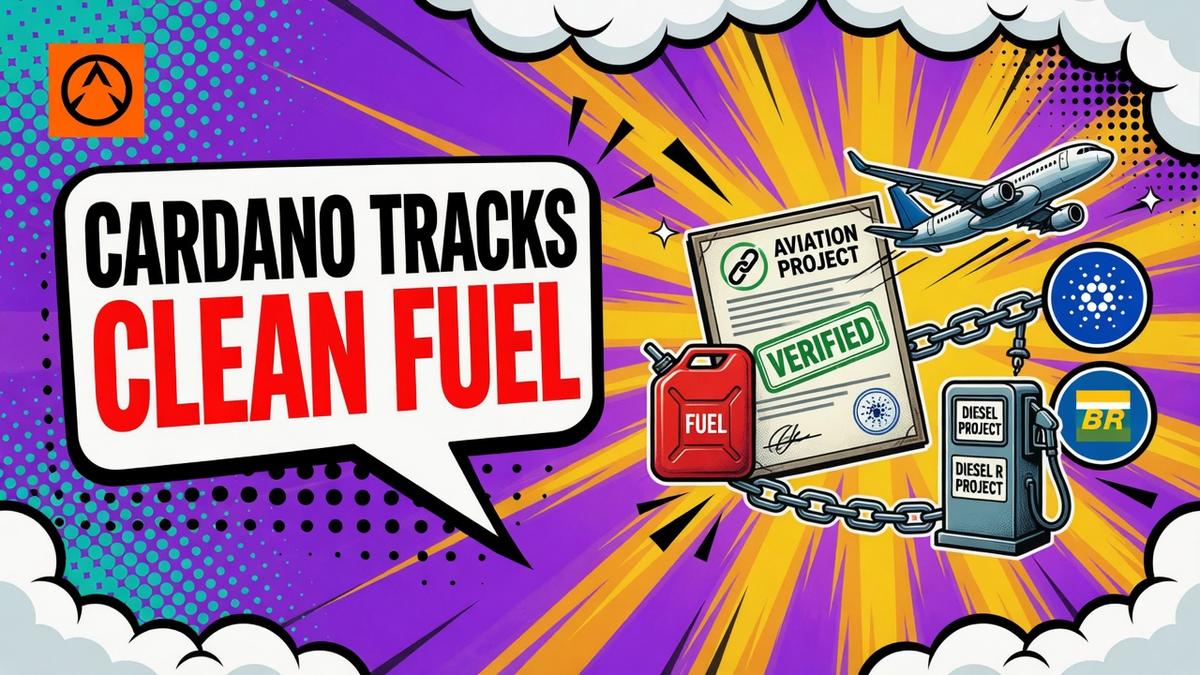
Brazil’s state-controlled oil company Petrobras is testing Cardano in two research projects focused on cleaner fuel.
One project explores sustainable aviation fuel. The other looks at Diesel R, Petrobras’ partly renewable diesel made from materials such as vegetable oils or animal fats.
The interesting part is not merely that a blockchain is in the room. It is what Petrobras wants the shared record to do: track who claims an environmental benefit, when they claim it and where it came from. The projects are still research work, though, and the announcement offered no fuel volumes or timeline for wider use.
Aviation fuel needs a clean paper trail
The aviation project uses the book-and-claim model. An airline can pay for the environmental benefit of sustainable aviation fuel even when the fuel itself is used elsewhere.
That model depends on keeping the claim distinct. The application is designed to record where each benefit originated, who received it and when it was claimed. Without that record, two companies could count the same emissions reduction.
There is a passenger-facing part, too. In the described flow, a traveller enters their departure and destination airports, calculates the corresponding fuel benefit and receives a certificate linked to the original fuel certificate.
It is a small interface detail, but a useful one. The passenger sees a result that can be traced back to a particular fuel certificate, rather than a general promise that an airline has done something environmentally positive.
Diesel follows the fuel’s full journey
The proposed diesel model takes a wider view. It would record information during production, transportation and use, then join those records into a history of the fuel’s journey.
That matters for emissions reporting because companies often need information from other businesses. The records behind Scope 3 emissions, which cover indirect emissions across suppliers and customers, can sit outside the company doing the reporting.
A shared record could make that trail easier to follow. It could also make errors easier to spot, provided the people entering and checking the data agree on what each entry means.
What Cardano has to prove next
The research projects point to a sensible use for a blockchain: keeping track of an environmental claim so that it cannot easily be counted twice. The aviation project gives Cardano a defined record to manage. The diesel project asks it to connect many stages of a fuel supply chain.
But the announcement does not provide transaction counts, addresses, record volumes or a live deployment date. There is also no confirmed primary document from the Cardano Foundation or Petrobras in the source material. We do not know whether the projects are funded contracts, research grants or academic work.
The evidence so far is a pilot, not adoption at scale. Cardano’s wider institutional momentum was also part of the announcement, including its addition to the x402 payment standard and Fireblocks support for Cardano native tokens. The x402 payment software had only been tested on Cardano’s pre-production network, with no demonstrated commercial use on the live blockchain.
So the real test is simple: turn these research designs into records that people and businesses can inspect, check and use without creating a new pile of unanswered questions. If Petrobras does that, the projects could show what a blockchain is actually contributing: not a prettier claim about cleaner fuel, but a clearer trail behind the claim.

Pallavi Malviya Gupta
Pallavi Malviya Gupta is the COO of Altcoin Buzz and founder of Funjible Games. Based in Singapore, she's been with Altcoin Buzz since its early days. Pallavi brings a builder's eye to both crypto media and gaming, she's spent years watching both spaces grow from niche communities into mainstream industries and still gets genuinely excited when something's built well.
More from PallaviNext up

Chainlink Expands Integrations as Reserve Holdings Reach 6.68M LINK
Chainlink's Reserve has reached approximately 6.68 million LINK after another weekly addition. New integrations and institutional pilots with Aave, Moody's, and DTCC are also expanding its ecosystem.
 LINK
Related
More in Crypto NewsRelated
KAVA Crashes 40% After Suspicious Activity in Kava Lend
 KAVA

TON Edges Past Robinhood Chain in Daily App Revenue, Fragment Drives the Lead

TAO Rises as Bitcoin Falls, Bittensor Subnet Revenue Gains Attention
 TAO

Arbitrum's Tokenized RWA Market Tops $1B as Holder Count Climbs 12%
 ARB