Can Bitcoin Hold $60K as the Fed's 50 Basis Point Hike Bet Dies?
Fed funds futures now price a quarter-point December hike to 4.00% to 4.25%, with the 50 basis point move off the table after the Nasdaq's 10.4% weekly rout.

By Bikash DekaAuthor
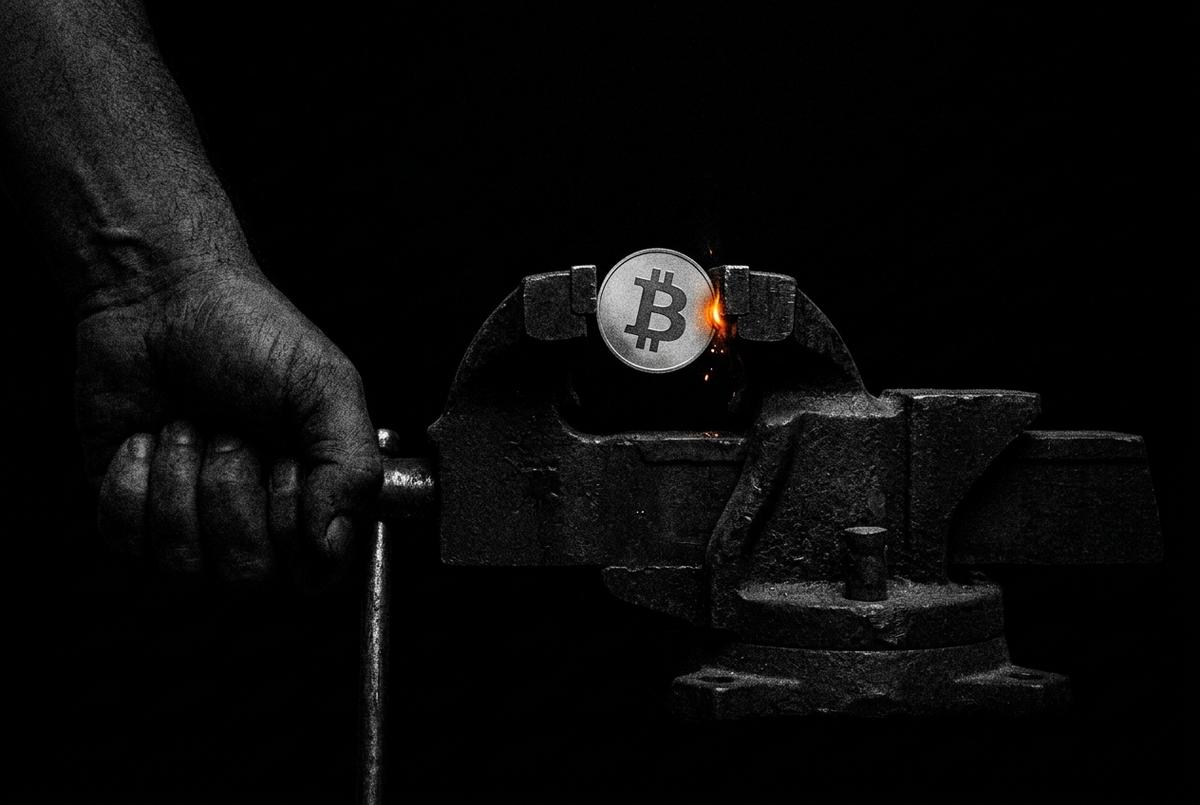
Markets have all but given up on a half-point Federal Reserve rate hike in December, after one of the worst weeks for US stocks since the pandemic. Fed funds futures now assign essentially no probability to a 50 basis point move, or half a percentage point, leaving a quarter-point increase to 4.00% to 4.25% as the base case. Bitcoin fell more than 6% last week and briefly slipped below $55,500 before climbing back above $60,000.
- The news: Fed funds futures now price a quarter-point December hike to 4.00% to 4.25%, with the 50 basis point move off the table.
- The key figure: The Nasdaq Composite fell 10.4% in the week to 20 November, its biggest weekly drop since March 2020, and the VIX jumped 86%.
- What happens next: The Fed meets on 8-9 December 2026, and October PCE inflation data is due this week.
Why the 50 Basis Point Bet Collapsed
The repricing followed a broad selloff in risk assets, not a change in what the Fed has said. The Nasdaq Composite tumbled 10.4% for the week, its biggest drop since the Covid-19 shock in March 2020. The Cboe Volatility Index, or VIX, jumped 86%, among its four largest advances since 2004.
Losses spread well beyond US equities. Global stock markets retreated, and gold, copper and commodity-linked currencies all sold off hard.
The move caps a run of hot inflation data that had already pushed December rate-hike odds higher. Futures now imply a nearly 60% chance of another quarter-point increase in January, to a 4.25% to 4.5% range. JPMorgan expects one more hike in March, a slower but still ongoing tightening path rather than a pivot.
The Macro Paper, a pseudonymous macro commentator, summed up the swing in a post on X: 11 days earlier, investors were pricing a 15% chance of a half-point increase and no chance at all of a pause. "Now, 50 bps is completely off the table, while the probability of NO hike has jumped to 12%," the account wrote.
The Fed's Own Record Points to 8-9 December
Where rates stand is not in dispute. The FOMC raised the target range by a quarter point in September to 3.75% to 4.00% and left it there in October.
In its September statement, the committee said: "The Committee decided to raise the target range for the federal funds rate by 1/4 percentage point to 3-3/4 to 4 percent, in support of the Federal Reserve's dual mandate."
The minutes of the October meeting show the median expectation from the Fed's own Open Market Desk survey was one rate hike in December and another in March 2027, followed by a rate cut early in 2028. The Board of Governors voted unanimously to keep the interest rate on reserve balances at 3.90%, effective 29 October 2026, and the primary credit rate at 4.0%.
The same minutes flag a separate risk. Fed staff warned that rapid growth in debt tied to the artificial intelligence buildout, off-balance-sheet leasing commitments and circular financing among AI-related firms could amplify losses if returns on AI investment disappointed.
The next FOMC meeting is scheduled for 8-9 December 2026.
Bitcoin's Rebound Meets a Wall of ETF Outflows
Bitcoin's climb back above $60,000 has run into heavy withdrawals from US spot Bitcoin ETFs. On 19 November, $582.3 million left the products, including $541.1 million from BlackRock's IBIT, according to Farside Investors. The 16-20 November week saw roughly $1.25 billion in net outflows.

Total November outflows across the 12 US spot Bitcoin ETFs are estimated at between $3.47 billion and $3.59 billion through 20 November, with IBIT accounting for around 85% of the monthly total.
Derivatives pointed the same way. CoinGlass recorded $68.82 million in Bitcoin short liquidations within one hour of the rebound, against $1.64 million in long liquidations. Funding rates on Binance turned negative during the decline, meaning short traders pay long ones, a sign of aggressive demand for bearish exposure.
The rebound itself is hard to read. Total crypto market capitalisation rose 2.88% over 24 hours while Bitcoin trading volume fell 37%, which makes the strength of new buying difficult to establish. Bitcoin traded near $61,500 after touching its lowest price since September 2024 on Saturday.
BitMEX co-founder Arthur Hayes warned that continued weakness in technology shares could send Bitcoin back toward $55,000, with $50,000 possible if Nasdaq selling persists.
Bessent Warns the Fed Against Overtightening
Treasury Secretary Scott Bessent said on Sunday the Fed could damage the economy if it pushes policy too far. In an interview with CBS's Face the Nation, he said many people believe the central bank "may be making a policy mistake if they over-tighten."
Bessent has made the point before. In a CNBC interview on 13 November, he said it would be a mistake for the Fed to hike too aggressively into an energy supply shock he described as already easing, and called recent inflation data noisy. On 20 November, he urged policymakers not to back a larger rate rise.
He did not name the officials he had in mind, and did not say what decision he wants in December.
What to Watch Before the December Meeting
The next marker is October PCE inflation, the Fed's preferred gauge. RBC projects core PCE will rise 0.3% month on month and 3.3% year on year, with headline up 0.3% and the annual headline rate at 3.8%.
eToro's Asia-Pacific lead analyst Josh Gilbert said a softer number "would go some way toward cooling expectations of an outsized hike and give investors a reason to step back in." He warned that fund flows are the real test: "if the outflows continue even with a softer read, investors are clearly stepping away, which is a much harder problem for bitcoin to fix."
The Fed meets on 8-9 December. Until then, the two numbers that matter most are the PCE print and whether ETF outflows keep up their November pace.

Bikash Deka
Bikash Deka is a crypto and Web3 analyst and writer focused on making blockchain, cryptocurrency, and digital asset developments easier to understand. His work covers crypto markets, emerging blockchain projects, industry trends, and major developments across the digital asset ecosystem. With a background in Technology and Web3, Bikash combines analytical research with clear, beginner-friendly writing. He follows market movements, evaluates industry developments, and turns complex crypto topics into accessible insights for readers. At Altcoin Buzz, Bikash contributes research driven news and educational content designed to help readers better understand what is happening in the fast-moving world of cryptocurrency and blockchain.
More from BikashNext up
Bitcoin Bounces From $55,100: Why Is Crypto Up Today?
Bitcoin traded near $59,662 on Nov. 22, up 3.13% in 24 hours, after touching $55,100. CoinGlass counted 85,533 traders liquidated; PCE and a $6.6B expiry loom.
 BTC
 XRP
Related
More in Crypto NewsRelated
Chainflip Offers 10% Bounty After 122.86 BTC Vault Hack
BTC ETH
How Did Bitcoin Drop to $17K on Kraken's CAD Pairs?
BTC
Why Did Bitcoin ETFs Lose $1.79 Billion Last Week?
BTCETH
What Happened in Crypto Today, 22 November 2026?
BTCETH

