Demystifying Ethereum Gas Fees: A Comprehensive Guide
Ethereum, often hailed as the pioneer of smart contracts and decentralized applications (DApps), has taken the blockchain world by storm.
By Victor
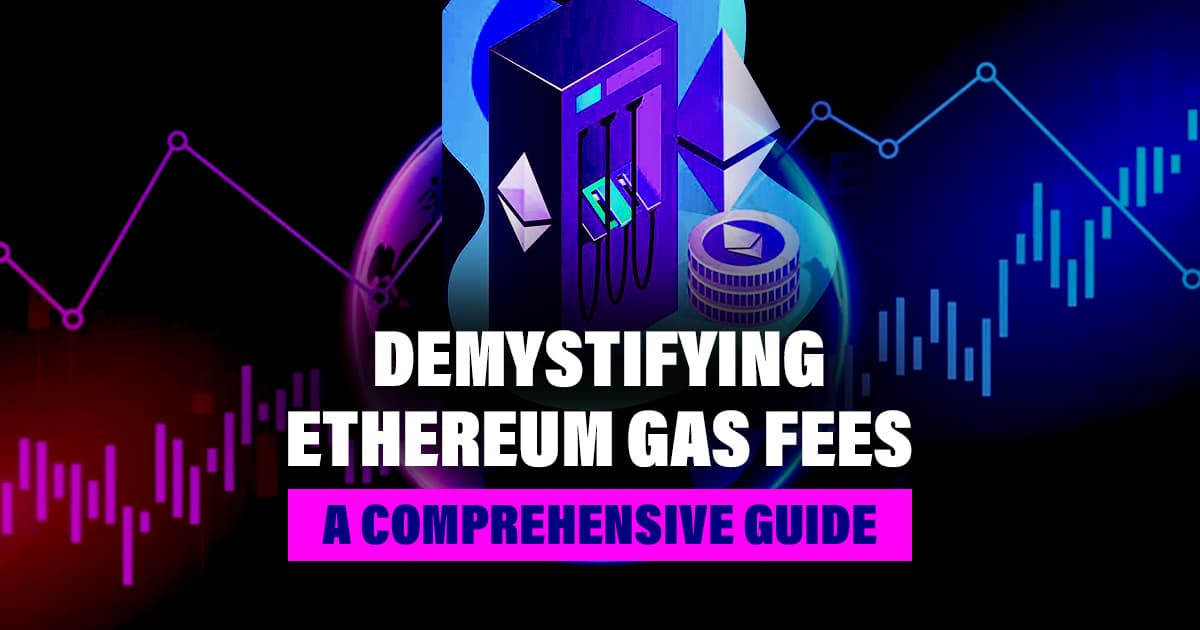
As the popularity of Ethereum has grown, so has the prominence of Ethereum gas fees. These fees play a crucial role in the Ethereum ecosystem, affecting transaction speed and cost.
In this comprehensive guide, we will delve into what Ethereum gas fees are, and how they work. Also, the factors influencing their fluctuations, and provide a historical perspective by showcasing the all-time highs and lows of gas fees.
Understanding Ethereum Gas Fees
Ethereum gas fees are the costs associated with executing transactions and smart contracts on the Ethereum blockchain. These fees serve multiple purposes within the network:
- Incentivizing Miners: Ethereum operates on a proof-of-work consensus mechanism, which relies on miners to validate and add transactions to the blockchain. Gas fees serve as incentives for miners to prioritize and process transactions promptly.
- Resource Allocation: Gas fees are a mechanism for allocating computational resources on the network. They ensure that users pay for the computational power and storage space their transactions consume.
- Spam Prevention: By attaching a cost to transactions, Ethereum prevents spam attacks and ensures that the network’s resources are utilized efficiently.
How Ethereum Gas Fees Work
Ethereum gas fees are denominated in a unit called “Gas,” which measures the computational work required to execute a transaction or contract. The total cost of a transaction is calculated by multiplying the Gas price (denominated in Ether) by the amount of Gas used. Here is the formula:
Transaction Cost (in Ether) = Gas Price (in Ether per Gas) × Gas Used
Gas Price: Users specify the Gas price they are willing to pay for their transactions. Miners tend to prioritize transactions with higher Gas prices since they offer more significant rewards. Therefore, users can influence the speed of their transactions by setting higher Gas prices.
Gas Used: This represents the total computational work required to process the transaction. More complex transactions or smart contracts consume more Gas.
Factors Influencing Ethereum Gas Fees
Several factors contribute to the fluctuation of Ethereum gas fees, making them variable over time:
- Network Congestion: High demand for Ethereum’s services can lead to congestion on the network, causing an increase in Gas fees. During periods of heavy usage, such as ICOs or DeFi yield farming frenzies, Gas fees tend to surge.
- Gas Price Auction: Ethereum uses an auction system to determine which transactions get processed first. Users compete by setting higher Gas prices to have their transactions prioritized, especially when the network is congested.
- Smart Contract Complexity: The computational complexity of executing a smart contract directly impacts the Gas required and, consequently, the Gas fees. Complex smart contracts consume more Gas, leading to higher fees.
- Ethereum Upgrades: Ethereum has undergone several upgrades, such as Ethereum 2.0’s transition to proof-of-stake. These upgrades aim to improve scalability and reduce fees, but their impact may not be immediately apparent.
- Market Speculation: Traders and investors sometimes speculate on Ethereum’s Gas fees, leading to sudden and unpredictable price spikes.
Historical Perspective: All-Time Highs and Lows
Understanding the historical evolution of Ethereum gas fees provides valuable insights into their volatility and growth. Here’s a timeline of the all-time highs and lows:
All-Time High (February 23, 2021): During the height of the DeFi boom and NFT craze, Ethereum gas fees reached an astronomical level. The average Gas price surged to over 1,400 Gwei (Giga-wei), equivalent to approximately 0.04 Ether per transaction. This was a challenging period for regular Ethereum users as transaction costs became prohibitively expensive.
All-Time Low (Pre-2015): In the early days of Ethereum, Gas fees were almost negligible, as the network had relatively low usage. It was possible to send transactions with fees as low as a fraction of a cent in Ether. However, as Ethereum gained popularity and adoption, Gas fees began to increase.
Current Gas Fee Trends (2023): Since the previous all-time high, Ethereum has undergone significant changes, including the ongoing transition to Ethereum 2.0. These changes are aimed at reducing Gas fees and improving scalability. The Gas fees in 2023 have, on average, become more manageable, but they still fluctuate depending on network demand and usage.
Conclusion
Ethereum gas fees are an integral part of the Ethereum blockchain, serving as incentives for miners, resource allocation mechanisms, and safeguards against spam attacks. Understanding how Gas fees work and the factors influencing their fluctuations is essential for anyone using the Ethereum network.
While Ethereum has experienced both extreme highs and lows in Gas fees, ongoing upgrades and the transition to Ethereum 2.0 hold promise for a more scalable and affordable ecosystem in the future. Keeping an eye on gas prices and network conditions is crucial for users looking to optimize their Ethereum transactions.

Disclaimer
The information discussed by Altcoin Buzz is not financial advice. This is for educational, entertainment, and informational purposes only. Any information or strategies are thoughts and opinions relevant to the accepted levels of risk tolerance of the writer/reviewers and their risk tolerance may be different than yours. We are not responsible for any losses that you may incur as a result of any investments directly or indirectly related to the information provided. Bitcoin and other cryptocurrencies are high-risk investments so please do your due diligence. Copyright Altcoin Buzz Pte Ltd.
Next up

Bitcoin ETFs Draw $1.07B in Three Days, Short of Rally-Era Pace
US spot bitcoin ETFs took in about $1.07 billion from Oct. 19 to 21, led by IBIT. Past steep rallies ran on months of $200 million-plus daily inflows.
 BTC
BTCRelated
More in Crypto NewsRelated
Bitcoin Drops Below $80K as Crypto Liquidations Top $834M
BTC ETH
ETH
Sui's Hashi Adds Anchorage Digital as $500M Bitcoin Launch Nears
BTC SUI
SUI
Bitcoin Core Speeds Up Fixes for AI found Bugs Drops
BTC
Bitcoin ETFs Lose $635M in a Day as DWF Study Says Flows Chase Price
BTC


