Goldman: SEC's five-year tokenized stock window covers AMM venues only
Goldman tells clients the SEC's Sept. 17 tokenized stock exemption covers AMM venues only and excludes CLOBs, with a five-year clock.

By Bikash DekaAuthor
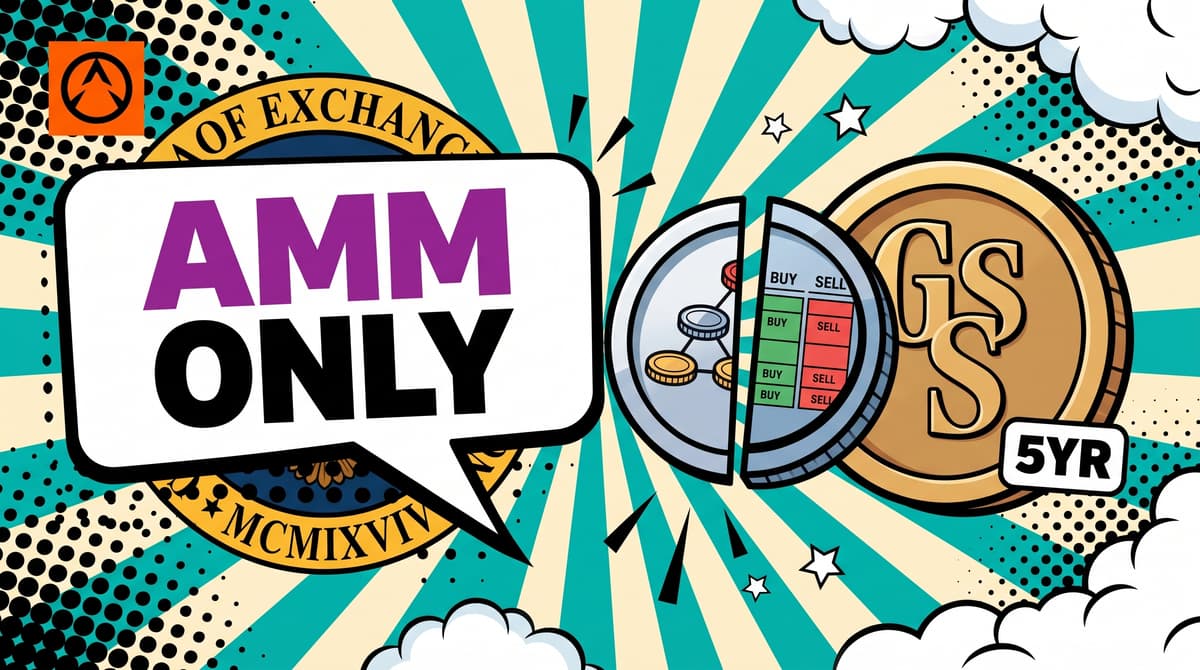
The SEC on Sept. 17 granted tokenized securities venues a five-year conditional exemption from registering as exchanges, an order Chairman Paul Atkins framed as a step toward bringing America's capital markets into the digital age. Goldman Sachs analysts told clients the order targets AMM venues (automated market makers, which use formulas to price trades against pooled liquidity) specifically, not the central limit order books, called CLOBs, that traditional exchanges and most large centralized crypto venues use.
The exemption covers only natively tokenized stocks, tokens carrying the same dividend and voting rights as the underlying share, which excludes the derivative-style wrappers sold offshore today. Venues must notify an issuer before listing a tokenized version of its stock and give it a chance to object.
What Goldman Reads into The AMM Requirement
The AMM-only requirement, in Goldman's reading, "appears to be specifically targeted at enabling innovation among smaller, more nascent execution venues in the decentralized finance space." AMMs function better at smaller scale, the bank's analysts wrote, while CLOBs handle deeper, more liquid markets better, and AMM pricing produces more slippage, which "hinders liquidity as markets expand." Given volume caps and corporate issuers' ability to opt out, the order means "minimal impact to volumes at traditional exchanges," Goldman concluded.
The Five-Year Clock and What Fits Inside It
The venue exemptions lapse after five years; the Nasdaq pilot already approved runs for three, covering tokenized orders meeting the same order book as ordinary shares in Russell 1000 constituents and major index ETFs. DTCC's tokenization service is due in October. NYSE is building a separate venue for round-the-clock trading and stablecoin-based funding, still subject to approval. The order landed two days after the CLARITY Act, a market-structure bill on SEC and CFTC jurisdiction over digital assets, fell 11 votes short in the Senate.
How Goldman is Positioning Clients
Goldman expects Buy-rated Coinbase to benefit most, pointing to its custody business and its Coinbase Tokenize platform. Buy-rated Robinhood would need to rebuild its European tokenized stock product to meet the native-tokenization test the order sets. The specific Goldman analysts behind the note, per-venue volume caps and current tokenized-stock market caps have not been disclosed in public reporting.

Bikash Deka
Bikash Deka is a crypto and Web3 analyst and writer focused on making blockchain, cryptocurrency, and digital asset developments easier to understand. His work covers crypto markets, emerging blockchain projects, industry trends, and major developments across the digital asset ecosystem. With a background in Technology and Web3, Bikash combines analytical research with clear, beginner-friendly writing. He follows market movements, evaluates industry developments, and turns complex crypto topics into accessible insights for readers. At Altcoin Buzz, Bikash contributes research driven news and educational content designed to help readers better understand what is happening in the fast-moving world of cryptocurrency and blockchain.
More from BikashNext up
NEAR Issuance Cut to 1.6% Passes Vote, Staking Yield Set to Fall
NEAR's HSP-029 has passed its vote and sits in its veto window. It cuts max issuance from 2.5% to 1.6% over 24 months, taking staking yield toward 3.37%.
 NEAR
Related
More in Crypto NewsRelated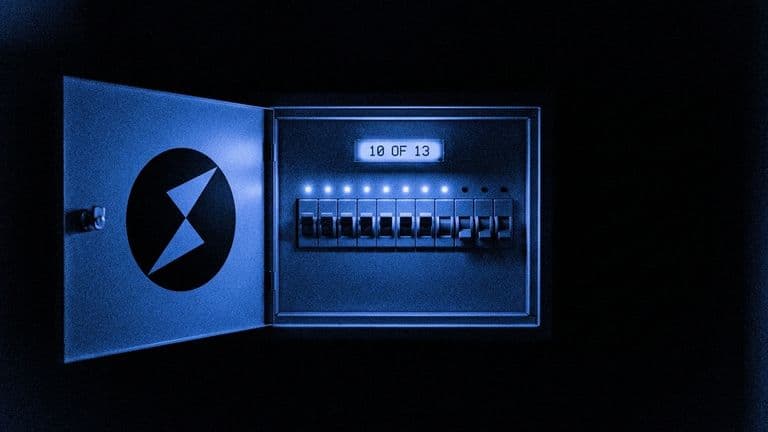
THORChain Restarts Swaps on 10 of 13 Networks After Refund Bug Halt
 ETH
 BTC

Justin Sun Seeks Sanctions Against World Liberty Over UAE Ties
 TRX
 WLFI

GitBook Hit by AI Agent Attack, PancakeSwap Takes Docs Offline

South Korea's Lee Seeks a Cybersecurity Czar After Binance Hack
BTC