Italy, Portugal and Singapore Top the US in Tokenized Treasuries
Italy, Portugal and Singapore hold bigger shares of tokenized US Treasury value than the US, as the market grows 125% to $15.42 billion, per Chainalysis.

By Pallavi Malviya GuptaChief Editor
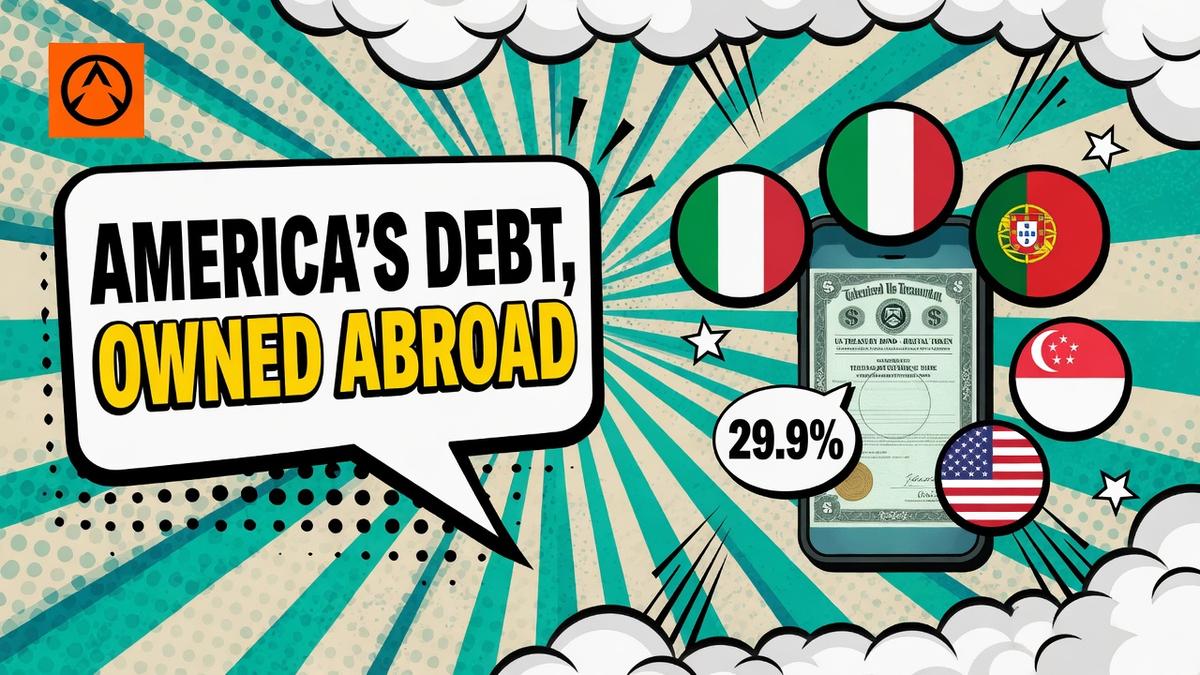
Italy, Portugal and Singapore each account for a larger share of tokenized US Treasury value than the United States does, and by a wide margin. The US ranks fourth at 10.5%, behind Italy at 29.9%, Portugal at 18.8% and Singapore at 18.2%, according to Chainalysis's 2026 North America report.
One qualifier sits under those numbers. They are shares of geolocated value, meaning holdings the report could tie to a country. Read them as a map of identified buyers, not a full accounting of the market.
Even with that caveat, the biggest buyers of on-chain American debt are largely outside America.
Treasury Debt Grew 125% to $15.42 Billion
Tokenized Treasury debt grew 125% in the 12 months ending July 1, 2026, from $6.86 billion to $15.42 billion, Chainalysis says. In dollar terms that is more than the next three RWA categories combined, and it makes US government debt the single largest real-world asset on-chain at 42.8% of all tokenized RWA value.
The wider tokenization market finished Q2 2026 at $36.07 billion, up 135% period over period.
Japan Has the Most Holders and Almost No Value
Rank the same market by holder count and the picture rearranges almost entirely. Japan leads with 16.4% of tokenized Treasury holders but just 0.4% of the value. Italy, by that measure, has the value. Japan has the crowd.
Chainalysis reads the split as a small base of large foreign holders driving the market, while a broader retail base builds smaller positions alongside them.
Why Someone in Lisbon Can Buy a Wholesale Instrument
The mechanism behind the geographic spread is the part worth slowing down for. Tokenization lowers the minimum position size and removes the need for a US brokerage relationship, Chainalysis says, which turns a wholesale instrument into one a retail holder in Lisbon or Singapore can buy directly.
What that produces, in the report's own framing:
A holder outside the United States who buys a tokenized Treasury product is creating demand for US government debt rather than for their own government's.
The money arrives. It just arrives without a brokerage account, a domestic bank or a domestic bond market in the middle.
Holders also treat these tokens differently from other collateral. They tend to hold tokenized Treasuries rather than post them as collateral, and Treasury lending contracted 23% over the period, the only RWA lending category to shrink. Private credit lending grew 1,618% and commodities 875%.
Canada Passes a Law and Watches the Dollar Win Anyway
The stablecoin side shows how hard that habit is to redirect. Dollar-pegged stablecoins account for 99.1% of stablecoin order book volume traded, against 0.45% for euro-backed coins, even with MiCA in place.
Canada is the clearest test case. By June 2026, stablecoins took 44% of Canadian dollar-based order book volume, up from 30% a year earlier, with USDC leading that share and very little trading flowing to Canadian dollar stablecoins. The country's Stablecoin Act, carried in Bill C-15, received Royal Assent on March 26, 2026, clearing the way for Canadian dollar tokens, though the full regime still depends on supporting regulations.
For Morva Rohani, executive director of the Canadian Web3 Council, that shift comes at Canada's expense. She said dollar stablecoin purchases build demand for US government debt that Canadian debt could otherwise capture.
This is a trend that Canadian policy-makers are following closely.
Chainalysis's own conclusion is narrower than the politics. Whether domestic alternatives gain traction or simply confirm the dollar default will depend on adoption, not legislation alone.
US Holders Are 11.7% of the Global Holder Base
One more number keeps the scale honest. US holders are 11.7% of the global tokenized RWA holder base and account for 11.4% of its value, a near match. On those measures, American participation looks proportionate rather than dominant, which is a strange thing to write about US debt.
Circle's quarter gives the dollar plumbing its size. USDC in circulation was $73.3 billion at quarter end, up 19% from a year earlier, against $14.8 trillion in USDC on-chain transaction volume in Q2 2026, up 151%.
The next thing to watch is not another law but whether anyone uses it. Chainalysis's test for domestic alternatives is adoption, and the holder data so far points the other way: the default is still the dollar.

Pallavi Malviya Gupta
Pallavi Malviya Gupta is the COO of Altcoin Buzz and founder of Funjible Games. Based in Singapore, she's been with Altcoin Buzz since its early days. Pallavi brings a builder's eye to both crypto media and gaming, she's spent years watching both spaces grow from niche communities into mainstream industries and still gets genuinely excited when something's built well.
More from PallaviNext up

Bitcoin Holds Near $64K as ETF Flows Turn Positive and Fed Hike Bets Climb
Bitcoin is holding near $64,000 after $2 billion in weekend liquidations. ETF flows have turned slightly positive, while rising Fed rate hike expectations and strong demand for Anthropic's IPO add to the broader market uncertainty.
 BTC
Related
More in Crypto NewsRelated
DBS and Circle Bring 24/7 USDC Minting and Redemption to Asian Institutions

JPMorgan and DBS Bring 24/7 Tokenized Dollar Transfers Between the US and Singapore

NVIDIA Posts 103% Revenue Growth as AI Crypto Projects Watch GPU Demand
 TAORENDER

$38,206 Drained From Curve Fee Contract in Signature Flaw
 CRVUSDC