Kazakhstan's Central Bank Taps Tether to Study Tenge Stablecoin
Kazakhstan's central bank, Tether and the Alatau City Authority signed a memo to study a tenge-pegged stablecoin and asset tokenization.

By Anmol BillaSenior Analyst
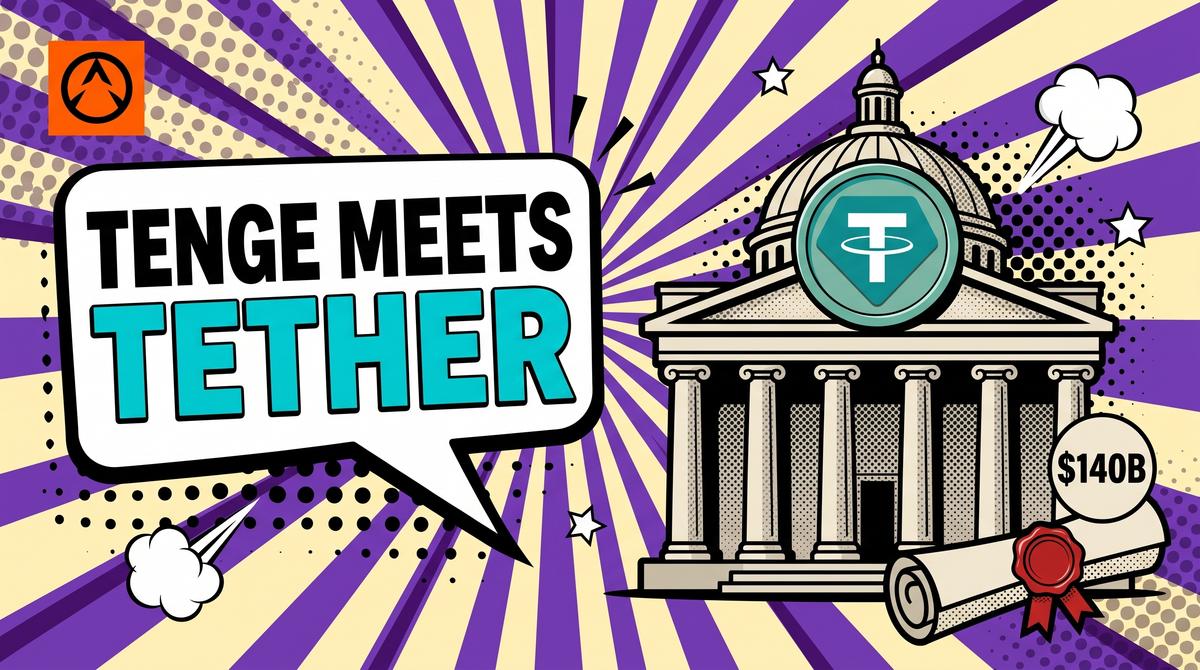
The National Bank of Kazakhstan, Tether and the Alatau City Authority signed a memorandum of understanding on October 7 to study stablecoins, asset tokenization and decentralized finance.
If you hold USDT, the near-term effect is close to zero. The agreement is exploratory and does not amount to a decision to issue the stablecoin, and no issuance date, blockchain, reserve structure or commercial issuer has been announced for the proposed tenge token. A memorandum sets out what three parties will study. It is not a launch.
One focus will be a potential stablecoin pegged to the Kazakhstani tenge. The other is an asset tokenization framework in Kazakhstan, and Tether's Hadron platform is one technology under consideration for it.
What the Memorandum Actually Commits
Under the agreement the parties will develop digital finance infrastructure, study international models for stablecoin issuance, define potential use cases and prepare a concept and pilot proposal for a stablecoin pegged to the national currency, the tenge. Tether and the Kazakh authorities will also run workshops on stablecoin reserves, issuance and tokenization for central bank staff and other government agencies.
Those sessions are to cover the international stablecoin and digital asset market, issuance and reserve management models, and the tokenization of real-world assets using distributed ledger technology.
That is the scope. The agreement does not commit Kazakhstan to issuing anything, and it carries no funding figure, licensing promise or exclusivity clause in the pages the parties have published.
NBK Deputy Governor Binur Zhalenov described the intent this way:
As part of piloting tokenization projects, we intend to thoroughly study international best practices in stablecoin issuance and real-world asset tokenization.
He added that "maintaining financial stability, transaction transparency, and robust investor protection remains the paramount priority for the National Bank."
Tether CEO Paolo Ardoino framed Kazakhstan as taking "a deliberate, forward-looking approach by exploring asset tokenization and a strategic reserve framework." That line is Tether's description of Kazakhstan's direction. It does not confirm that Kazakhstan has adopted a reserve plan tied to Tether.
The Pilot Would Run Inside Alatau
Alatau is the city where the tokenization pilot is to be launched, within its jurisdiction. It operates under a special legal regime designed in part to encourage financial technology.
The Alatau City Authority, which Tether describes as a specialized state administrative body, handles public administration and regulatory development in the city under that regime. It was established to position Alatau as a hub for digital innovation and financial technology in Central Asia. Constitutional changes effective July 1 created a framework for accelerated-development cities, and Alatau is the first area to use it.
The parties will identify priority asset categories and design a conceptual tokenization model. No launch date or asset class has been selected.
Hadron Is the Platform Being Considered
Tether describes Hadron as supporting bonds, equities, stablecoins, funds and commodity-backed tokens through their issuance and management lifecycle. It has been used before: in August, Tether announced a collaboration with First Data and BKN301 on tokenizing institutional real estate assets in Saudi Arabia, and in July it signed an agreement with the Nairobi Securities Exchange to study tokenized securities and blockchain infrastructure.
Tether is best known as the issuer of USDT, the largest US dollar stablecoin, with about $140 billion in circulation. It also issues XAUT, a roughly $3.3 billion tokenized gold product backed by physical bullion held in Swiss vaults. That balance sheet is the reason a central bank takes a meeting with the company at all.
Kazakhstan Has Run a Tenge Pilot Before
The National Bank launched its first tenge-denominated stablecoin pilot in September 2025 through its regulatory sandbox. Intebix issued that pilot token with Solana, Mastercard and Eurasian Bank. The stablecoin is known as Evo, or KZTE, and operates on Solana.
On May 1, 2026, the National Bank introduced comprehensive digital asset rules. That framework recognizes money-backed stablecoins, tokenized real assets and digital versions of traditional financial instruments as digital financial assets.
Whether a new tenge token would replace, expand or run separately from Evo is not settled in the agreement. It does not say.
The National Bank also plans a National Cryptocurrency Analytics Center capable of monitoring crypto transactions, fiat payments, wallets and customer information. A central bank studying tokenization is also building the tools to watch it.
Kazakhstan is not the only institution testing central bank money against tokenized assets; the European Central Bank has been exploring how to put central bank money onchain. The difference here is the shape of the commitment. What exists today is a study plan with a workshop schedule attached. The next observable step would be the concept and pilot proposal for the tenge token, or a named asset class for the Alatau pilot. Neither exists yet.

Anmol Billa
Anmol Billa is a Senior Analyst at Altcoin Buzz, with over five years of experience working across cryptocurrency markets and the broader digital asset industry. His work focuses on technical analysis, market research, investment insights, and evaluating emerging opportunities within the crypto ecosystem. At Altcoin Buzz, Anmol contributes to technical market analysis, research-driven insights, pitch decks, and funding-related initiatives. His experience combines analytical thinking with a practical understanding of crypto markets, helping translate market trends and emerging projects into clear, actionable insights for readers and industry stakeholders.
More from AnmolNext up

Bitcoin Holds Near $64K as ETF Flows Turn Positive and Fed Hike Bets Climb
Bitcoin is holding near $64,000 after $2 billion in weekend liquidations. ETF flows have turned slightly positive, while rising Fed rate hike expectations and strong demand for Anthropic's IPO add to the broader market uncertainty.
 BTC
Related
More in Crypto NewsRelated
DBS and Circle Bring 24/7 USDC Minting and Redemption to Asian Institutions

JPMorgan and DBS Bring 24/7 Tokenized Dollar Transfers Between the US and Singapore
NVIDIA Posts 103% Revenue Growth as AI Crypto Projects Watch GPU Demand
 TAORENDER

$38,206 Drained From Curve Fee Contract in Signature Flaw
 CRVUSDC