Lighter Blames Leaked API Key for Reported $15.5M Drain
Lighter blames a leaked API key, not its contracts, for the 16 November incident that halted withdrawals; researchers estimate a $15.5 million loss.

By Anmol BillaSenior Analyst
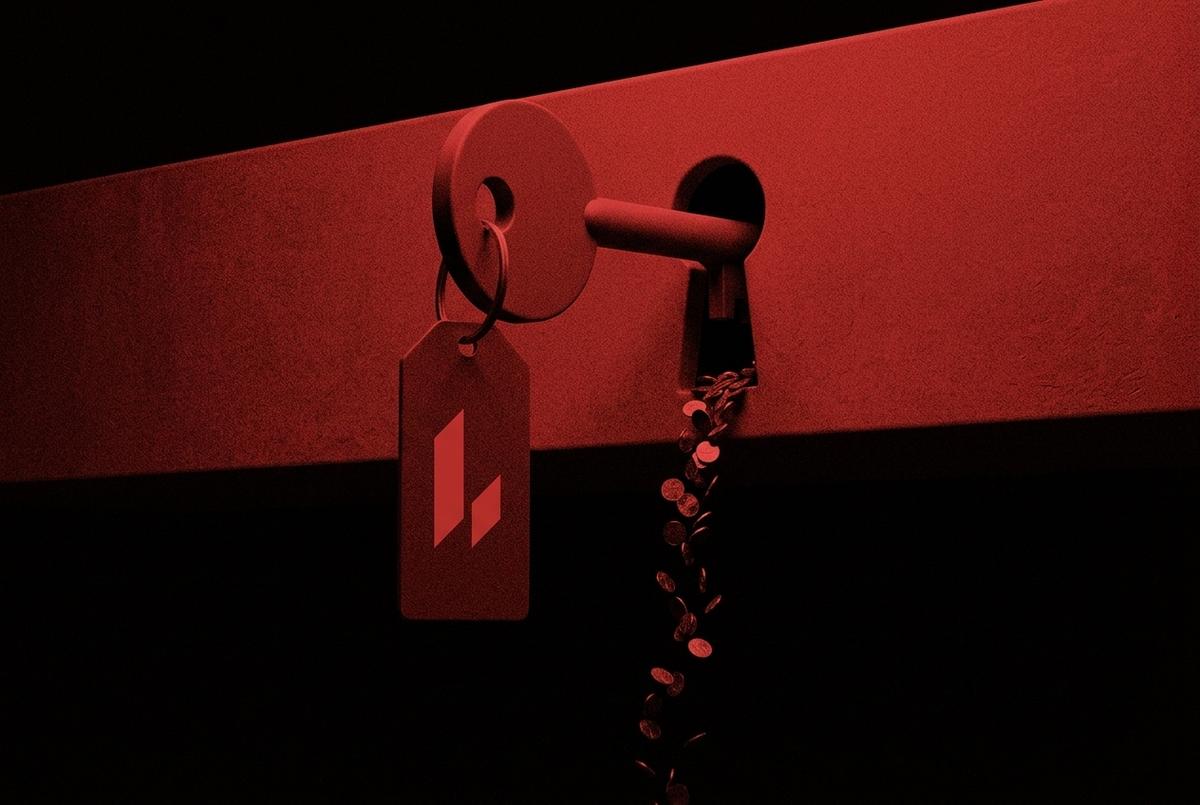
Lighter says the security incident that made it halt withdrawals on 16 November came from a leaked API key for a single trader's account. The decentralized perpetuals exchange said its protocol and smart contracts were not compromised. It stopped all withdrawals and new liquidity pool creation that day while it investigated.
That distinction matters to anyone holding LIT or trading on the venue. If the fault sat in an external signer rather than Lighter's own code, then the contracts users trusted are not the part that failed. The risk sits with whoever handled the key.
- The news: Lighter halted all withdrawals and new liquidity pool creation on 16 November after a suspected security incident.
- The key figure: On-chain researchers estimate about $15.5 million in USDC left two market maker accounts on 16 November, a total Lighter has not confirmed.
- What happens next: Lighter says withdrawals have resumed and that it will add signature requirements, IP allowlists and monitoring for key reuse.
Lighter Blames a Leaked API Key, Not Its Contracts
In its own update, the exchange said: "Our investigation indicates that today's incident was caused by a leaked API key for a specific trader's account. The Lighter protocol and smart contracts are unaffected."
The statement did not name the affected entity or give an amount. Lighter described the incident as appearing to involve a single compromised external party. An API key lets a trader's software place orders without signing each one by hand. A leaked one is a problem with that trader's setup, not with the chain.
What Researchers Traced On-Chain
A wallet pulled about $10.39 million in USDC from Lighter's Layer 1 contract, according to the on-chain monitoring account MLM onchain. The funds were converted into Ether through the decentralized exchange CoW Swap, then split into transfers of roughly 160 ETH each.
A second affected account was identified later, taking the estimate to about $15.48 million. Account #714710 is tied to the $10.39 million and account #714723 to another $5.09 million. The address that withdrew the first tranche, 0xb3fffca23d4444eE73349825ACD84f7b5020e387, had received about $10,000 through a relay transfer. That was around half an hour earlier.
Researcher 0xTria relayed findings from Korean blockchain observers. 0xTria said the incident probably came from leaked API keys for two large market maker accounts, not a direct attack on the protocol. The attacker reportedly opened a public liquidity pool with a 0% fee from one compromised account. A deposit of about $10,000 claimed roughly 99.99% of the pool.
Guardian Mode Returned About $5 Million
Lighter's postmortem says its Guardian smart contract mechanism triggered on the suspicious activity and paused withdrawals. Its Security Council returned about $5 million in USDC to the affected trader.
The postmortem put the root cause outside Lighter's code. The affected accounts used signing software outside Lighter's official software development kits (SDKs), and that software reused cryptographic nonces. Reusing a nonce lets an attacker rebuild private keys from public signatures. A nonce is a one-time value inside a signature, and reusing one leaks the key behind it.
Lighter has since required wallet signatures for transfers into public pools and made API key signatures non-public. It plans IP allowlists, configurable API key permissions and automated monitoring for nonce reuse. It advised traders using custom or third-party signing software to rotate their keys and switch to Lighter's official SDKs.
Update (17 November): Lighter says Guardian mode has been disabled, withdrawals have resumed, and pending withdrawal requests are being processed.
LIT Falls and Korean Exchanges Pause Deposits
LIT, Lighter's token, fell on 16 November, at one point by more than 17%. It recovered part of the drop to trade around $2.50 to $2.66. Trackers that measured the day differently put the fall between 7% and 13%. In South Korea, Upbit and Bithumb suspended LIT deposits and withdrawals after the incident.
What Lighter Has Not Confirmed
Lighter has not confirmed the roughly $15.5 million figure. It has not named the trader or firm whose key leaked, and it has not said whether money beyond the $5 million returned by its Security Council will come back. Its own statements describe a single compromised external party and a leaked API key. They stop short of the numbers circulating on-chain.
Until Lighter confirms an amount, the $15.5 million is a researcher estimate, not an exchange figure. The firm behind the leaked key is still unnamed.

Anmol Billa
Anmol Billa is a Senior Analyst at Altcoin Buzz, with over five years of experience working across cryptocurrency markets and the broader digital asset industry. His work focuses on technical analysis, market research, investment insights, and evaluating emerging opportunities within the crypto ecosystem. At Altcoin Buzz, Anmol contributes to technical market analysis, research-driven insights, pitch decks, and funding-related initiatives. His experience combines analytical thinking with a practical understanding of crypto markets, helping translate market trends and emerging projects into clear, actionable insights for readers and industry stakeholders.
More from AnmolNext up

Binance Heist and DeFi Exploits Put Crypto Security Under Pressure
The $6.3 billion Binance security breach remained at the center of crypto's security concerns this week, as US authorities obtained court approval to seize or