Polygon Adds TRON Support for Cross-Border Transfers and Stablecoin Payments
Polygon's Open Money Stack now supports TRON, routing USDT between the networks in one flow.

By Saloni RathiSenior Editor
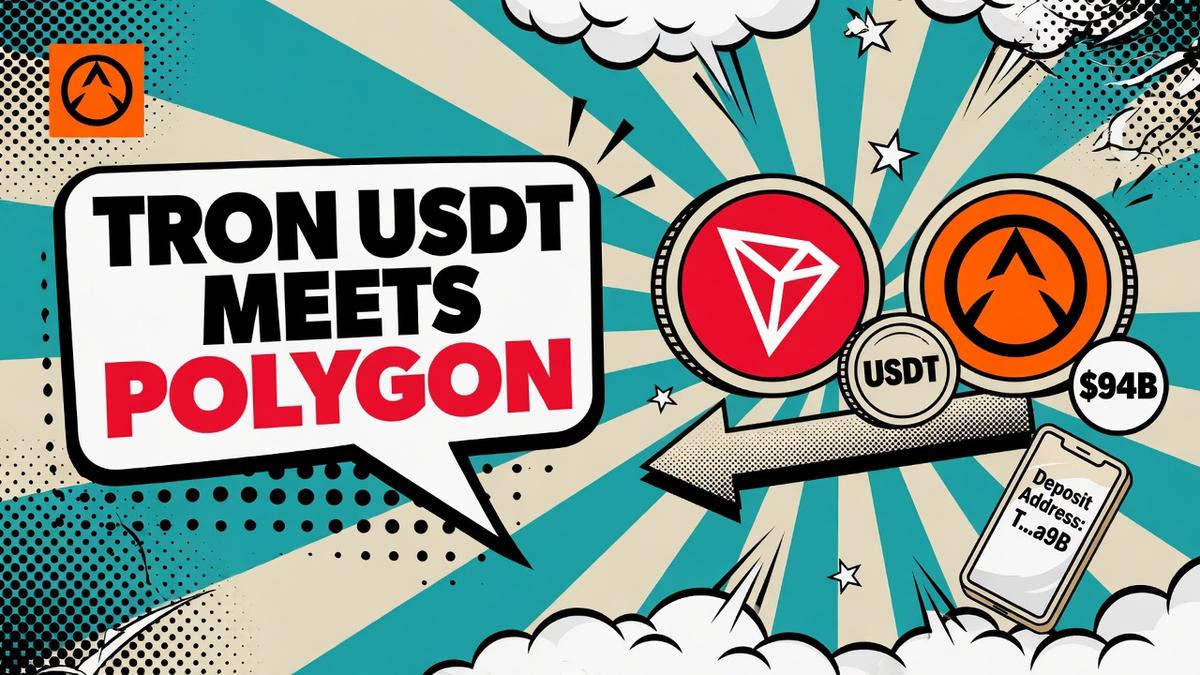
Polygon Labs has added the TRON network to its Open Money Stack, giving fintechs, remittance providers and payment platforms one integration for stablecoin payments and cross-border transfers. The two parties announced the expansion from Dubai on Oct. 7, and Polygon published how the mechanics work a day later.
The promise is easy to state. A business can accept USDT on TRON, settle in another stablecoin on an EVM chain and connect the result to a U.S. bank account, without signing four separate vendor contracts to make it happen.
Whether that beats the bridges and ramps you already use is a different question. Neither party published a fee, a spread, a gas cost or a settlement time for the route, so the cost and speed case cannot be checked from what they released.
What the TRON Support Actually Adds
The joint announcement splits TRON support across three parts:
- Regulated dollar access. Polygon Ramps connects TRON-based products to fiat on- and off-ramps, backed by money-transmitter licences and compliance systems covering 48 U.S. states.
- Programmable TRON wallets.
- Cross-chain USDT movement between TRON and supported EVM chains.
The pitch is consolidation. Polygon describes the alternative as four vendors, an on-ramp, a wallet, a bridge and an off-ramp, each with its own contract, API and service level agreement. Open Money Stack puts them behind one contract instead. Polygon says it had processed more than $3 trillion in payments volume as of Sept. 21.
USDT Moves Between TRON and EVM Chains in One Flow
On the cross-chain leg, Polygon names Polygon Trails as the routing layer. USDT and other supported assets move between TRON and EVM chains in a single transaction, with the bridging, conversion and execution handled underneath.
Polygon's example: a business accepts USDT from a TRON wallet and settles in USDC for an Ethereum user, or the reverse, without either side touching a bridge. The chains it lists for routing out of TRON are Polygon, Base, Arbitrum, Avalanche and Optimism.
One worked example comes with numbers. Sending 100 USDT from a TRON address returns 99.98 USDC on Polygon, a 2 cent shortfall on a $100 transfer. That is the only cost figure either party published.
Each customer gets a persistent TRON deposit address they can reuse, and incoming USDT is attributed to the right customer so the business does not reconcile deposits itself. Custody splits two ways: a licensed custodian holds keys for custodial wallets, with screening and transaction monitoring inside the flow, while embedded wallets leave the keys with the user.
The Cost and Speed Case Is Unproven
This is where the announcement stops short of the comparison it invites. There is no per-transfer fee, no spread, no gas estimate and no settlement time for the TRON to EVM route on either page. Without those, there is nothing to set against the USDT bridges and ramps a business already pays for.
The "single transaction" and "without touching a bridge" descriptions are the companies' own wording. No transaction hash or contract address was published alongside them, so they describe how Polygon says the product works, not a result anyone outside the two companies has tested.
Why TRON's $94 Billion Pool Matters
Polygon says TRON already carries more than $94 billion in circulating USDT, over half the stablecoin's total supply across every chain. The joint announcement puts TRON's total stablecoin transfer volume above $30 trillion and points to markets such as the Philippines, Mexico, Argentina and Nigeria, where customers already receive, hold and transfer USDT.
That is the case for routing through TRON rather than replacing it: the dollars are already there. What Open Money Stack adds is the layer on top, fiat in and out plus the cross-chain move, aimed at remittance platforms, gig products, exchanges and fintechs. The same problem shows up on smaller tickets: Lloyds and Visa settled $750,000 in USDC across borders.
Licensing Does Not Disappear
The integration does not remove the licensing and regulatory obligations of the payment firms using it, and it does not turn TRON into a bank. The 48-state coverage rests on Polygon's own money-transmitter licences and compliance systems, which is a claim about its own footprint rather than a new permission granted by the TRON side.
What the First Phase Leaves Open
Both companies call this the first phase of TRON support, with more assets, markets and payment capabilities expected later. No date was given for any of it. Neither page says whether the support is live for all business customers today or needs onboarding through Polygon's sales team, and both direct interested businesses to contact the Open Money Stack team.
Marc Boiron, CEO of Polygon Labs, framed the addition in the announcement:
Adding TRON brings one of the deepest pools of USDT liquidity into that same integration, so businesses can move those dollars onto U.S. banking rails or across chains with the licensing and orchestration already handled underneath.
Justin Sun, TRON's founder, put the customer side of it this way in the same release:
Customers expect their assets to arrive where they want them regardless of the blockchain they use to transfer funds.

Saloni Rathi
Saloni Rathi has been part of Altcoin Buzz for over five years, working across content and marketing within the crypto and Web3 space. Her work focuses on creating clear, engaging and accessible content that helps readers understand complex cryptocurrency and blockchain topics. With a strong interest in storytelling and audience engagement, Saloni brings together research, creativity and marketing insight to turn complex ideas into simple and relatable stories. She believes great content starts with curiosity, creates clarity, and ultimately builds meaningful connections with readers.
More from SaloniNext up

Backpack Surges 23% on CFTC Approval for U.S Derivatives Exchange
Backpack has secured CFTC approval for its U.S. derivatives exchange and clearing operation. The news sent its BP token up around 23%, while the company prepares to bring 24/7 leveraged crypto perpetual futures to U.S. users.
 BP