Solana could become the “everything chain” as crypto apps go mainstream
6th Man Ventures co-founder Mike Dudas says Solana’s low fees, fast settlement and broad ecosystem could help bring crypto applications to hundreds of millions of mainstream users.

By Bikash DekaAuthor
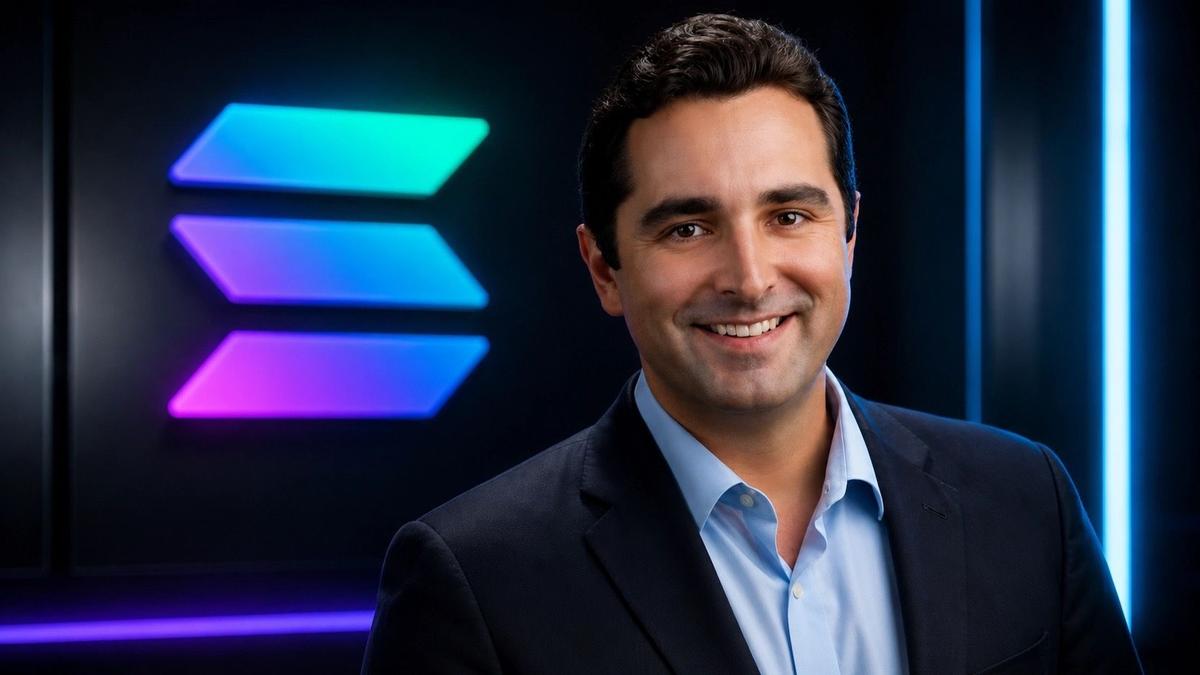
Solana could play a major role in bringing the next wave of users into crypto, even if many of them never realize they are interacting with a blockchain. Mike Dudas, co-founder of crypto investment firm 6th Man Ventures, believes Solana’s infrastructure is well suited for consumer applications that can make on-chain activity feel invisible.
Speaking on Decrypt’s Fomo Hour podcast, Dudas pointed to Solana’s broad range of use cases as one of its biggest strengths. The network supports everything from meme coins and decentralized finance to newer applications such as stock trading.
Dudas, whose firm was an early investor in Pump.fun and other Solana-based projects, said the network’s underlying infrastructure could support crypto applications used by hundreds of millions of people.
Why Solana could become an “everything chain”
Dudas argued that the next stage of crypto adoption may not look like users consciously choosing to “go on-chain.” Instead, blockchain technology could operate quietly in the background while people use familiar consumer applications.
Solana’s infrastructure could help make that possible through several key features:
- Low transaction costs
- Fast settlement
- Deep liquidity
- 24/7 availability
- Support for a wide range of applications
These features can make blockchain-based products easier to build and use at scale.
Solana’s broad range of use cases
One of Solana’s defining characteristics is the variety of activity taking place on the network.
The ecosystem has become closely associated with meme coins, with platforms such as Pump.fun helping drive significant activity. However, Dudas believes limiting Solana’s identity to speculative tokens would overlook the broader role the network can play.
The same infrastructure can support different types of applications, including financial products and consumer-focused services.
Dudas said Solana’s ability to accommodate these different uses is ultimately a strength. Even controversial applications can contribute to a broader ecosystem where developers experiment with new ways to use blockchain technology.
He argued that Solana’s willingness to support a wide range of use cases has helped the network maintain activity even during weaker market conditions.
Corporate-backed chains face different incentives
Dudas also compared Solana with blockchain networks backed by large companies, including Coinbase’s Base and Robinhood’s planned blockchain.
According to Dudas, corporate-backed networks can face different incentives because their parent companies have businesses to protect and products to promote.
He argued that companies such as Coinbase and Robinhood have a natural reason to steer users toward products that generate revenue for their businesses.
Solana, by contrast, has developed as a broader ecosystem where applications from different categories can compete for users and liquidity.
The distinction could become more important if blockchain adoption moves toward mainstream applications rather than remaining focused primarily on crypto-native users.
Solana token issuance comes under scrutiny
Dudas also voiced support for efforts to reduce the rate at which new SOL tokens enter circulation.
The discussion comes as the Solana community considers SGP-0003, a proposal that combines changes designed to reduce new SOL issuance with measures that would increase the amount of SOL burned through network fees.
Token burns remove SOL from circulation, while lower issuance would reduce the amount of new supply entering the market.
If implemented as proposed, the changes could put additional pressure on SOL’s supply growth. However, the potential effect on the token would depend on factors such as network demand and actual usage.
Dudas argued that the crypto industry may have placed too much emphasis on high token inflation as a requirement for network security. He described the proposed changes as reasonable.
What Solana’s next phase could look like
The bigger question for Solana is whether its infrastructure can support applications that attract users who do not think of themselves as crypto users.
For mainstream adoption to happen, users are unlikely to care about transaction finality, validators, liquidity or token mechanics. They will care about whether an application is fast, affordable and easy to use.
That is where Solana’s infrastructure could become important.
If developers can hide the complexity of blockchain technology behind simple consumer experiences, users may interact with Solana without needing to understand the network underneath.
This would represent a different model of crypto adoption from the early industry, when users typically needed wallets, exchanges and a basic understanding of blockchain transactions before they could participate.
What this means for Solana
Dudas’ argument ultimately comes down to infrastructure. Solana does not need every mainstream user to know they are using Solana for the network to benefit from wider adoption.
Its broad support for different applications, low fees, fast settlement and liquidity could give developers the foundation needed to build consumer products at scale.
The network still faces competition from other blockchains, while its token economics and ecosystem governance remain subjects of debate. But if crypto applications increasingly become part of everyday financial and consumer products, Solana’s “everything chain” approach could give it a strong position in that transition.
The key test will be whether developers can turn that underlying infrastructure into products that ordinary users actually want to use.

Bikash Deka
Bikash Deka is a crypto and Web3 analyst and writer focused on making blockchain, cryptocurrency, and digital asset developments easier to understand. His work covers crypto markets, emerging blockchain projects, industry trends, and major developments across the digital asset ecosystem. With a background in Technology and Web3, Bikash combines analytical research with clear, beginner-friendly writing. He follows market movements, evaluates industry developments, and turns complex crypto topics into accessible insights for readers. At Altcoin Buzz, Bikash contributes research driven news and educational content designed to help readers better understand what is happening in the fast-moving world of cryptocurrency and blockchain.
More from BikashNext up
Pyth Adds Live NYSE Data From Five Exchanges as ARR Reaches $13.67 Million
Pyth Network has added real-time stock and ETF data from all five NYSE Group exchanges to its Data Marketplace. The move follows its Nasdaq distribution agreement and comes as October ARR reaches $13.67 million.
 PYTH
Related
More in Crypto NewsRelated
Forward Industries Expands Solana Treasury to 8.7 Million SOL as Per-Share Growth Slows
 SOL

Solana's Fall Looks Too Fast: What Settles It at $80.83?
SOL
Sui Ecosystem Faces Another Exit as Suiet Ends Wallet Services
 SUI
Zcash Community to Vote on Moving 50,000 ZEC From the Grants Treasury
 ZEC

