Aave DAO Weighs Smaller Buybacks and AAVE Token Burn
Aave DAO is considering a smaller annual buyback budget after pausing purchases in April, while a new proposal could eventually burn some of the AAVE tokens bought by the protocol.

By Saloni RathiSenior Editor
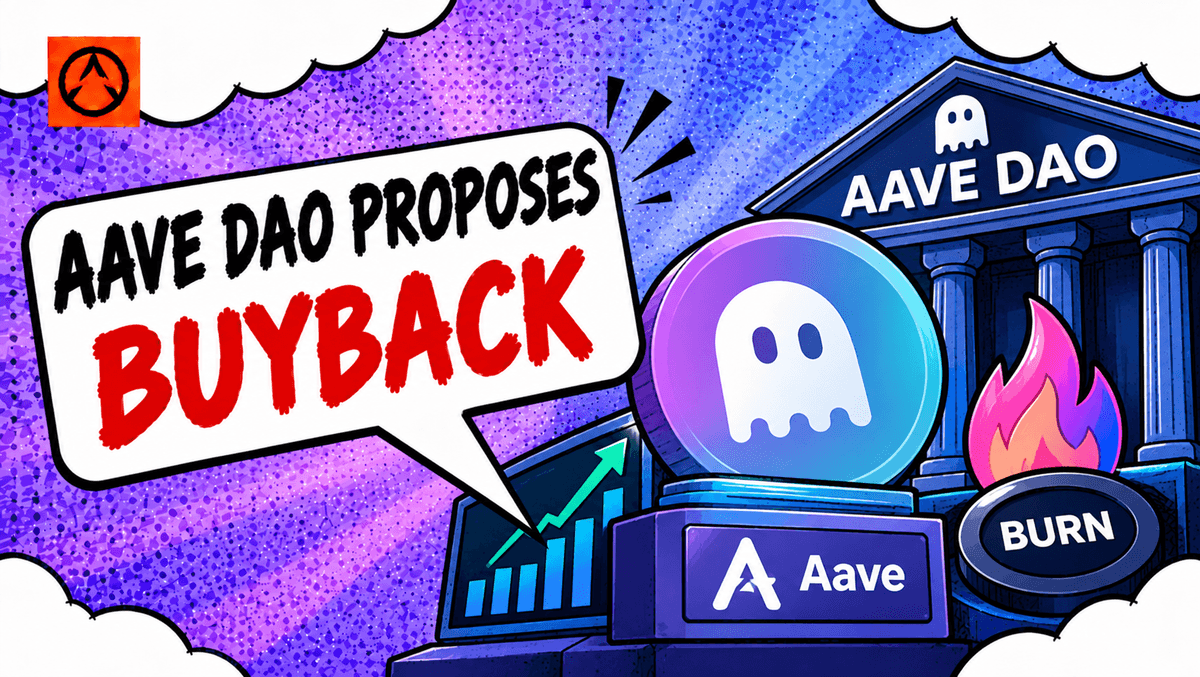
Aave's token strategy is facing another change as the DAO weighs a smaller buyback budget while considering whether bought-back AAVE should eventually be burned.
The DAO had proposed cutting its annual AAVE buyback budget from about $50 million to $30 million. The proposal cited weaker borrow-fee revenue and the need to preserve treasury funds for operations and growth.
The reduction would lower the estimated acquisition rate from about 487 AAVE per day to roughly 292 AAVE per day. At the proposed $30 million annual budget, the DAO estimated it could still acquire about 106,000 AAVE per year.
Buybacks remain paused
The buyback program has also been paused since April 19.
Aave stopped purchases after the April 18 rsETH bridge incident created uncertainty around potential losses and the DAO's response. TokenLogic said preserving treasury flexibility was more important than continuing purchases while the situation was being assessed.
The pause means the proposed budget reduction has not simply translated into a lower ongoing purchase rate. No buyback transactions were executed after April 19 under the pause announced by TokenLogic.
The program had already accumulated more than 205,000 AAVE after spending about $42 million during its first 10 months, according to Aave DAO funding materials. That represented more than 1.28% of AAVE's total supply at the time.
AAVE burn enters the discussion
A newer proposal could change what happens to those tokens.
Aave founder Stani Kulechov said on September 28 that the protocol is considering adding a burn mechanism as part of Aavenomics 3.0. However, there is currently no formal governance proposal specifying how many AAVE tokens would be burned, when the burns would begin, or whether existing treasury holdings would be included.
The difference is important. Under the existing buyback structure, AAVE purchased by the DAO is sent to the Ecosystem Reserve rather than permanently destroyed. Governance can therefore use those tokens for future programs.
A burn would permanently remove the tokens from circulation. That would turn at least part of the buyback process into a direct supply-reduction mechanism.
The change comes as Aave continues expanding its lending business. Aave V4 recently surpassed $1 billion in deposits during September, while its Base deployment also introduced lending against tokenized equities.
That growth gives the DAO more room to rethink how protocol revenue should flow to AAVE holders. But for now, the burn remains an idea under consideration rather than an approved mechanism.
The immediate picture is therefore mixed: Aave has proposed spending less on buybacks, has kept the program paused since April, and is now considering permanently burning some of the AAVE it buys.

Saloni Rathi
Saloni Rathi has been part of Altcoin Buzz for over five years, working across content and marketing within the crypto and Web3 space. Her work focuses on creating clear, engaging and accessible content that helps readers understand complex cryptocurrency and blockchain topics. With a strong interest in storytelling and audience engagement, Saloni brings together research, creativity and marketing insight to turn complex ideas into simple and relatable stories. She believes great content starts with curiosity, creates clarity, and ultimately builds meaningful connections with readers.
More from SaloniNext up
NEAR Protocol Cuts Token Inflation to 1.6% as Intents Volume Surpasses $37B
NEAR Protocol has ratified a proposal to reduce maximum annual token issuance from 2.5% to 1.6% over 24 months. The decision comes as NEAR Intents surpasses $37 billion in cumulative volume and the network attracts more than 2,400 hackathon submissions.
 NEAR