Indonesia Eyes Tokenized Government Securities, Mining Assets and Stablecoins
Indonesia is exploring tokenized government securities, mining assets, property and infrastructure alongside stablecoins as policymakers seek to expand blockchain adoption beyond crypto trading.

By Shashwat GuptaFounder
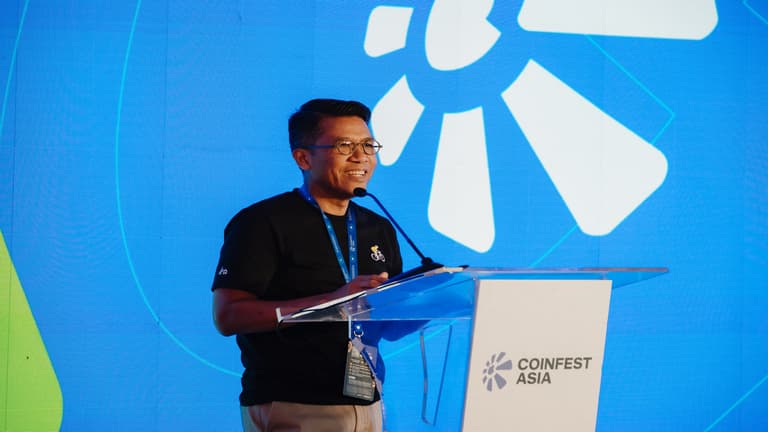
Indonesia is looking to expand its digital-asset industry beyond crypto trading, with policymakers exploring tokenized government securities, mining assets, property, infrastructure and stablecoins as potential drivers of the country's next blockchain growth phase.
The direction was outlined by Mukhamad Misbakhun, Chairman of Commission XI of Indonesia's House of Representatives, during Coinfest Asia 2026 in Bali on August 20 - 21.
The focus reflects a broader shift toward connecting blockchain technology with traditional finance and real-world assets rather than treating digital assets solely as speculative investments.
Indonesia Sees Tokenization Opportunity in Real World Assets
Indonesia's large natural-resource base could provide a significant foundation for tokenization.
“We have extraordinary mining assets. If we turn them into real-world assets and tokenize them, the potential is enormous,” Misbakhun said during an interview at Coinfest Asia.
He also identified government securities, property, toll roads and ports as potential assets that could eventually be represented through blockchain-based systems.
Tokenization could allow traditional assets to be represented digitally, potentially creating new ways for investors and institutions to access financial products.
For Indonesia, the opportunity is not simply about adopting blockchain technology. It is about using that infrastructure to connect the country's existing assets and financial system with a growing digital economy.
Regulatory Sandbox Already Testing Tokenization
Some of these applications are already moving beyond the conceptual stage.
As of July 31, 2026, Indonesia’s Financial Services Authority (OJK) had received 343 consultation requests from potential participants in its regulatory sandbox and 35 formal applications.
The sandbox has already tested several digital asset models, including gold and securities tokenization, tokenized property ownership benefits, rupiah stablecoin issuance, non-trading digital asset custody and crypto fund management. These developments suggest Indonesia is already experimenting with how blockchain-based financial products can operate within a regulated environment.
The sandbox gives regulators and companies a controlled space to test new financial models before determining how they should ultimately be regulated.
Misbakhun described the sandbox as an important bridge between innovation and regulation, allowing companies to bring new instruments to regulators and determine how consumer protection and supervision should apply.
That approach could become increasingly important as blockchain products begin overlapping with traditional financial markets.
Indonesia Wants More Digital Asset Activity to Stay Onshore
Indonesia already has a substantial digital-asset market.
As of July 2026, the country had 22.93 million digital-asset customer accounts, while monthly crypto transaction value reached IDR20.52 trillion.
But Misbakhun argued that user growth alone is not enough if the economic activity generated by Indonesian users is ultimately processed through overseas platforms.
“We should become the host and build strength around our own national assets,” he said.
That means developing domestic infrastructure capable of attracting users, companies and capital.
Indonesia's regulated digital-asset market currently includes 32 licensed entities: two exchanges, two clearing and settlement institutions, two custodians and 26 digital financial asset traders.
Misbakhun said the country needs an exchange that is regulated and transparent while still giving the industry room to grow.
Stablecoins Could Become Part of the Settlement Layer
Stablecoins are another key component of Indonesia's emerging digital-finance framework.
Misbakhun outlined a broader ecosystem built around legal certainty, settlement infrastructure, investor protection and talent development.
Within that framework, the settlement layer could include central bank digital currency, stablecoins and other forms of digital currency.
This would position stablecoins not simply as crypto trading instruments, but potentially as part of a wider financial settlement infrastructure.
The approach also highlights the importance of cooperation between different institutions.
“Cross-authority collaboration is very, very important,” Misbakhun said, pointing to coordination between Parliament, OJK, Bank Indonesia and other stakeholders.
Indonesia's Next Digital Asset Phase
Indonesia's strategy could mark a shift in how the country approaches blockchain adoption.
Rather than focusing exclusively on crypto trading volumes, policymakers are increasingly looking at what blockchain can do for real-world assets, financial markets and domestic settlement infrastructure.
That could give tokenization a broader role in the country's digital economy, particularly if government securities, natural resources and infrastructure eventually become part of regulated blockchain markets.
The regulatory sandbox provides a testing ground for those ideas, while stablecoins could potentially provide another layer of digital settlement.
The challenge will be balancing innovation with investor protection and financial stability.
For Indonesia, the next stage of digital asset growth may therefore depend less on attracting more crypto traders and more on building infrastructure that allows capital, assets and financial activity to remain within the country's regulated ecosystem.
As Misbakhun put it, Indonesia wants regulation to foster innovation.
Related: Coinfest Asia 2026 Connects Institutions, Builders and Traders to The World’s Crypto Festival

Shashwat Gupta
Shashwat Gupta is an entrepreneur, CEO and co-founder of the online media portal, Altcoin Buzz. Shash has been a crypto enthusiast since 2015 and entered the emerging cryptocurrency space full time in early 2017. His business expertise and extensive knowledge in the crypto space have helped shape Altcoin Buzz to be what it is today.
More from ShashwatNext up

French Hill Says SEC, CFTC Crypto Rules 'Fall Short' of Clarity
Rep. French Hill told Fox Business that SEC and CFTC crypto rules fall short of a lasting law.
Hyperliquid Policy Center CEO Says Exchanges Need Public Blockchains to Stay Competitive
 HYPE
HYPE SOL
SOL
BTC Tests Its $81,431 Floor: Does It Turn the Price Again?
 BTC
BTC
Helius CEO Mert Mumtaz Joins NEAR Foundation Council
 NEARSOL
Ripple Taps Stripe-Owned Privy for AI Payments on XRP Ledger
 XRP
XRP