Yield-Bearing Stablecoins: What to Expect in 2025 – Part 1
How Stablecoins Are Slowly Becoming Your Wallet’s Best Passive Income Tool in 2025
By Tari
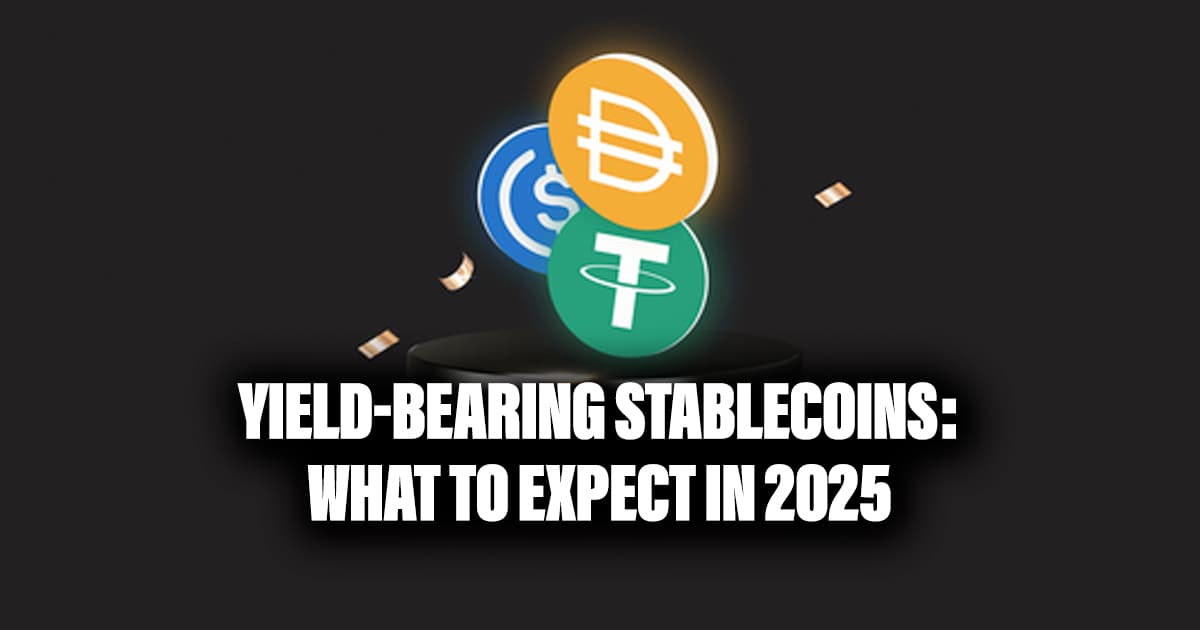
Stablecoins are great for payments, trading, and moving money fast. But in 2025, they’ve started doing more than sitting in your wallet.
Let’s break down how some of the top protocols are helping users earn more with stablecoins. With yield-bearing stablecoins, your $1 stablecoin stays stable and earns passive income.
1). sDAI – MakerDAO (via Spark Protocol)
With sDAI, you get around 5–8% annual percentage yield. So, how do you go about it?
- Get DAI stablecoin in your wallet.
- Go to Spark Protocol
- Deposit your DAI into Spark’s savings vault.

Source: X
In return, you receive sDAI, a special type of token that grows in value automatically over time (thanks to the ERC-4626 standard). There is no staking or manual claiming—your balance keeps increasing.
2). sUSDe – Ethena Labs
Here, you get an 8–15% annual percentage yield (sometimes higher in bull markets). This process is possible, but it requires following specific steps even though it involves complex execution.
- Get ETH in your wallet.
- Head to the Ethena Labs platform
- Deposit ETH into the sUSDe minting system.
- Ethena will stake your ETH and short ETH on exchanges to generate a delta-neutral yield.
The protocol generates profits through its staking rewards and its ability to earn funding rates. A synthetic stablecoin, like sUSD, gives you compounded returns. Just hold sUSDe to earn—no staking required. You get a high yield, but not without risk—especially if the crypto market gets volatile.
3). sUSDS – Sky Ecosystem (ex-MakerDAO)
You get about 4.5% APY. Now, see this as a hybrid approach. The yield comes from both tokenized U.S. Treasuries and lending activity via Spark. So;
- Get sUSDS (mint or buy it on supported DeFi platforms).
- Hold sUSDS in your wallet.
- You’ll get the yield in your balance (auto-accruing).
- No lockups, no staking—fully liquid and governed by the Sky Savings Rate (SSR).
4). USDY – Ondo Finance
This yield-bearing stablecoin offers 4–5% APY. It is backed 1:1 by short-term Treasuries and bank deposits, acting like a tokenized money market fund. USDY is only available to non-U.S. users.
- Go to Ondo Finance.
- Mint or buy USDY.
- Hold USDY in your wallet.
So, your USDY grows passively—ideal for anyone looking for a TradFi-style yield with on-chain convenience.
5). USDM – Mountain Protocol
USDM on the Mountain protocol offers 4–5% APY. 100% of USDM’s reserves are in U.S. T-bills.
- Visit Mountain Protocol
- Buy or mint USDM, backed by U.S. Treasuries.
- Hold USDM and watch your balance increase with no extra steps.
It rebases daily, meaning your token balance increases a little every day (about 0.0137%). This stablecoin offers simplicity, transparency, and growth. It’s only available for users outside the U.S.
Conclusion
Stablecoins are not only a way to store digital dollars—they’re becoming the backbone of on-chain finance. You can earn returns with yield-bearing stablecoins while avoiding the volatile crypto market. Whether looking for safer, more predictable returns (like sDAI and USDM) or open to higher-risk, higher-reward options (like sUSDe), Yield-Bearing stablecoins are for earning on autopilot. Here is the second part.

Disclaimer
The information discussed by Altcoin Buzz is not financial advice. This is for educational, entertainment, and informational purposes only. Any information or strategies are thoughts and opinions relevant to the accepted levels of risk tolerance of the writer/reviewers, and their risk tolerance may be different from yours. We are not responsible for any losses that you may incur as a result of any investments directly or indirectly related to the information provided. Bitcoin and other cryptocurrencies are high-risk investments so please do your due diligence. Copyright Altcoin Buzz Pte Ltd.
Next up

JPMorgan Gives Bitcoin a 10% Annual Return in Long-Term Outlook
J.P. Morgan Asset Management adds a bitcoin return range to its 2027 long-term outlook, with a reported 10% base case, but leaves BTC out of allocations.
 BTC
Related
More in Crypto NewsRelated
Bitcoin Core Speeds Up Fixes for AI found Bugs Drops
BTC
Bitcoin ETFs Lose $635M in a Day as DWF Study Says Flows Chase Price
BTC
Bitcoin ETFs Draw $1.07B in Three Days, Short of Rally-Era Pace
BTC
BBIT Spot Bitcoin ETF Heads to SIX in November, Swiss Investors Only
BTC


