Bitcoin's Security Budget Debate Gets a New Proposal as NAT Documentary Arrives
DMT-NAT proposes an additional reward mechanism for Bitcoin miners to address long-term security budget concerns. Its upcoming documentary explores the relationship between Bitcoin's scarcity and network security.

By Anmol BillaSenior Analyst
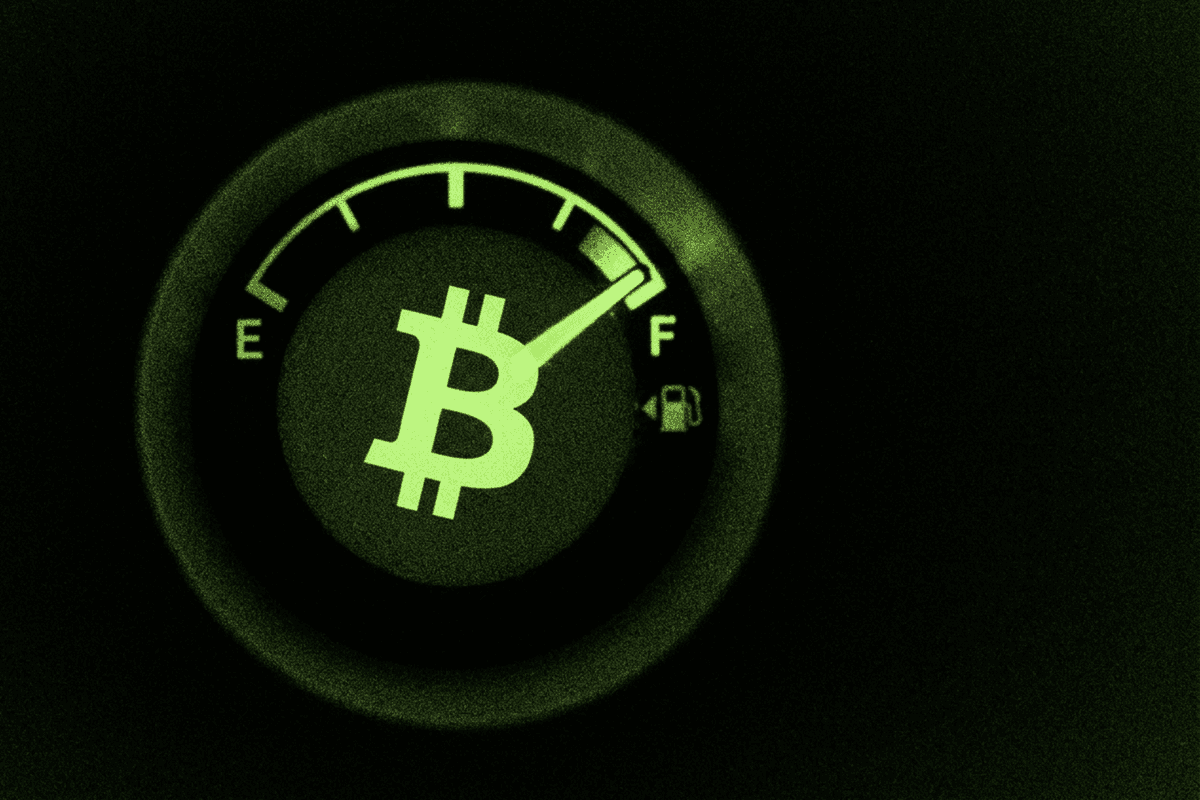
Bitcoin's long-term security is becoming a growing topic of debate across the crypto industry, as the network's mining rewards continue to decline through programmed halvings and transaction fees remain a variable source of revenue.
A new documentary from the DMT-NAT community, titled Scarce or Secure, aims to bring that debate into focus. Scheduled for release on November 20, the documentary explores whether Bitcoin's existing mining incentive model can sustain the network's security over the long term and presents DMT-NAT ($NAT) as a proposed additional incentive for Bitcoin miners.
The discussion comes as more than 50 million crypto tokens compete for liquidity, attention and market share. NAT's supporters argue that instead of competing with Bitcoin as another standalone cryptocurrency, it is designed to complement Bitcoin's mining economics.
The Problem NAT Wants to Address: Bitcoin's Mining Security Budget
Bitcoin's security depends on miners using computing power to validate transactions, produce blocks and protect the network against attacks. Their incentive comes primarily from block subsidies and transaction fees.
The block subsidy is programmed to decrease roughly every four years. Following the April 2024 halving, miners receive 3.125 BTC for each block, with the next halving expected in 2028. As subsidies decline over time, transaction fees are expected to play a larger role in supporting mining economics.
However, transaction fees have historically fluctuated and have not consistently replaced the revenue lost through halvings. This has fueled a long-running debate about whether Bitcoin's security budget can remain sufficient as the block subsidy gradually declines.
NAT's white paper argues that Bitcoin's store-of-value narrative could contribute to this challenge by encouraging holders to keep their coins offchain rather than generate regular onchain transactions and fees.
The project proposes two metrics to frame the debate:
- Bitcoin Security Intensity (BSI): Annualized miner revenue divided by Bitcoin's market capitalization. NAT uses this ratio to measure miner revenue relative to the network's valuation.
- Energy Security Ratio (ESR): Bitcoin's estimated energy consumption divided by a proposed global electricity-surplus figure. NAT uses this metric to frame its assessment of the energy resources theoretically available relative to Bitcoin's mining footprint.
The white paper cites a BSI of 0.88% and an ESR of approximately 4.8% using its 2024 energy benchmark calculations. These are NAT's proposed analytical metrics and assumptions, not universally accepted measures of Bitcoin's security or the likelihood of an attack.
How DMT-NAT Proposes to Supplement Bitcoin Miner Rewards
DMT-NAT presents itself as an additional reward mechanism tied to Bitcoin's block data rather than a change to Bitcoin's core consensus rules.
According to the project's documentation, the Non-Arbitrary Token (NAT) is generated using Bitcoin block data, including the difficulty-related Bits field. The framework operates through the Digital Matter Theory (DMT) and TAP meta-protocol infrastructure, which uses Bitcoin's existing block data and inscriptions to create and track tokens.
The project describes the mechanism as follows:
- Block-data-based issuance: NAT issuance is linked to data contained in Bitcoin blocks, including the Bits field, which reflects the network's difficulty target.
- Miner-directed rewards: Following the initial minting phase, the project's documentation describes a system in which newly generated NAT is directed to Bitcoin miners.
- Additional revenue: NAT is intended to provide miners with another potential source of economic reward alongside BTC block subsidies and transaction fees.
- No Bitcoin consensus changes: The proposal operates through a meta-protocol rather than modifying Bitcoin's underlying consensus rules or block subsidy schedule.
The project argues that if NAT gains sufficient market demand, its value could supplement miner income, potentially making mining more economically attractive during periods of lower BTC subsidy and fee revenue.
These are the project's design claims and intended economic effects. The value of NAT, miner adoption, revenue impact and long-term security benefits have not been established.
The approach is also different from changing Bitcoin's monetary policy. It does not propose increasing Bitcoin's supply or changing the 21 million BTC limit. Instead, it attempts to create a separate asset tied to Bitcoin's underlying block data and mining activity.
Why the Debate Is Growing Across the Mining Industry
The security-budget discussion is gaining attention as Bitcoin miners face changing economics. Mining profitability depends on Bitcoin's price, network difficulty, electricity costs, hardware efficiency and reward structure.
Some publicly traded mining companies have also begun shifting parts of their infrastructure toward AI and high-performance computing, where long-term contracts may offer different revenue opportunities.
Altcoin Buzz previously covered Bitcoin miners facing margin pressure as AI and computing demand reshape the industry, highlighting how mining economics and the expansion of AI infrastructure are affecting the sector.
The transition is not uniform across the industry. Some companies continue to expand their Bitcoin mining operations, while others are reallocating capital, power capacity and infrastructure toward AI workloads.
What the NAT Documentary Could Bring to the Discussion
The upcoming documentary is expected to explore Bitcoin's security budget, the relationship between scarcity and network security, and the proposed role of DMT-NAT in supplementing miner incentives.
NAT's white paper goes beyond the token's issuance mechanism. It also explores broader questions about Bitcoin's long-term monetary role, energy consumption, miner economics and whether governments could eventually become more involved in supporting network security.
Those ideas remain speculative, particularly the paper's proposed scenarios involving state-sponsored mining, national reserves and the potential concentration of mining power.
The documentary could help bring the technical and economic arguments into a format more accessible to Bitcoin holders, miners and the broader crypto community.

Anmol Billa
Anmol Billa is a Senior Analyst at Altcoin Buzz, with over five years of experience working across cryptocurrency markets and the broader digital asset industry. His work focuses on technical analysis, market research, investment insights, and evaluating emerging opportunities within the crypto ecosystem. At Altcoin Buzz, Anmol contributes to technical market analysis, research-driven insights, pitch decks, and funding-related initiatives. His experience combines analytical thinking with a practical understanding of crypto markets, helping translate market trends and emerging projects into clear, actionable insights for readers and industry stakeholders.
More from AnmolNext up

Singapore Settles $77.5M Tokenized Bills Using Central Bank Digital Currency
Singapore's central bank issued S$100 million ($77.5 million) of four-week tokenized bills on 6 November, settled in wholesale CBDC on its own ledger.
Binance Hacker Moves $142M in ETH as THORChain Bitcoin Swaps Continue
 ETH
 BTC

Coldcard CEO Says 0.17% of Users Were Affected as Bitcoin Theft Tops $100M
BTC
Zoom, CNN & Ledger Caught in Major Crypto Malware Attack Across 178 Sites
BTCETH
Crypto Bridges Lost Hundreds of Millions in 2026. Why Bridge Hacks Keep Working?
ETHUSDC