Litecoin Computer Launches JavaScript Smart Contracts
The Litecoin network just took a major step forward.
By Victor
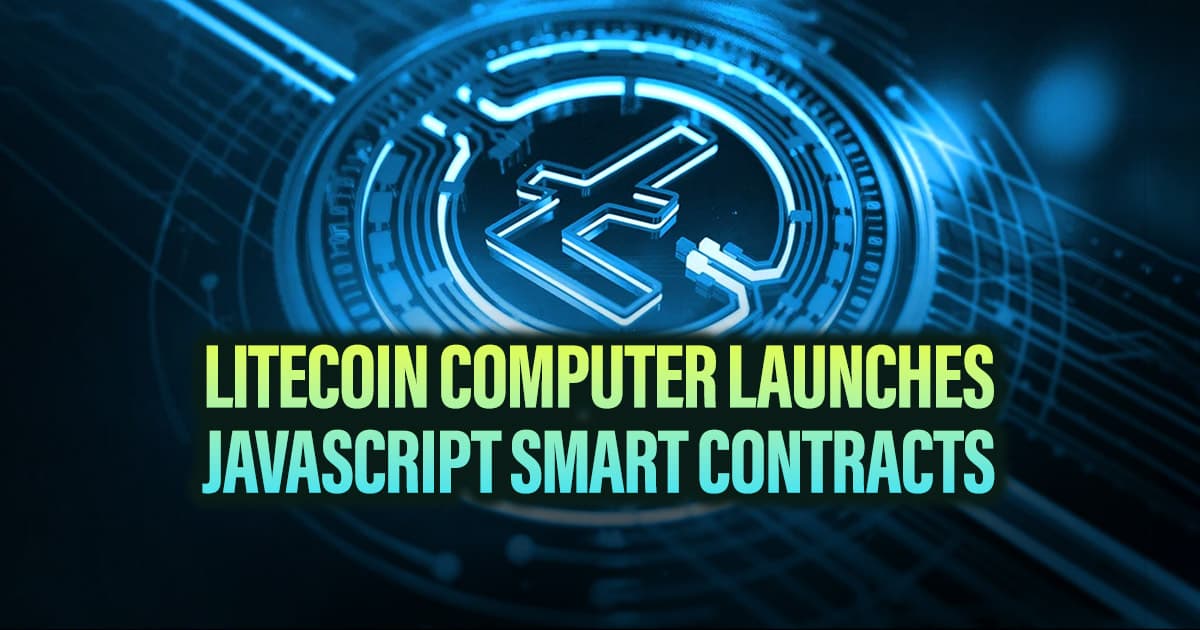
With the launch of the Litecoin Computer, developers can now build Turing-complete smart contracts using JavaScript. They can do this without giving up security or breaking the bank on transaction fees.
For years, developers had to choose between secure blockchains like Bitcoin and Litecoin or flexible but costly, complex platforms. The Litecoin Computer changes the game by merging the best of both worlds. By bringing smart contracts to Litecoin, this new tool empowers builders to create advanced decentralized applications (dApps) with minimal cost and complexity.
Why Developers Are Turning to Litecoin Computer
The biggest draw? Developers no longer need to learn a specialized language like Solidity. With Litecoin Computer, they can write smart contracts using JavaScript, the most widely used programming language in the world. That means they can use familiar tools, libraries, and workflows to build blockchain apps, dramatically lowering the learning curve.
Unlike Ethereum and other platforms where smart contracts are processed onchain—often leading to high and unpredictable fees—the Litecoin Computer handles most of the logic on the client side. This approach cuts down on computational costs while still recording key data and results on the Litecoin blockchain. Importantly, it runs directly on Litecoin itself. This isn’t a separate chain or layer. There’s no new token to manage. Developers and users rely on Litecoin’s proven security model, and assets remain safely secured on the base layer.
Because Litecoin uses the UTXO (Unspent Transaction Output) model, the system is naturally scalable. UTXOs can be processed independently, meaning users and applications compute only what they need. This enables the kind of high-throughput dApps—like onchain order book exchanges or complex multiplayer games—that would struggle to scale on traditional account-based chains.
What’s Possible with Litecoin Computer
From advanced DeFi tools to secure enterprise solutions, the possibilities are growing. Developers can now build lending platforms, NFT marketplaces, or even full-blown games without worrying about high fees or smart contract complexity.
For example, a team could build an onchain auction house for Ordinals NFTs, where bids, transfers, and ownership history are all handled with client-side logic but stored securely on Litecoin. This keeps interactions fast and fees low, while ensuring everything is fully auditable and permanent.

Disclaimer
The information discussed by Altcoin Buzz is not financial advice. This is for educational, entertainment, and informational purposes only. Any information or strategies are thoughts and opinions relevant to the accepted risk tolerance levels of the writer/reviewers, and their risk tolerance may differ from yours. We are not responsible for any losses you may incur due to any investments directly or indirectly related to the information provided. Bitcoin and other cryptocurrencies are high-risk investments, so please do your due diligence. Copyright Altcoin Buzz Pte Ltd.
Next up

XRP ETF Inflow Streak Ends as Exchange Wallets Show No Net Inflow
XRP ETFs saw $1.84M of net outflows, ending 13 weeks of inflows and leaving holders about 18% underwater. Exchange wallet data shows no real inflow.
 XRP