Cardano's Leios Upgrade Hits About 1,000 TPS in Public Testing
A September Leios test reached about 1,000 TPS. Here's what that shows, the reported end-2026 mainnet target, and Hoskinson's Quinelings experiment.

By Shashwat GuptaFounder
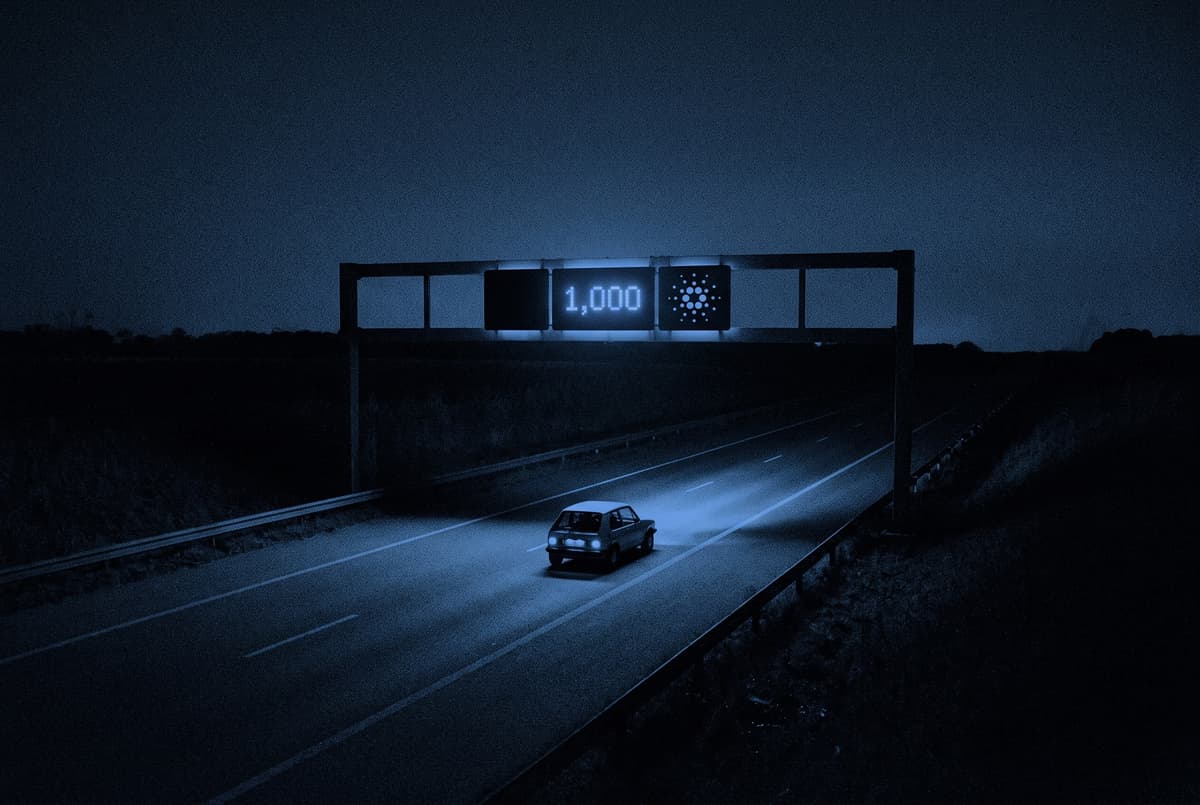
Cardano's next big scaling upgrade, Leios, has a headline number. A test in September reached about 1,000 transactions per second, and Input Output, the engineering firm behind much of Cardano's development, has pointed to that result as a marker of progress.
The number is real, but on its own it doesn't tell you much. What's still missing is the setup behind it, and that matters more than the figure itself.
What the 1,000 TPS Test Does and Doesn't Show
Throughput figures depend heavily on how a test is run. The kind of transactions, the network setup and how long the load was held can all move the result a long way. None of those conditions have been made clear for the September test, so it's best read as a promising data point, not as a preview of what mainnet will handle.
The capacity estimates for Leios are also wide. They run from twice to 30 times Cardano's current levels. That's a range so broad it mostly tells you the final figure hasn't been settled. A narrower claim of a 3x to 5x increase didn't turn up in the reporting behind this article.
So the honest summary is simple. One test hit roughly 1,000 TPS, the long-term ceiling is still an estimate, and the details that would let anyone compare this with other chains haven't been published in what we reviewed.
Musashi Dojo Is Where the Testing Happens
The work is happening on a public testnet called Musashi Dojo, which started on June 23. It's built to move through five phases, a bit like belt levels, and it's currently in the Fire phase.
That staged design is the interesting product choice here. Instead of one big test and a launch date, each phase gives developers a checkpoint to look at results before moving on. It also means progress can be tracked from outside rather than taken on faith.
The Mainnet Timeline Comes With Conditions
Leios mainnet is reported to be targeted for before the end of 2026. That's a little over two months away. The target is tied to test results and technical decisions still to be made, so it's a goal, not a fixed date.
No official roadmap page confirming that timeline was reviewed for this article. Until one appears, treat the end-of-year target as a plan that could still move.
What Is Quinelings?
Alongside Leios, Cardano founder Charles Hoskinson has been talking about a very different side project. It's called Quinelings, an experimental framework of self-replicating programs that rebuild their own code and take the form of code-based digital creatures.
It's an odd idea to picture. Think of a small program that carries its own blueprint around and is drawn as a little creature. It sits closer to a research experiment than to anything users of the Cardano network will touch.
Its link to Cardano, ADA or any token hasn't been established in the reporting we reviewed. For now, Quinelings is best seen as a curiosity from Cardano's founder rather than a Cardano product.
For ADA holders, the item to watch is Leios. The next useful signal will be the testnet moving past its Fire phase, along with published details on how that 1,000 TPS figure was produced.

Shashwat Gupta
Shashwat Gupta is an entrepreneur, CEO and co-founder of the online media portal, Altcoin Buzz. Shash has been a crypto enthusiast since 2015 and entered the emerging cryptocurrency space full time in early 2017. His business expertise and extensive knowledge in the crypto space have helped shape Altcoin Buzz to be what it is today.
More from ShashwatNext up
Stablecoin Payments Hit $482B as Solana Chases Smaller Tickets
Stablecoin payments rose 45% to $482 billion through September while supply grew 0.4%, and the average ticket fell to $462, the shape Solana's fees suit.
 SOLUSDC
Related
More in Crypto NewsRelated
MoonPay and Dunamu Explore Stablecoin Payments and GIWA Expansion
Sui Gains 4.5% as Samsung Wallet and AI Agent Infrastructure Drive Attention
 SUI
Uniswap Futures Go Live on CME: First DeFi Token Gets Regulated Futures
 UNI
 BCH
NEAR Business Pitches Private Multisig Treasuries With a Free Tier
 NEAR
 BTC


